Founder, LifeHetu
Puneet Pandey is the founder of LifeHetu. He has worked alongside psychologists since 2022 while building the platform, helping practitioners grow their online presence with digital tools and care solutions.
12 Jan 26 06:00 pm
How Syncing Appointments with Google Calendar Can Streamline Your Online Counselling Practice
Learn how syncing appointments with Google Calendar can reduce scheduling stress, protect boundaries, and improve presence in online counselling practices.
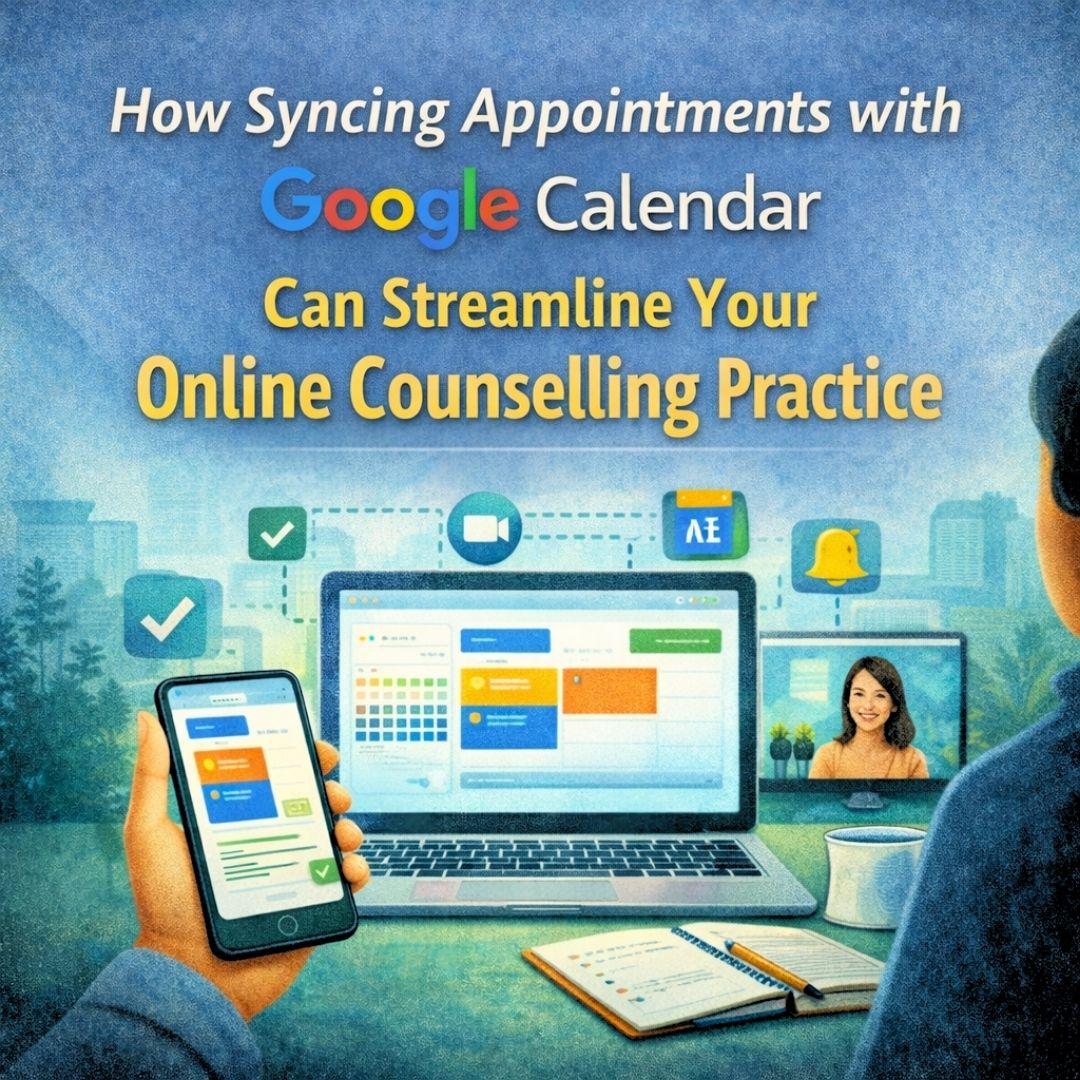
How Syncing Appointments with Google Calendar Can Streamline Your Online Counselling Practice
At LifeHetu, we regularly speak with therapists, psychologists, and counsellors running online practices. While therapeutic styles differ, one concern appears consistently: scheduling feels harder than it should.
Not because therapists struggle with time management, but because online counselling introduces subtle layers of complexity that quietly add up. Session links, reminders, reschedules, and personal commitments all live in the background, demanding attention.
Over time, we’ve noticed a clear pattern. Practices with smoother workflows almost always have one thing in common: their appointments are synced with Google Calendar.
What does syncing appointments with Google Calendar mean?
Syncing appointments with Google Calendar means therapy sessions automatically appear in a therapist’s calendar, updating in real time when appointments are booked, rescheduled, or cancelled. This creates a single, reliable view of the day without manual updates.
For online counselling practices, this simple integration can significantly reduce scheduling stress and mental load.
The scheduling stress no one talks about
Most mental health professionals don’t begin their practice thinking deeply about systems. Early on, a basic calendar and a few messages are enough.
As practices grow, therapists start managing:
- Recurring online sessions
- Follow-ups and documentation time
- Personal commitments alongside client work
- Multiple tools that don’t always talk to each other
This is where scheduling friction creeps in.
We’ve heard therapists describe moments like realising a session is about to start while still finishing notes, or double-checking emails to confirm timings. These interruptions may seem small, but they break mental flow — something essential for effective counselling.
Why Google Calendar fits naturally into therapy workflows
Google Calendar isn’t new or complex, which is exactly why it works so well.
Therapists don’t need to learn a new way of thinking about time. When appointments sync automatically, sessions appear where therapists already plan their day. Changes update instantly, and upcoming sessions are visible at a glance.
Several professionals we’ve spoken to shared that once their calendar reflected their actual schedule, they felt calmer even before the workday began.
How synced scheduling improves presence in online counselling
Online counselling requires intentional presence. Unlike in-person work, there are fewer natural transitions between sessions.
When therapists feel rushed or uncertain about timing, that pressure carries into sessions. A synced calendar creates breathing space.
- Notifications act as gentle reminders, not last-minute alerts
- Therapists can mentally close one session before the next
- Preparation becomes intentional rather than reactive
Clients may never say this explicitly, but they often sense when sessions feel grounded and unrushed.
Protecting boundaries becomes easier with calendar sync
One unexpected insight we heard repeatedly was how calendar syncing helped therapists protect personal time.
When work and life exist in separate systems, overextension happens easily. When everything appears in one calendar, boundaries become visible.
Therapists can:
- Block admin time
- Schedule breaks
- Protect personal commitments
This visibility alone can reduce burnout — without changing client load or working hours.
Why manual scheduling eventually breaks down
Manual scheduling isn’t wrong. It’s just not designed for complexity.
It works well when client numbers are small and sessions are predictable. As soon as practices expand — with recurring appointments, time zones, or online formats — manual systems begin creating friction.
At this stage, syncing appointments is no longer just about efficiency. It becomes about maintaining clarity as the practice evolves.
How digital systems support calendar syncing for therapists
Modern therapy platforms are designed to reduce this exact friction.
Using therapy practice management software allows appointments, client records, and schedules to stay connected. When such systems sync directly with Google Calendar, therapists no longer need to reconcile multiple tools manually.
Platforms like LifeHetu support this by keeping scheduling, session tracking, and client information aligned — without changing how therapists actually practice.
The benefit is not automation for its own sake, but mental clarity.
A pattern we consistently observe across practices
Across different online counselling practices, one pattern stands out clearly.
Therapists with organised, synced scheduling systems report feeling:
- More in control of their day
- Less distracted by logistics
- More present with clients
Not more productive.
Not less busy.
Just more present.
They spend less energy remembering logistics and more energy focusing on the therapeutic relationship.
Key takeaway for online counselling professionals
Syncing appointments with Google Calendar is a small operational change that delivers outsized benefits: clearer schedules, stronger boundaries, and improved presence during sessions.
Final thoughts
Syncing appointments with Google Calendar isn’t a dramatic transformation — and that’s exactly why it works.
In online counselling, where attention is already divided between screens, notes, and conversations, removing small points of friction makes a meaningful difference. From what we’ve observed at LifeHetu, better scheduling systems don’t replace clinical skills — they support them.
Sometimes, improving the quality of care starts with something as simple as a calendar that reflects reality.
Frequently Asked Questions (FAQs)
Why should therapists sync appointments with Google Calendar?
Syncing appointments reduces scheduling stress, prevents missed sessions, and provides a single, reliable view of the workday.
Is Google Calendar suitable for online counselling practices?
Yes. Google Calendar integrates easily with therapy platforms and fits naturally into existing workflows.
Can calendar syncing help reduce therapist burnout?
Yes. Clear scheduling and visible boundaries reduce cognitive load and support more sustainable practice.
Do clients see my Google Calendar when appointments sync?
No. Clients only see what is intentionally shared. Calendar syncing is designed to protect confidentiality.
Does LifeHetu support Google Calendar syncing?
Yes. LifeHetu supports appointment scheduling systems that integrate with Google Calendar for smoother workflows.
About the author
Founder, LifeHetu
Puneet Pandey is the founder of LifeHetu. He has worked alongside psychologists since 2022 while building the platform, helping practitioners grow their online presence with digital tools and care solutions.
Related Reads. Similar Blogs to Check Out.