
Digital Marketing Specialist
Shubham Srivastava is a digital marketing specialist with 3+ years of experience in the mental healthcare domain. He blends SEO expertise, social media strategy and creative storytelling to help mental health brands grow their digital presence.
10 Jan 26 06:40 am
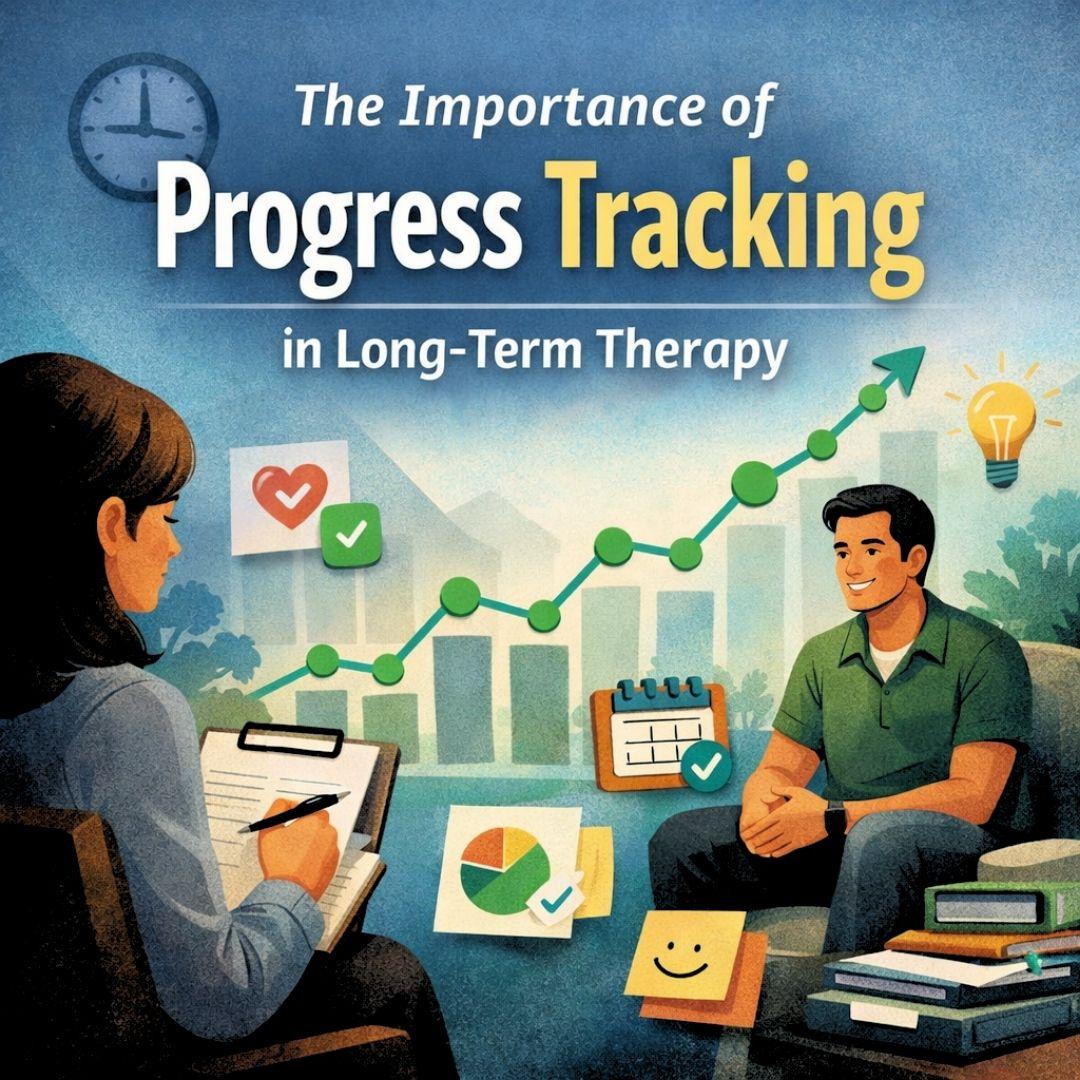
The Importance of Progress Tracking in Long-Term Therapy
Progress tracking helps make subtle therapeutic change visible over time. Learn why tracking sessions, notes, and patterns is essential in long-term therapy.
On this page
Jump to sections
The Importance of Progress Tracking in Long-Term Therapy
Long-term therapy is rarely defined by dramatic breakthroughs in every session. More often, it is shaped by subtle, gradual shifts — a new awareness, a softer emotional response, or a slightly different choice made under stress. Because these changes unfold slowly over time, progress can easily go unnoticed unless it is tracked intentionally.
This is why progress tracking is a critical component of long-term therapeutic work, both for therapists and for clients. When progress is visible and documented, therapy feels grounded and purposeful rather than repetitive or unclear. It helps everyone involved stay connected to the larger arc of the healing journey.
In this article
- Why progress can feel invisible in long-term therapy
- How session notes support continuity and outcomes
- How tracking keeps clients engaged during plateaus
- Why digital tools make progress tracking easier and more sustainable
- How tracking reduces therapist cognitive load and burnout risk
What is progress tracking in long-term therapy?
Progress tracking in long-term therapy is the intentional process of documenting emotional, behavioural, and relational changes across sessions to make gradual therapeutic progress visible over time. It helps therapists maintain clinical direction and supports clients in recognising meaningful growth, even when change feels slow.
Why can progress feel invisible in long-term therapy?
In long-term therapy, clients often revisit similar themes across many sessions. From the client’s perspective, this can feel like “talking about the same thing again and again.” Without clear markers of change, clients may assume they are stuck — even when meaningful progress is happening beneath the surface.
For therapists, holding months or years of therapeutic material purely in memory is neither realistic nor sustainable. Over time, details blur, and it becomes harder to clearly articulate how a client’s emotional regulation, insight, or coping capacity has evolved.
Progress tracking introduces clarity to what would otherwise remain intuitive, implicit, or abstract.
When progress is hard to notice, tracking creates continuity
Progress tracking creates a thread that connects sessions across time. When therapists maintain consistent session notes and records, it becomes easier to notice patterns, shifts, and repetitions.
- A reaction that once dominated sessions may gradually lose intensity
- A boundary that felt impossible may slowly begin to hold
- A pattern of avoidance may soften into curiosity
These changes often only become visible when sessions are viewed together rather than in isolation. Tracking allows therapists to hold the long view, which is especially important in relational, trauma-informed, and insight-oriented therapies where change is incremental rather than linear.
The role of session notes in long-term therapeutic outcomes
Session notes are not just administrative documentation — they are a clinical tool.
Thoughtfully written notes help therapists:
- Re-enter sessions with clarity and continuity
- Reduce cognitive load before appointments
- Track emotional, relational, and behavioural shifts over time
In long-term therapeutic work, consistent documentation is widely recognised as a best practice for ethical, effective, and sustainable care.
Over time, session notes support stronger clinical decision-making. They help therapists assess:
- Which interventions have been helpful
- Where resistance or stuckness tends to emerge
- When the therapeutic approach may need to shift
Without this record, therapy risks becoming reactive instead of intentional.
How does progress tracking help clients stay engaged in therapy?
One of the most powerful benefits of progress tracking is its effect on client motivation.
Many clients in long-term therapy struggle with the belief that they are “not improving enough.” When therapists can reflect specific changes — grounded in past sessions, behaviours, or emotional responses — clients begin to see their growth more clearly.
This is especially important during plateaus or difficult phases of therapy.
“Six months ago, this felt unbearable. Now you’re noticing it sooner — and responding differently.”
These reflections help clients remain engaged with the process rather than questioning its value or disengaging prematurely.
How does progress tracking guide therapeutic direction?
Long-term therapy requires flexibility. What supported a client earlier in their journey may no longer be effective later.
Progress tracking helps therapists:
- Identify emotional patterns across sessions
- Measure changes in coping and regulation
- Adjust therapeutic direction intentionally
Rather than relying solely on memory or intuition, therapists can refer to session histories and progress markers to guide their clinical choices with greater confidence.
Digital tools and the evolution of progress tracking in therapy
As therapy practices grow, manual tracking becomes increasingly difficult to sustain. Paper notes, scattered documents, or disconnected systems make it harder to see patterns over time.
This is why many mental health professionals are moving toward secure digital tools for therapy practices.
Platforms like therapy practice management software allow therapists to:
- Maintain structured session histories
- Store private clinical notes securely
- Track engagement and care continuity in one place
When used thoughtfully, digital systems do not change how therapy is practiced — they simply make progress tracking more reliable and less mentally demanding.
The value is not technology itself, but the clarity it provides.
Visual: Digital tools for therapy

How progress tracking protects against therapist burnout
Holding long-term therapeutic work without structure can be emotionally exhausting. When therapists are required to remember everything or reconstruct client journeys from memory, cognitive and emotional load increases significantly.
Progress tracking reduces this burden.
Clear records allow therapists to:
- Trust the therapeutic process
- Stay present in sessions
- Preserve emotional availability
This mental relief supports sustainable, ethical, and compassionate practice over the long term.
Long-term therapy is not linear — and tracking helps normalize that
Progress tracking does not imply constant improvement. One of its greatest strengths is showing that setbacks, pauses, and repetitions are part of genuine growth.
When viewed across time, fluctuations begin to make sense rather than feel discouraging. This perspective helps both therapists and clients maintain realistic expectations and self-compassion.
Healing is layered, complex, and deeply human — and progress tracking helps honour that reality.
Key takeaway for therapists
Progress tracking in long-term therapy is not about measuring outcomes rigidly. It is about preserving continuity, reducing cognitive load, and making subtle but meaningful change visible over time — for both therapists and clients.
Closing thoughts
Progress tracking is not about measuring success in rigid terms. It is about staying connected to the therapeutic journey — noticing what has shifted, what remains tender, and what is slowly transforming.
Whether supported through careful note-taking or secure digital systems like LifeHetu, progress tracking ensures that therapy does not lose its direction over time.
When progress is visible, therapy feels intentional.
And when therapy feels intentional, both clients and therapists move forward with greater trust and clarity.
Frequently Asked Questions (FAQs)
What is progress tracking in long-term therapy?
Progress tracking is the intentional documentation of emotional, behavioural, relational, and cognitive changes over time to understand how a client evolves throughout therapy.
Why is progress tracking important in long-term therapy?
Because change in long-term therapy is gradual, progress tracking helps make subtle improvements visible, keeps therapy purposeful, and supports informed clinical decision-making.
How does progress tracking help clients?
It helps clients recognise growth they may overlook, stay motivated during plateaus, and feel reassured that therapy is meaningful even when progress feels slow.
Are session notes only for documentation?
No. Session notes are a clinical tool that supports continuity, reflection, and intentional therapeutic planning over time.
How do digital tools improve progress tracking in therapy?
Secure digital platforms centralise session histories and notes, making long-term progress easier to review while reducing cognitive load.
Does progress tracking mean therapy must be linear?
Not at all. Progress tracking helps normalise setbacks and fluctuations by placing them within the broader context of long-term growth.
About the author
LifeHetu Editorial Team (Shubham Srivastava) writes practical, therapist-first content on practice systems, documentation, engagement, and sustainable workflows—built for real-world mental health care.
On this page
Jump to sections
About the author
Digital Marketing Specialist
Shubham Srivastava is a digital marketing specialist with 3+ years of experience in the mental healthcare domain. He blends SEO expertise, social media strategy and creative storytelling to help mental health brands grow their digital presence.
Related Reads. Similar Blogs to Check Out.