Founder, LifeHetu
Puneet Pandey is the founder of LifeHetu. He has worked alongside psychologists since 2022 while building the platform, helping practitioners grow their online presence with digital tools and care solutions.
10 Jan 26 07:30 pm
Secure Ways to Store Therapy Client Information
Learn secure, ethical ways to store therapy client information. Understand risks, digital tools, and best practices for protecting sensitive client data.
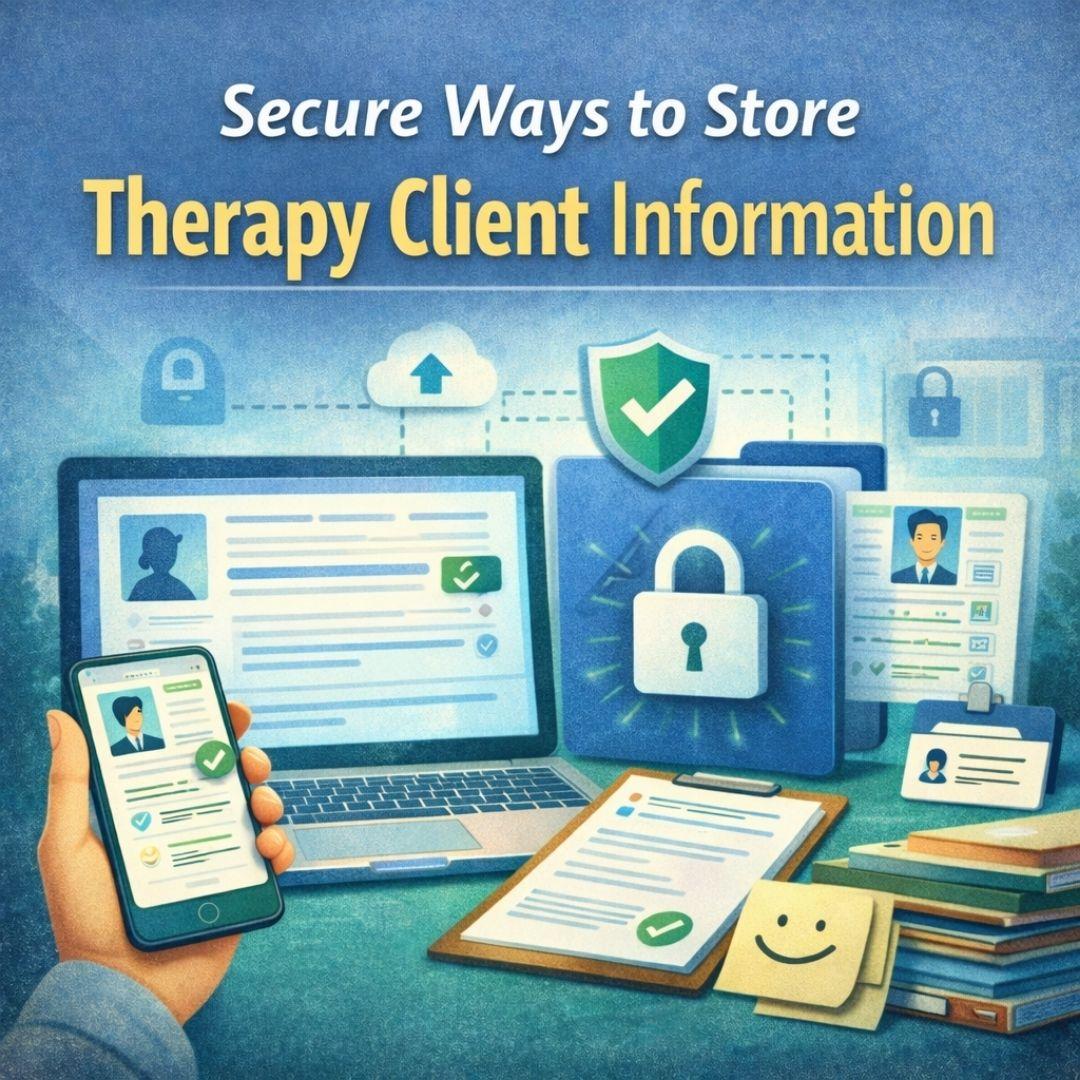
Secure Ways to Store Therapy Client Information
Every therapy session carries something fragile. Stories, emotions, fears, memories, and moments of vulnerability that clients trust you with. Long after the session ends, that trust continues in another form: how safely their information is stored.
For therapists, secure data storage is not just a technical concern. It is an ethical responsibility and a core part of professional care.
As a practice grows, session notes, intake forms, assessments, contact details, and progress records accumulate quickly. Without a clear system, this information can become scattered across notebooks, devices, emails, or shared folders — creating risk, confusion, and stress.
Understanding secure ways to store therapy client information is essential for protecting clients, protecting your practice, and protecting your own peace of mind.
What does secure storage of therapy client information mean?
Secure storage of therapy client information refers to using organised, protected systems that ensure confidentiality, prevent unauthorised access, and reduce the risk of data loss across all client records — both physical and digital.
Secure storage supports ethical care, legal compliance, and long-term sustainability of a therapy practice.
Why does client data security matter more than we think?
When clients share personal information in therapy, they are not just sharing facts. They are sharing their identity, trauma history, relationships, and inner world.
Data breaches are not always dramatic. Often, they occur through:
- A misplaced notebook
- An unlocked laptop
- A shared document accessed by the wrong person
Even small lapses can cause deep harm, break trust, and lead to serious ethical or legal consequences.
Secure storage is not about fear. It is about respect. It signals to clients that their privacy is taken seriously and that safety extends beyond the therapy room.
The hidden risks of informal storage methods
Many therapists rely on informal systems because they feel manageable at first:
- Writing notes in physical notebooks
- Saving files on personal drives
- Sharing forms via messaging apps
Over time, these methods create problems.
Physical files can be lost or damaged. Personal devices can be accessed by others. Unstructured folders increase the risk of mixing up client records. The mental effort required to remember where everything is stored grows steadily.
The risk is not just data loss — it is therapist fatigue.
What does secure storage look like in daily practice?
Secure client information storage does not require complex technology. At its core, it includes three principles:
- Controlled access: Only authorised individuals can view sensitive data
- Clear organisation: Each client’s records live in one structured place
- Consistent protection: Encryption, password protection, and secure backups
When these are in place, therapists no longer rely on memory or scattered systems. Information is accessible when needed and protected at all other times.
Why moving from paper to digital systems matters
Paper-based systems feel familiar, but they are difficult to secure fully, hard to search, and nearly impossible to back up reliably.
Digital systems — when designed for mental health work — offer:
- Encrypted storage
- Role-based access
- Automatic backups
- Structured client profiles
The goal is not simply going digital, but choosing secure digital tools for therapy practices rather than generic storage platforms.
How do digital tools support secure therapy data storage?
Mental health–specific platforms are built to address confidentiality, organisation, and ethical responsibility.
Tools like therapy practice management software help therapists:
- Store session notes securely
- Maintain structured client histories
- Protect sensitive information with encryption
- Reduce administrative risk
Platforms such as LifeHetu centralise therapy client information in one secure system without disrupting the therapeutic process.
The real value is not the tool itself, but the sense of safety and order it creates.
Balancing accessibility with confidentiality
Therapists need quick access to information during sessions, while ensuring that access remains controlled.
Secure systems strike this balance by allowing therapists to:
- Review notes efficiently
- Access histories when clinically relevant
- Prevent unauthorised viewing or sharing
This reduces stress and supports presence. When therapists trust their systems, they can focus fully on the client in front of them.
Secure storage as therapist self-care
Secure data storage is often framed as compliance, but it is also a form of self-care.
When systems are organised and protected:
- Mental load decreases
- Anxiety about data loss reduces
- Focus and emotional availability improve
Therapy already requires emotional regulation. Removing background worry about information safety allows therapists to work more sustainably.
Building trust through responsible systems
Clients may never ask how their information is stored, but they feel the impact of your systems.
Consistency, organisation, and calm confidence communicate safety. Secure storage becomes part of the therapeutic container itself — quietly reinforcing trust over time.
Key takeaway for therapists
Secure storage of therapy client information is not optional. It is a foundational part of ethical, effective practice that protects clients, supports therapists, and strengthens long-term trust.
Closing thoughts
The way you store client information reflects how seriously you hold the responsibility entrusted to you.
By choosing secure, organised, and thoughtful systems, therapists protect their clients, their work, and their own mental space — allowing the therapeutic relationship to flourish without distraction.
Frequently Asked Questions (FAQs)
What is the safest way to store therapy client information?
The safest approach is using secure, encrypted digital systems designed specifically for therapy practices, with controlled access and regular backups.
Are paper records safe for therapy client data?
Paper records carry higher risk due to loss, damage, and limited access control. Digital systems offer stronger security when chosen carefully.
Why is confidentiality so important in therapy data storage?
Client information includes deeply personal material. Mishandling it can cause harm, break trust, and create ethical and legal consequences.
Do therapists need special software to store client information securely?
While not legally required everywhere, therapy-specific platforms provide far better protection and organisation than generic storage tools.
How do digital tools reduce therapist stress?
Secure systems reduce mental load by keeping information organised, accessible, and protected — freeing therapists to focus on clinical work.
About the author
Founder, LifeHetu
Puneet Pandey is the founder of LifeHetu. He has worked alongside psychologists since 2022 while building the platform, helping practitioners grow their online presence with digital tools and care solutions.
Related Reads. Similar Blogs to Check Out.