Founder, LifeHetu
Puneet Pandey is the founder of LifeHetu. He has worked alongside psychologists since 2022 while building the platform, helping practitioners grow their online presence with digital tools and care solutions.
10 Feb 26 11:50 am
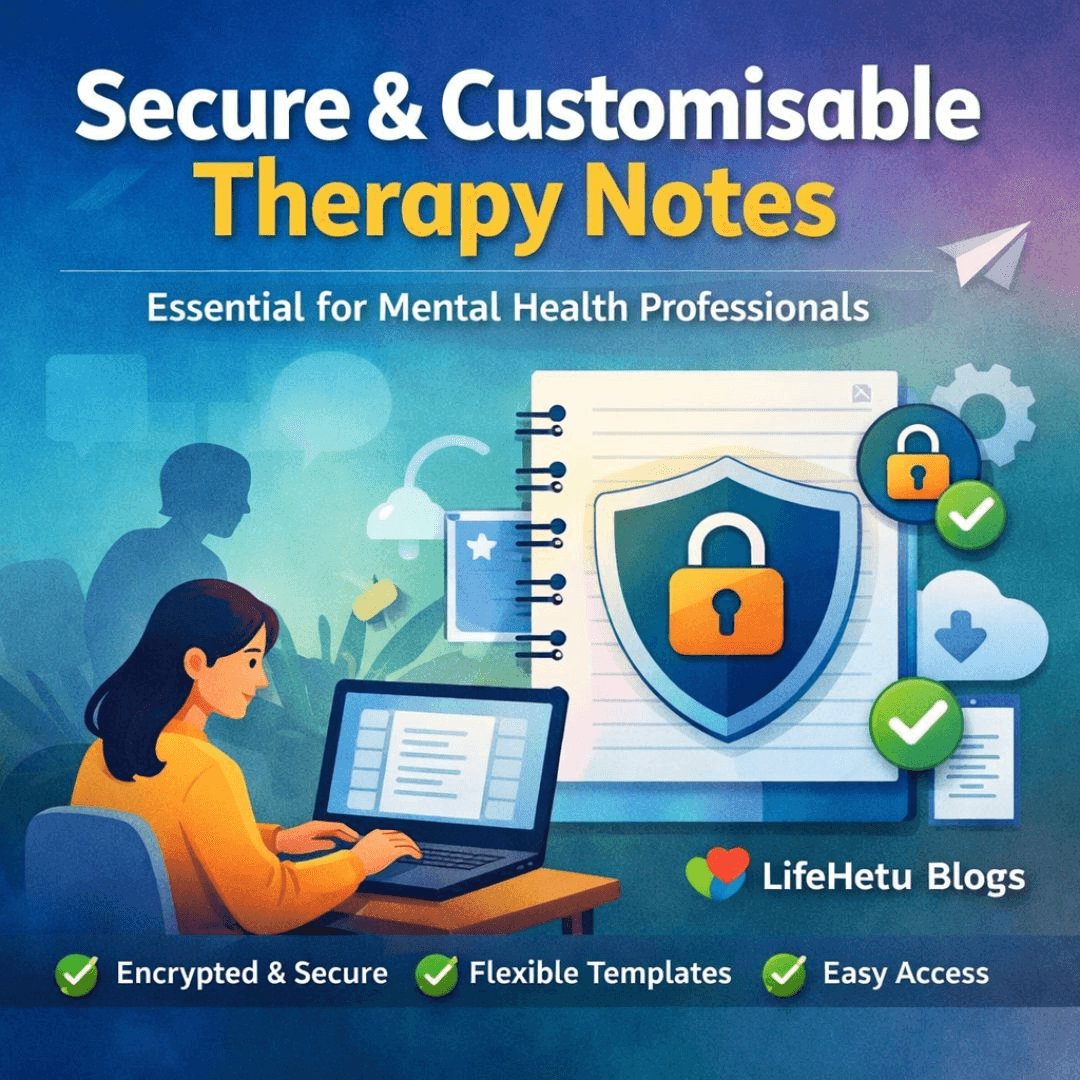
Secure and Customisable Therapy Notes: Why Mental Health Professionals Need the Right Documentation System
Secure, encrypted therapy notes with customisable templates for therapists and mental health professionals. Improve documentation, protect confidentiality, and maintain continuity of care.
On this page
Jump to sections
In mental healthcare, much of the real work happens quietly. Conversations unfold in sessions, but what supports those conversations over time are the therapy notes, reflections, and observations recorded along the way.
Secure therapy notes are not just administrative records. They form the backbone of continuity, risk management, and long-term client care.
At LifeHetu, while building digital tools for therapists, psychologists, and counsellors, we’ve seen how documentation plays a far more significant role than it’s often given credit for. The challenge isn’t writing notes. It’s managing them in a way that feels secure, organised, and practical during real sessions!
What Are Secure Therapy Notes?
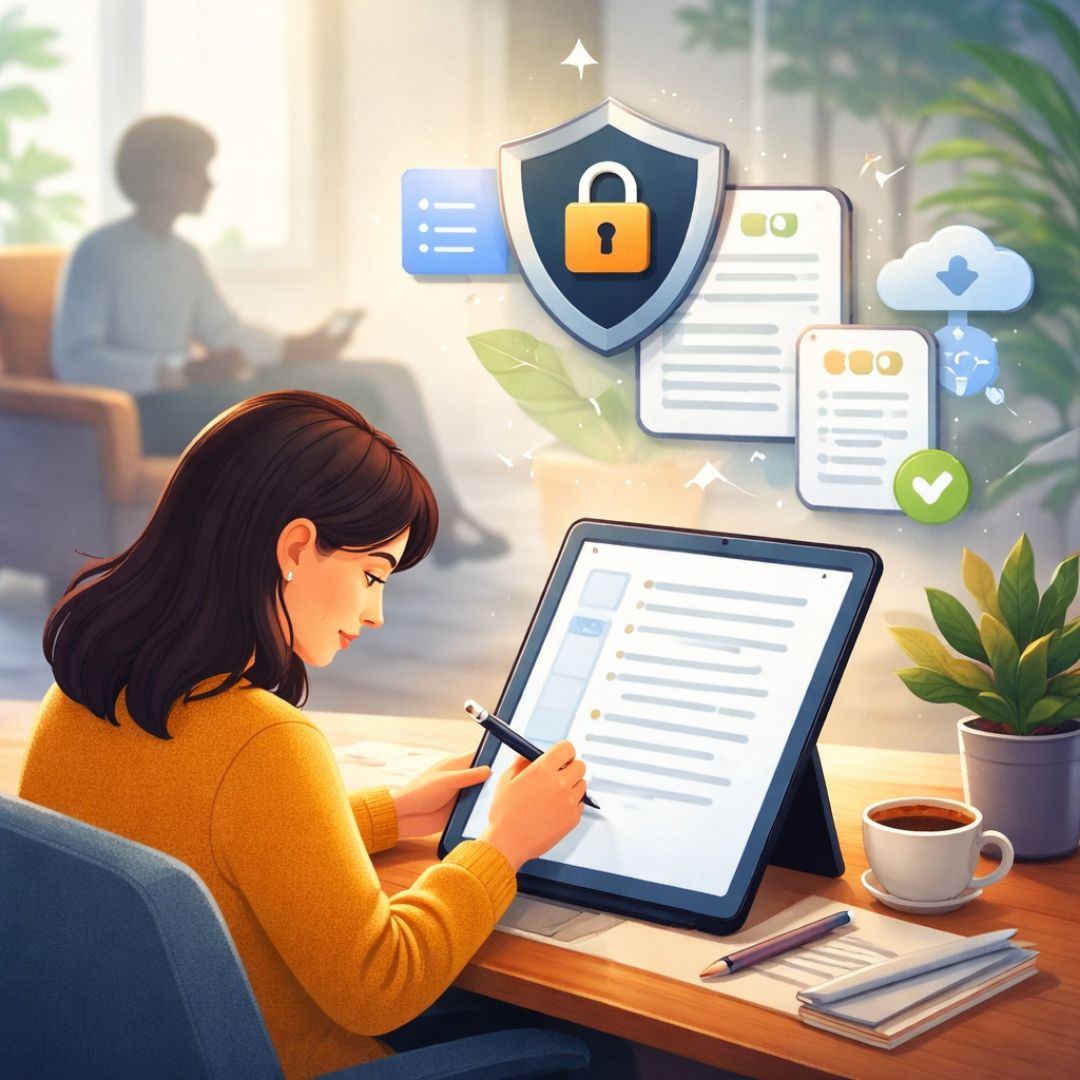
Secure therapy notes are digital session records protected by encryption, strict access controls, and confidential storage systems designed specifically for mental health documentation.
A modern therapy documentation system should:
- Protect sensitive client information
- Allow flexible note formats
- Provide organised session history
- Be accessible without disrupting session flow
- Support compliance and confidentiality standards
When these fundamentals are in place, documentation becomes an asset rather than a burden.
The Sensitive Nature of Mental Health Documentation
Therapy notes differ significantly from other professional records.
They often contain:
- Emotional states and psychological assessments
- Family histories and relationship dynamics
- Trauma disclosures
- Risk indicators and safety planning
- Personal reflections and behavioural patterns
Because of this, security in mental healthcare is not optional. It is foundational.
When therapy notes are stored in encrypted systems with role-based access control, practitioners can focus fully on their clients instead of worrying about data vulnerability. Security becomes invisible — as it should be.
In mental healthcare, confidentiality is not a feature to highlight. It is a responsibility to uphold.
Why One-Size-Fits-All Note Templates Don’t Work
Therapeutic approaches vary widely. A cognitive behavioural therapist may prefer structured progress tracking. A psychodynamic therapist may rely more on narrative reflections. A trauma-informed practitioner may need specific assessment markers.
Yet many documentation systems force therapists into rigid formats.
This creates friction.
Customisable therapy note templates solve this by allowing professionals to shape documentation around their clinical approach. Instead of adjusting their thinking to fit a system, the system adapts to them.
When documentation aligns with clinical style:
- Notes become more consistent
- Administrative time reduces
- Post-session fatigue decreases
- Documentation quality improves
Flexibility encourages better habits.
Accessing Notes Without Breaking Session Flow
Presence is central to effective therapy.
Switching between notebooks, disconnected apps, or scattered tabs can interrupt the therapeutic process. Even small disruptions affect attention and emotional continuity.
A web-based, mobile-friendly therapy documentation platform allows therapists to:
- Quickly review past session notes
- Check treatment goals and progress
- Add reflections in real time
- Maintain continuity during online sessions
This seamless access becomes especially important in virtual therapy, where attention is already divided across screens.
When documentation integrates naturally into workflow, it supports care instead of interrupting it.
Organisation Supports Long-Term Care
Mental health progress is rarely linear. Patterns emerge gradually — recurring themes, behavioural cycles, emotional triggers, or relational dynamics.
An organised session history helps therapists:
- Identify long-term patterns
- Track improvement or stagnation
- Revisit earlier interventions
- Adjust care plans effectively
- Support returning clients after breaks
Clear documentation preserves perspective. In long-term therapy, perspective is everything!
Privacy Builds Trust — Even When It’s Invisible
Clients may never ask about encryption standards or access controls. But they assume their information is handled with the highest level of confidentiality.
When therapists feel confident in their documentation system, that confidence subtly shapes the therapeutic environment. There is less background stress, less hesitation, and more psychological safety.
Secure therapy notes protect not just data, but trust.
Key Features Every Therapy Documentation System Should Include
If you are evaluating a mental health documentation platform, look for:
- End-to-end encryption
- Secure cloud storage
- Role-based access control
- Customisable note templates
- Structured and narrative flexibility
- Clear session history view
- Mobile and web accessibility
- Simple, intuitive interface
Complex systems often reduce consistency. Simplicity increases adoption.
What We’ve Learned from Working with Mental Health Professionals
Across different practice sizes — individual practitioners, group practices, and counselling centres — one insight stands out:
When documentation feels secure, flexible, and accessible, therapists engage with it more thoughtfully.
They rely less on memory.
They document more consistently.
They feel less burdened after sessions.
The system does not change how they practice. It supports their practice quietly in the background.
At LifeHetu, we’ve built our private notes system around these principles — secure by default, flexible by design, and accessible when it matters most.
Final Thoughts
Secure and customisable therapy notes are not about better software. They are about protecting confidentiality, preserving continuity, and supporting presence in mental healthcare.
Mental health professionals do not want complicated systems. They want documentation tools that:
- Respect client privacy
- Adapt to their working style
- Stay accessible during real sessions
- Reduce administrative friction
When those fundamentals are in place, documentation stops feeling like an obligation and starts becoming a quiet support to the therapeutic process.
And in mental healthcare, that balance makes all the difference.
About the Author
Puneet is the founder of LifeHetu Technology, a platform built specifically for mental healthcare professionals to manage appointments, documentation, payments, and client engagement securely. He works closely with therapists, psychologists, and counselling centres to simplify digital practice management while preserving confidentiality and clinical integrity.
FAQs
Are digital therapy notes secure?
Yes, when stored in a properly designed documentation system, digital therapy notes can be highly secure. Secure platforms use encryption, access controls, and protected cloud storage to ensure that only authorised individuals can access sensitive client information. The level of security depends on the system being used.What makes a therapy notes system secure?
A secure therapy notes system typically includes:
- End-to-end encryption
- Role-based access controls
- Secure cloud storage
- Data backup and recovery systems
- Confidential access protocols
These features help protect sensitive mental health documentation from unauthorised access.
Why are customisable therapy note templates important?
Therapists use different clinical approaches, including CBT, psychodynamic therapy, trauma-informed care, and integrative models. Customisable note templates allow professionals to structure documentation according to their preferred format, whether structured, narrative, or hybrid.
This flexibility improves efficiency and documentation consistency.Is digital documentation better than paper notes for therapists?
Digital documentation offers several advantages over paper notes:
- Improved security through encryption
- Easier organisation and searchability
- Access across devices
- Reduced risk of physical loss or damage
- Faster retrieval of session history
However, security depends on using a reliable, secure platform.
How do secure therapy notes improve client trust?
Confidentiality is foundational in mental healthcare. When therapists use secure documentation systems, they reduce the risk of data exposure and reinforce ethical responsibility. Even if clients do not ask about security protocols, knowing that their information is protected strengthens the therapeutic relationship.What should therapists look for in a mental health documentation platform?
When evaluating a therapy documentation system, professionals should look for:
- Strong encryption and security standards
- Customisable note formats
- Easy session history tracking
- Mobile and web accessibility
- Simple, intuitive interface
A system should support clinical work without increasing administrative burden.
On this page
Jump to sections
About the author
Founder, LifeHetu
Puneet Pandey is the founder of LifeHetu. He has worked alongside psychologists since 2022 while building the platform, helping practitioners grow their online presence with digital tools and care solutions.
Related Reads. Similar Blogs to Check Out.