Child & Adolescent Counselling
Explore mental health professionals who work with children and teenagers, read about their qualifications and approach, and book an available online session through LifeHetu.
Families reach out for many different reasons — a child who has become withdrawn or unusually angry, a teenager under exam pressure, difficulty at school, friendships that have turned painful, a bereavement, a separation, or simply a sense that something has changed and is not settling. As a parent or guardian, you make the booking; what the sessions cover is worked out with the practitioner you choose.

Practitioners Offering Child & Adolescent Counselling
Independent professionals who offer child counselling through LifeHetu. Each one sets their own approach, the age groups they work with, their availability and their fee.

Mrs Mahalakshmi Rajagopal
28 years in practice
MSW, MSc
Online session: Video
Languages: English, Hindi, Tamil, Kannada, Telugu, Malayalam
Fee: ₹1800 per session

Ms Sonali Sikdar
16 years in practice
Online session: Video
Languages: English, Hindi, Marathi
Fee: ₹1500 per session

Dr. S.S. Saini
10 years in practice
M.Phil (Clinical Psychology), Ph.D (Clinical Psychology),PGDCBM with 10 years experience
Online session: Video · Phone Call
Languages: English, Hindi, Punjabi
Fee: ₹1500 per session
Fees and availability shown come from each practitioner’s own current settings. Confirm with the practitioner that they work with your child’s age group before you book.
Choosing a Practitioner for Your Child
There is no way to know in advance who your child will work well with, and reasonable parents choose differently. Reading a few profiles is usually the most useful thing you can do. Things worth looking at:
Your child’s age group
Working with a seven-year-old and working with a sixteen-year-old are different skills. Confirm the practitioner sees children of your child’s age.
Qualifications
The degree they hold and the institution that issued it, as they have provided it.
Years in practice
How long they have been working, calculated from the year they started.
How they describe their work
Each profile carries the practitioner’s own account of how they practise — worth reading closely on a page about children.
Language
The languages they offer sessions in. For a child, the language they are most comfortable in often matters more than for an adult.
How they involve parents
Whether they work with the child alone, with you, or both. Ask before you book.
Fee
The current fee for child counselling with that practitioner, shown before you book.
Availability
When they actually have time open, which you can see before committing.
LifeHetu does not match you to a practitioner, assess your child’s needs, verify a specialism in working with children, or recommend one person over another. Read the qualifications and each practitioner’s own description of their work on their profile, and decide for yourself. If you need help using the site or understanding what you are looking at, you can contact us — that is navigation help, not clinical advice.
What Is Child & Adolescent Counselling?
Child and adolescent counselling is a structured conversation between a young person and a qualified mental health professional trained to work with that age group. The aim is to give the child or teenager a space to express what is going on and to be helped to make sense of it.
It usually looks different from counselling with an adult. Younger children often express themselves more readily through play, drawing or activity than through sustained conversation, and a practitioner may work in whatever way suits the child’s age and stage. Older teenagers may want something closer to an adult conversation, and may want it to be their own.
There is no single method. What happens in a session depends on the practitioner’s training and professional scope, the approach they work in, the young person’s age, and what the family has come with. Counselling is not a guaranteed outcome and is not the right fit for every child or every difficulty — some families find a few conversations enough, others continue over a longer period, and some find a different kind of support suits their child better.
Who These Sessions Are For, and Who Makes the Booking
Practitioners set the age groups they work with themselves, and those ranges differ — someone who works with young children may not work with older teenagers, and the reverse is just as common. LifeHetu does not publish a single age range on their behalf. The practical way to check is to read how a practitioner describes their own work on their profile, and to confirm directly with them that they see children of your child’s age before you book.
A parent or legal guardian makes the booking. The booking form collects the contact details of the adult making it — a name, an email address and a WhatsApp number — so the confirmation and session details come to you. There is no separate field for your child’s details; who the sessions are for, and any background the practitioner should know, is something you give them directly.
Where parents are separated or a guardian is acting for a child, arranging consent between the adults involved is a matter for the family and the practitioner. LifeHetu does not verify guardianship or mediate that arrangement.
What Families Bring to Counselling
There is no threshold a child has to cross before it is reasonable to talk to someone. Families commonly come with:
Worry or anxiousness — about school, separation, health, or without an obvious cause
Low mood, withdrawal, or losing interest in things they used to enjoy
Anger, frequent meltdowns, or behaviour that has become difficult to manage at home
Exam stress and academic pressure
Difficulty at school — refusing to go, trouble concentrating, or falling behind
Friendship difficulties, social anxiety, or bullying
Bereavement, or the illness of someone close
Family changes — a separation, a move, a new sibling, a parent working away
Confidence, self-esteem, or harsh self-criticism
Sleep or appetite changes that have persisted
Screen time, gaming or online life becoming a source of conflict
Adjusting after a frightening or distressing experience
This page provides general information. It does not diagnose anything, and reading a list like this is not an assessment of your child. Children behave differently at different ages and during difficult periods, and many of these things resolve on their own. If you are unsure whether counselling fits your situation, that is a reasonable thing to raise in a first conversation with a practitioner.
Related Pages
If one of these is closer to what is going on, these pages go into more detail. They are written about the difficulty in general rather than about children specifically.
What to Expect from an Online Session
Sessions booked through LifeHetu are online. You and your child connect remotely with the practitioner you chose at the time you booked.
A first conversation often covers what brought you, some background about your child and family, and what you are hoping for. Many practitioners will describe how they work with young people, whether they want to see your child alone or with you present, and what the sessions might look like — and it is entirely reasonable to ask, if they do not.
Beyond that, sessions vary a great deal by age. What is offered is set by the practitioner, not by LifeHetu, and it is worth asking what they will need from you between sessions, if anything.
A quiet room, a device the child is comfortable using, a stable connection and an uninterrupted stretch of time all help. For younger children in particular, an adult nearby to settle them at the start is often useful, even where the practitioner then wants to speak with the child alone.
How Parents and Caregivers Are Involved
How much a parent takes part depends on the child’s age and on how the practitioner works. With younger children, caregivers are often closely involved, and some practitioners work substantially with the parents rather than only with the child. With adolescents, practitioners frequently want part or all of the session to be the young person’s own.
That creates a real tension worth understanding before you start. A teenager who believes everything will be repeated at home may not say much that matters; a parent who is told nothing cannot support what is happening. Practitioners handle this in different ways — many agree at the outset what will be shared with you, what will stay between them and your child, and the circumstances in which they would tell you something regardless, such as where they believe a young person is at risk of serious harm.
Professional confidentiality sits with the practitioner and their professional obligations, not with LifeHetu, and those obligations have recognised limits. Ask your practitioner in the first conversation how they handle confidentiality with a child of your child’s age, and what they will and will not pass on. Separately, how LifeHetu handles the data you give the platform is covered in our privacy policy.
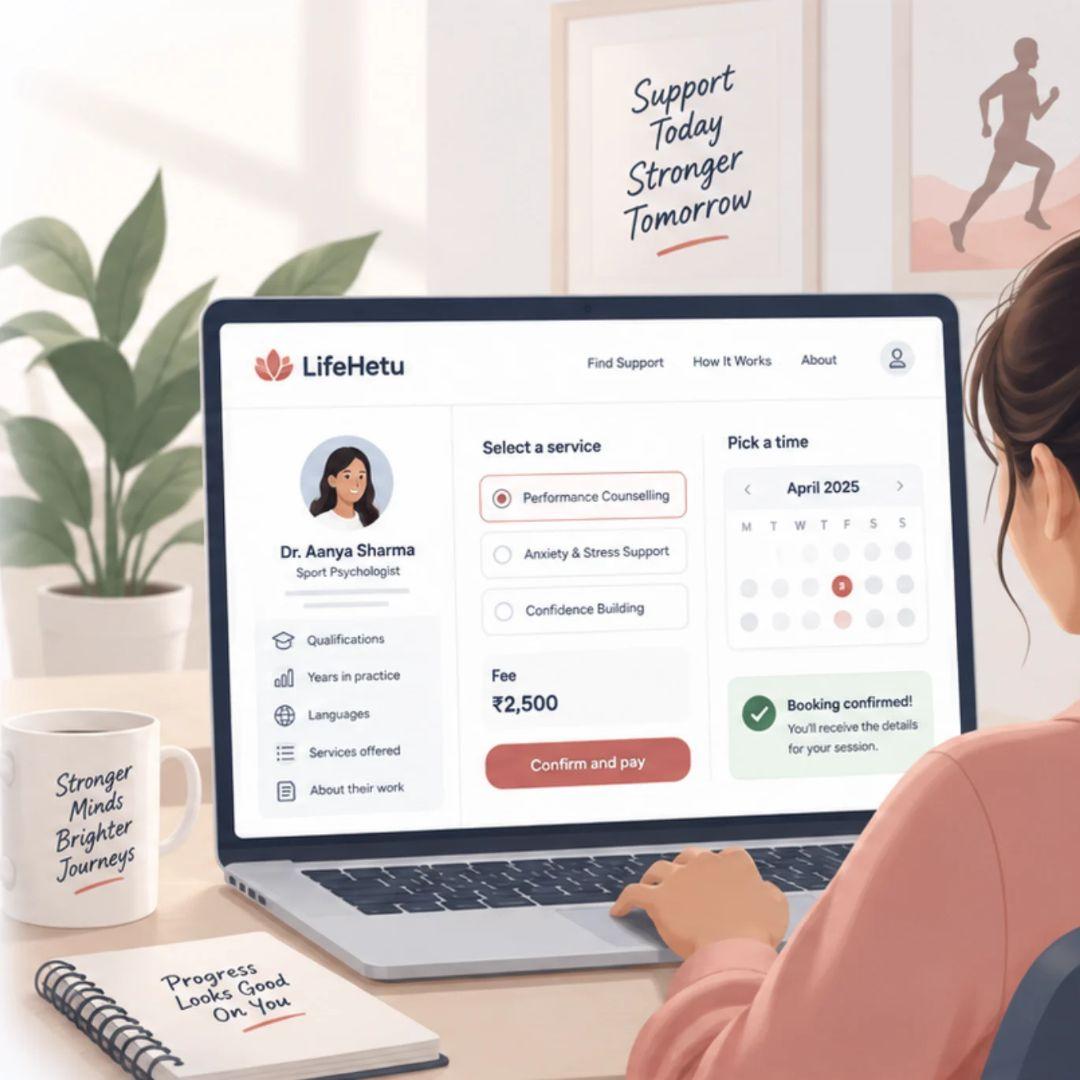
How Online Booking Through LifeHetu Works
Explore practitioners
Browse the professionals who offer child and adolescent counselling. Nothing is behind a sign-up.
Read the profile
Qualifications, years in practice, languages, the services they offer and how they describe their own work are on each profile.
Choose the service
Pick child counselling from the services that practitioner offers. The fee is shown for that service.
Pick a time
Availability comes live from the practitioner’s own calendar, so the times shown are the ones open — useful when you are working around school hours.
Confirm and pay
Complete the booking as the parent or guardian, and you receive the details for the session.
Online Sessions, and Meeting in Person Later
Sessions booked through LifeHetu are online. If you would like to explore meeting a practitioner in person in the future, you can discuss that possibility directly with them after connecting. Whether that is possible depends on the practitioner’s own location, availability and working arrangements — it is decided between you and them, and it is not arranged, scheduled or managed by LifeHetu.
When Your Child May Need Different or Urgent Support
Counselling booked through LifeHetu is a scheduled conversation with a practitioner. It is not an emergency service and cannot help in a crisis, and it does not replace psychiatric assessment, paediatric or medical evaluation, an educational assessment, or advice about medication where those are needed. Some difficulties in childhood need one of those first, and a practitioner may tell you so.
If your child is having thoughts of self-harm or suicide, or anyone is in immediate danger, go to the nearest hospital or emergency room, where you can see a psychiatrist, counsellor or therapist in person. Do not wait for a scheduled session. Staying with your child, and involving another adult who can be with you, helps.
Child & Adolescent Counselling Questions
It is a structured conversation between a young person and a qualified mental health professional trained to work with that age group. It usually looks different from counselling with an adult — younger children often express themselves through play, drawing or activity rather than sustained conversation, while older teenagers may want something closer to an adult conversation. What happens depends on the practitioner’s training and approach, your child’s age, and what the family has come with.
Practitioners set that themselves, and the ranges differ — someone who works with young children may not work with older teenagers, and the reverse is just as common. LifeHetu does not publish a single age range on their behalf. Read how a practitioner describes their own work on their profile, and confirm directly with them that they see children of your child’s age before booking.
The practitioner you choose. The professionals listed on LifeHetu practise independently and are not employed by LifeHetu — LifeHetu lists them, lets you read their profiles, and handles the booking and payment. LifeHetu does not verify that a practitioner specialises in working with children, so review each profile for qualifications, years in practice and how they describe their own practice, and ask them directly.
A parent or legal guardian makes the booking. The booking form collects the contact details of the adult making it — a name, an email address and a WhatsApp number — so the confirmation and session details come to you. There is no separate field for your child’s details; who the sessions are for is something you tell the practitioner directly.
Yes. LifeHetu currently enables booking for online sessions only. You and your child connect remotely with the practitioner at the time you booked. If you would like to explore meeting in person later, that is something to discuss directly with the practitioner — LifeHetu does not currently manage in-person session booking.
That is set by the practitioner, not by LifeHetu, and it depends a great deal on your child’s age. With younger children, caregivers are often closely involved. With adolescents, practitioners frequently want part or all of the session to be the young person’s own, because a teenager who expects everything to be repeated at home may not say much that matters. Many practitioners agree at the outset what will be shared with you, what will stay between them and your child, and when they would tell you something regardless — such as where they believe a young person is at risk of serious harm. Ask in the first conversation.
It depends on your child’s age and on how the practitioner works. Some want a caregiver present, some want to see the child alone, and some do both at different points. Ask the practitioner what they prefer. For younger children, an adult nearby to settle them at the start is often useful even where the practitioner then speaks with the child alone.
There is no threshold your child has to cross first, and this page cannot tell you — nothing here is an assessment of your child. Children behave differently at different ages and during difficult periods, and many things resolve on their own. If something has persisted, is affecting school, sleep, eating or friendships, or you simply cannot settle your own concern, that is a reasonable thing to bring to a first conversation with a practitioner, including the question of whether counselling is the right step at all.
Read a few profiles and compare qualifications, years in practice, how each person describes their work, languages, the current fee and when they have time available — and check they work with your child’s age group. LifeHetu does not match you to a practitioner or assess which one suits your child. It is also reasonable to change your mind after a first conversation; fit matters more with a young person than with an adult, and a child who does not warm to one practitioner may do fine with another.
Both are on the practitioner’s profile. Fees are set by each practitioner and differ between practitioners and between the services they offer, so the fee shown is the one for child counselling with that person. Availability is drawn live from their own calendar.
There is no set number, and anyone who gives you one without knowing your child is guessing. It depends on what you have come with, what you are working towards, and how the practitioner works. Some families find a few conversations enough; others continue over a longer period.
Sources & References
- World Health Organization — Adolescent mental healthThat mental health difficulties commonly begin in adolescence and that support needs differ across that age range.
- World Health Organization — Mental health: strengthening our responseThat mental health exists on a continuum, and that psychological support and medical or psychiatric treatment are distinct.
- UNICEF — The State of the World’s Children 2021: On My MindContext on children’s and adolescents’ mental health, including the role of families and schools.
- American Psychological Association — Understanding psychotherapy and how it worksThat therapeutic approaches vary by practitioner training, and what a first session typically involves.
- NIMHANS — National Institute of Mental Health and NeurosciencesIndian context for mental health services, including child and adolescent psychiatry, and where in-person clinical care is accessed.
Find a Practitioner for Your Child
Explore practitioner profiles and book an available online session through LifeHetu.