Digital Marketing Specialist
Shubham Srivastava is a digital marketing specialist with 3+ years of experience in the mental healthcare domain. He blends SEO expertise, social media strategy and creative storytelling to help mental health brands grow their digital presence.
16 Feb 26 06:59 pm
Why an Omnichannel Messaging Inbox Is Essential for Mental Health Practices
Manage Instagram and website enquiries in one place. Discover how LifeHetu CRM helps mental health practices streamline communication and appointments.
On this page
Jump to sections
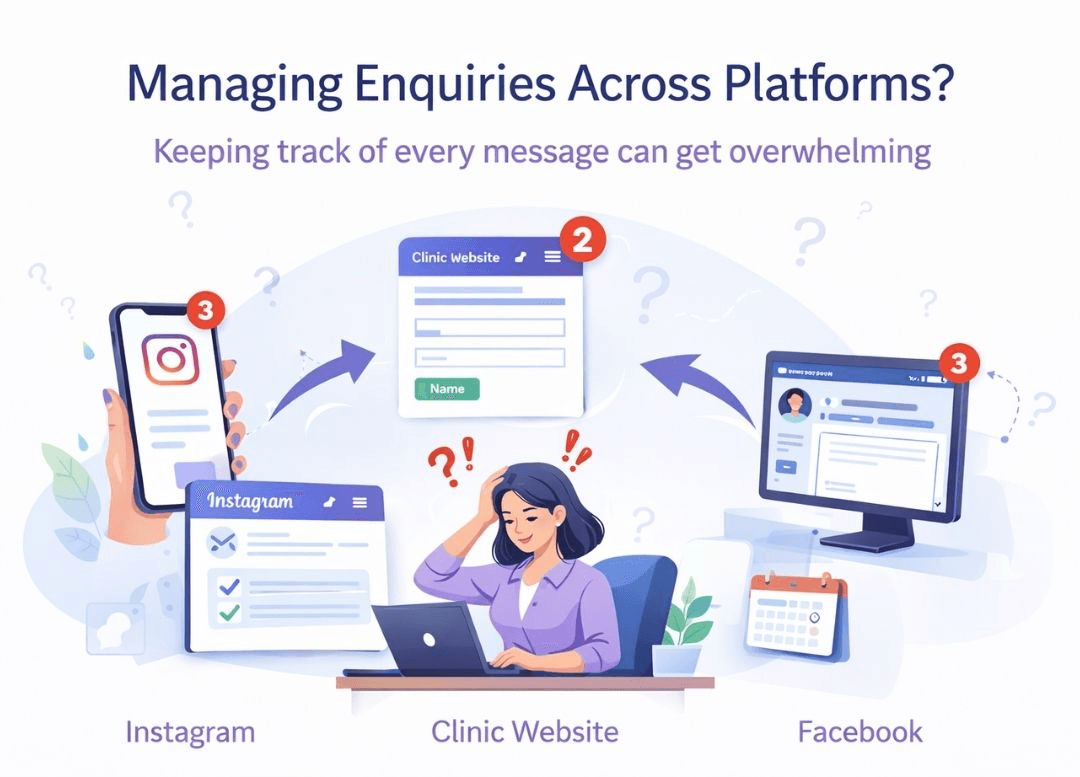
Running a mental health practice today means being available across multiple platforms. Clients don’t reach out from just one place anymore. Some send a message on Instagram after seeing a post. Others contact your clinic through Facebook. Many visit your website and fill out an enquiry form.
For psychologists and counsellors, this creates a real operational challenge: how do you manage Instagram and website enquiries without constantly switching between apps?
This is where a dedicated CRM for mental health practices becomes essential.
The Real Problem: Messages Are Scattered
Most mental health professionals manage communication manually.
Instagram DMs sit in one inbox.
Facebook page messages appear somewhere else.
Website enquiries land in email.
It doesn’t feel overwhelming at first. But as enquiries grow, keeping track becomes difficult. Messages get buried. Notifications are missed. A follow-up that was meant to happen tomorrow gets forgotten next week.
For a therapy practice, that’s not just a workflow issue — it’s a missed opportunity to support someone who may already feel hesitant about reaching out.
Why This Happens So Often
Many psychologists operate both personal and professional social media accounts. The personal account is usually logged in and checked frequently. The clinic account, however, may only be reviewed occasionally.
The same thing happens on Facebook. Messages sent to a personal profile are easy to notice. Messages sent to a clinic page are less visible and require deliberate checking.
Website enquiries add another layer. They typically arrive via email, where they compete with everything else — reports, vendor communication, reminders, and spam.
When enquiries are split across platforms, consistency suffers. Not because practitioners are careless, but because the system itself isn’t built for centralised communication.
What an Omnichannel Inbox Changes
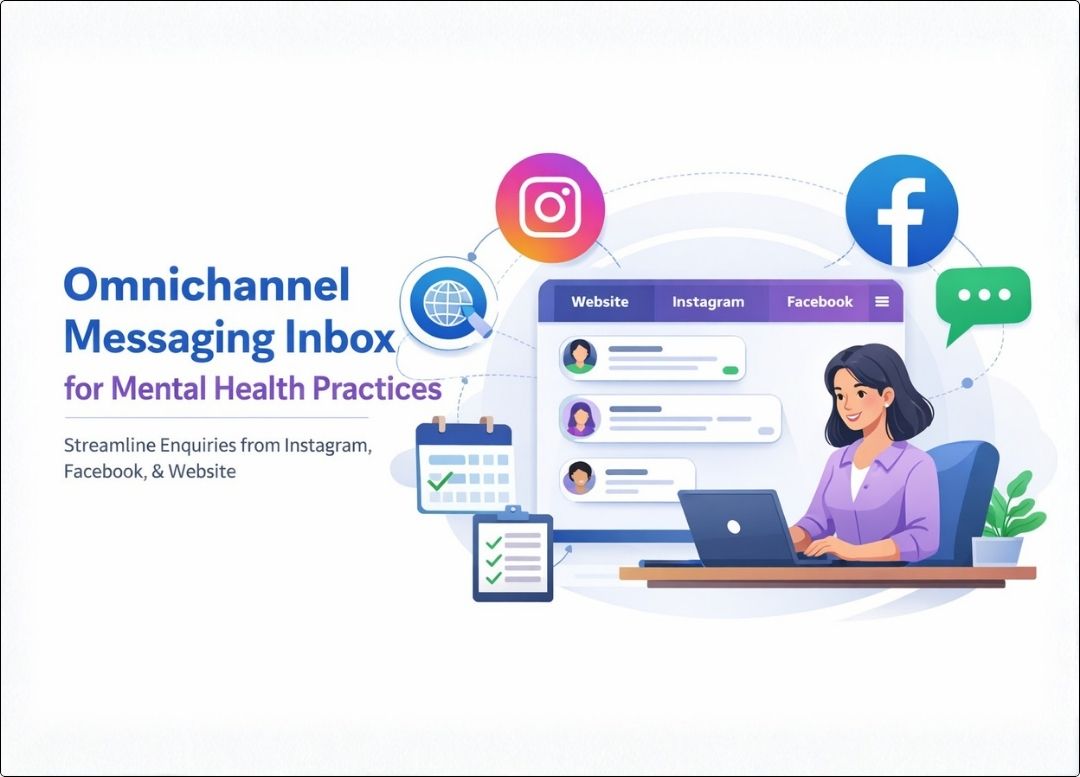
An omnichannel inbox inside a CRM for psychologists brings all conversations into one place.
Instead of checking three or four platforms separately, you log into a single dashboard. Website forms, Instagram messages, and Facebook enquiries appear inside one organised interface.
Within LifeHetu CRM, messages are automatically grouped by source, so you can clearly see where each enquiry originated while still managing everything from one screen.
This is a core feature of effective mental health practice management software — reducing administrative load so you can focus on care.
From Enquiry to Structured Lead
Responding to a message is only the beginning.
A proper mental health CRM in India should help you convert an enquiry into a structured lead. Inside LifeHetu CRM, you can add details such as name, phone number, email address, and basic context about the concern. Over time, this builds a clean pipeline instead of scattered conversations.
This directly supports better mental health practice management. You’re no longer replying randomly across apps. You’re tracking potential clients systematically.
For growing practices, this clarity becomes crucial.
Connecting Communication With Appointment Management
Enquiry management should not exist in isolation.
When communication lives inside your CRM, it naturally connects with appointment management. After responding to a message, you can guide the person toward booking a session, share relevant forms, or send structured information through integrated channels like WhatsApp.
For example, if someone enquires about child counselling through Instagram, you can respond from the CRM, assign an intake form, and prepare context before the first session — all without jumping between tools.
That continuity improves onboarding and reduces unnecessary back-and-forth.
Why This Matters Specifically for Mental Health Practices
In many industries, a delayed reply is an inconvenience.
In mental healthcare, it can feel personal.
When someone reaches out for therapy, they may already be unsure or anxious. A slow or missed response can discourage them from seeking help altogether. That’s why having a reliable CRM for mental health practices is not just about efficiency — it’s about responsibility.
A structured communication system supports:
- Faster response times
- Fewer missed enquiries
- Clearer follow-ups
- Better onboarding experience
- A more professional client journey
These small operational improvements quietly strengthen trust.
Built for Mental Health Professionals in India
Generic CRM tools are designed for sales teams. Mental health practices operate differently. The workflow involves sensitive communication, structured onboarding, scheduling, and long-term client relationships.
LifeHetu CRM is designed as a specialised mental health CRM in India, built to support psychologists, counsellors, and therapy centres. By combining omnichannel messaging, lead tracking, and appointment management within one system, it simplifies daily operations without adding technical complexity.
Instead of juggling multiple apps, you manage everything through one organised platform.
Final Thoughts
As your practice grows, so does the volume of communication. What starts as a few messages per week can quickly turn into a steady stream of enquiries from Instagram, Facebook, and your website.
Trying to manage them separately is inefficient and risky.
An integrated mental health practice management software with an omnichannel inbox ensures that every enquiry is visible, trackable, and actionable.
Sometimes improving client care doesn’t require dramatic changes. It starts with something foundational — making sure every message is seen, acknowledged, and guided forward with care.
About the Author
Shubham is a Digital Marketing and Content Specialist at LifeHetu Technology. For over three years, he has worked closely with therapists, psychologists, and counselling centres to help them build a strong and ethical online presence. Through his work with mental healthcare providers, he understands the unique challenges of communicating sensitive services responsibly while reaching the people who need support. His focus lies in bridging the gap between mental healthcare demand and supply through thoughtful digital strategy and content.
FAQs
What is a CRM for mental health practices?
A CRM for mental health practices is a system that helps psychologists, counsellors, and therapy clinics manage client enquiries, communication, appointment scheduling, and follow-ups in one organised platform. Unlike generic sales CRMs, a mental health CRM is designed to support sensitive communication and structured onboarding.Why do psychologists need a CRM?
As enquiries increase across Instagram, Facebook, and clinic websites, managing conversations manually becomes difficult. A CRM for psychologists helps centralise communication, reduce missed messages, and improve client onboarding. It ensures that every enquiry is tracked and followed up properly.How does an omnichannel inbox help manage Instagram and website enquiries?
An omnichannel inbox collects messages from multiple platforms — such as Instagram, Facebook, and your clinic website — and displays them inside a single dashboard. This makes it easier to manage Instagram and website enquiries without switching between apps or accounts.Is LifeHetu CRM suitable for solo practitioners?
Yes. LifeHetu CRM is designed for both individual psychologists and multi-practitioner clinics. Whether you run a solo practice or a growing mental health centre, the system helps streamline communication, appointment management, and overall mental health practice management.How is LifeHetu CRM different from generic CRM tools?
Most CRM tools are built for sales teams. LifeHetu CRM is a specialised mental health CRM in India, designed specifically for therapy and counselling practices. It connects communication, lead tracking, and appointment management in a way that aligns with how mental health practices operate.Does a mental health practice management software help reduce missed enquiries?
Yes. By centralising all communication into one organised system, mental health practice management software significantly reduces the chances of missing enquiries from social media or your website. This improves response consistency and enhances client experience.
On this page
Jump to sections
About the author
Digital Marketing Specialist
Shubham Srivastava is a digital marketing specialist with 3+ years of experience in the mental healthcare domain. He blends SEO expertise, social media strategy and creative storytelling to help mental health brands grow their digital presence.
Related Reads. Similar Blogs to Check Out.