
Founder, LifeHetu
Puneet Pandey is the founder of LifeHetu. He has worked alongside psychologists since 2022 while building the platform, helping practitioners grow their online presence with digital tools and care solutions.
30 Jun 26 06:00 am
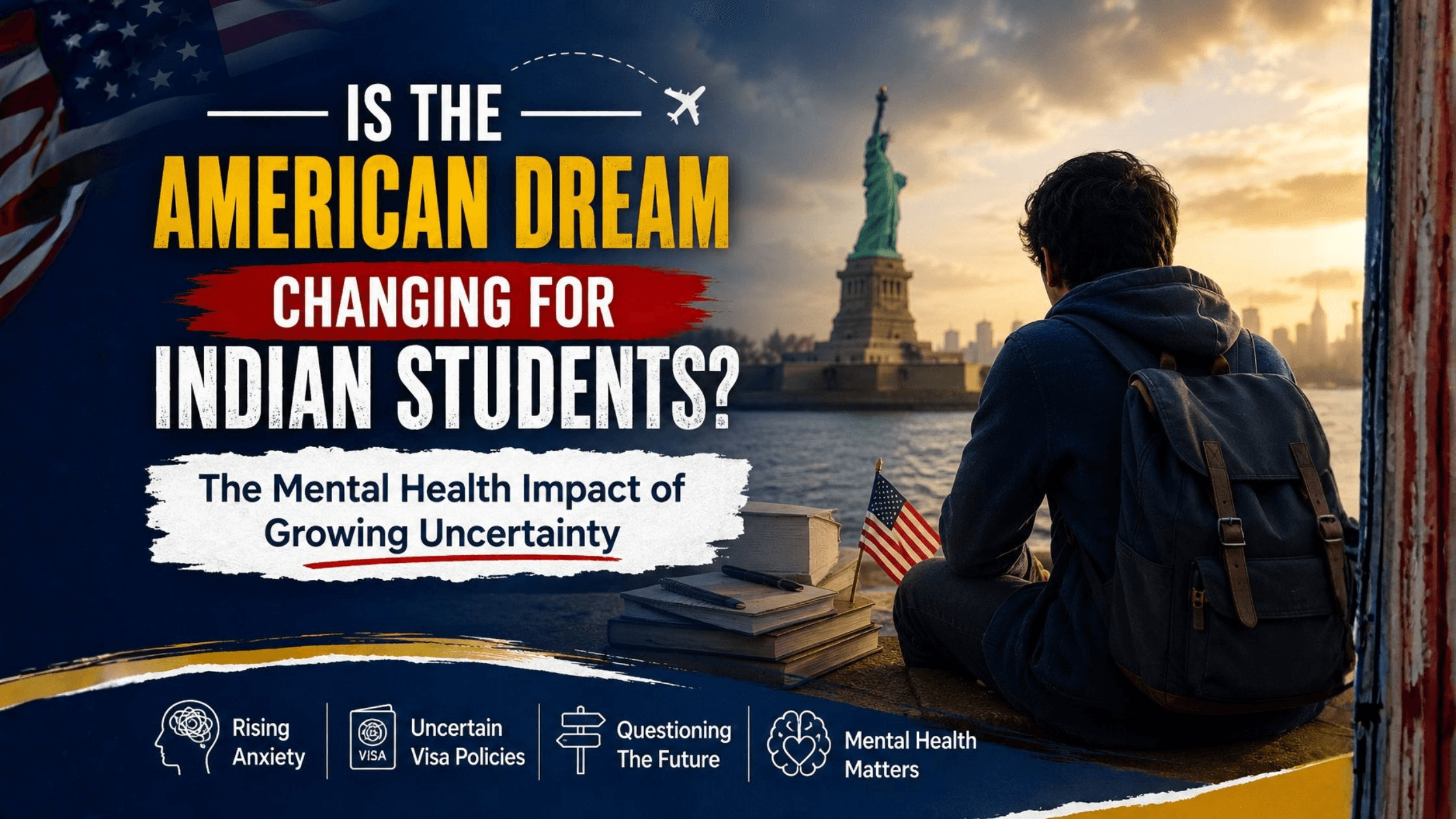
Is the American Dream Changing for Indian Students? The Mental Health Impact of Growing Uncertainty
Growing uncertainty around US visa policies is affecting the mental health of Indian students and parents. Learn how to manage anxiety and stay hopeful.
On this page
Jump to sections
For decades, studying in the United States has been one of the biggest dreams for Indian students.
It was never just about earning a degree. For many families, it represented opportunity, growth, financial stability, global exposure, and the possibility of building a brighter future. Parents spent years saving money, students prepared endlessly for competitive exams, and entire families planned their lives around the dream of studying abroad.
But recently, something feels different.
Conversations that once focused on university rankings, scholarships, and career opportunities are increasingly being replaced by discussions about visa restrictions, immigration policies, work permits, political uncertainty, and changing regulations. News headlines, social media posts, and online discussions have created an environment where many students and parents are beginning to question something they never thought they would:
"Is studying in the US still worth it?"
While education consultants, policymakers, and universities continue debating these questions, there is another side of this story that often gets overlooked—the impact this growing uncertainty is having on the mental health of students and families.
Because when a dream that has been carefully planned for years suddenly feels uncertain, it doesn't just affect future plans. It affects emotions, confidence, relationships, and overall wellbeing.
Why Studying in the US Became a Dream for So Many Indian Families
The appeal of higher education in the United States did not happen overnight.
For years, Indian students viewed American universities as places where they could access world-class education, cutting-edge research opportunities, global networks, and promising career prospects. Success stories from relatives, friends, and alumni further strengthened the belief that studying in the US could be life-changing.
Parents embraced this dream too.
Many families saw overseas education as an investment in their child's future. They were willing to make financial sacrifices, take education loans, delay personal goals, and spend years preparing because they believed the opportunities would be worth it.
When a dream becomes part of a family's long-term vision, it stops being just an educational decision. It becomes deeply emotional.
And that's exactly why uncertainty feels so difficult today.
When Uncertainty Becomes a Source of Anxiety
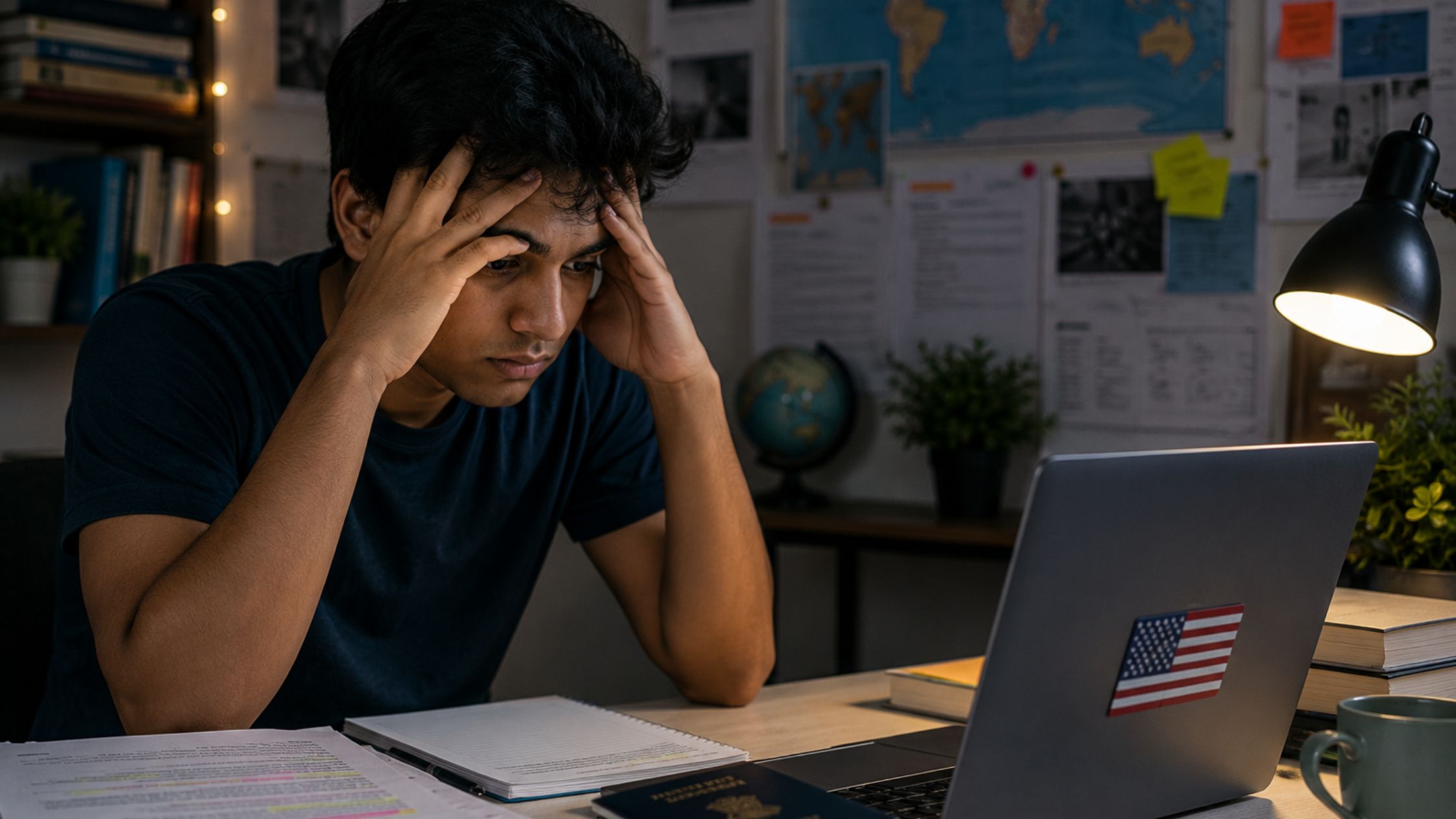
One of the hardest things for the human mind to deal with is uncertainty.
Most people can handle challenges when they know what they are facing. But when the future feels unpredictable, anxiety often starts filling the gaps.
Many Indian students preparing for higher education abroad are currently living in that uncertainty.
They wonder whether visa policies will change. They worry about post-study work opportunities. They question whether international students will continue receiving the same opportunities they once expected. Every new policy announcement or political statement seems to create another wave of concern.
Suddenly, a student who should be focusing on applications and academics finds themselves constantly checking news updates, watching videos about immigration policies, and reading countless opinions online.
The result is often emotional exhaustion.
Many students report feeling overwhelmed, distracted, and anxious about situations that are completely outside their control. Even those who have received university admissions sometimes struggle to fully celebrate because uncertainty about the future continues to linger in the background.
The Silent Mental Health Burden Students Carry
Preparing to study abroad is already a stressful process.
There are entrance exams to clear, applications to complete, interviews to prepare for, financial documents to arrange, and countless deadlines to manage. The pressure to succeed is often immense.
Now imagine carrying all of that while constantly worrying about factors you cannot control.
For many students, this creates a perfect storm of stress.
They may experience difficulty sleeping, racing thoughts, constant worry, irritability, reduced concentration, and feelings of helplessness. Some begin questioning years of hard work. Others fear disappointing their parents if plans do not work out exactly as expected.
What makes this particularly challenging is that many students feel they need to stay strong.
They continue studying, attending classes, and discussing future plans while quietly carrying fears they rarely talk about openly.
When anxiety starts affecting daily life, emotional wellbeing, or academic performance, seeking support can make a significant difference. Talking to ++mental healthcare professionals++ can help students process uncertainty in a healthier way, manage overwhelming thoughts, and develop practical coping strategies. Seeking help is not a sign of weakness. It is often one of the strongest things a person can do during uncertain times.
Parents Are Feeling the Pressure Too
When discussions about studying abroad happen, most people focus on students.
But parents are carrying their own emotional burden.
For many Indian families, overseas education is one of the largest financial commitments they will ever make. Years of savings, loans, investments, and sacrifices often go into making this dream possible.
Naturally, uncertainty affects them as well.
Parents worry about financial risks, changing regulations, safety concerns, and future opportunities for their children. Many spend sleepless nights calculating expenses, reading news updates, and wondering whether they are making the right decisions.
What makes it harder is that parents often hide their worries.
They want to appear calm and supportive, so they keep their fears to themselves. Meanwhile, students often hide their own anxiety because they don't want to increase their parents' stress.
This creates a situation where everyone is worried, but nobody is fully talking about it.
In many cases, families can benefit from speaking with ++mental healthcare professionals++ who can help them navigate these emotional challenges together. Sometimes having a safe space to discuss fears, expectations, and uncertainties can reduce a tremendous amount of stress.
How Social Media Is Making Everything Feel Worse
If there is one thing amplifying anxiety today, it is social media.
Every day, students encounter videos, posts, news updates, expert opinions, immigration discussions, and personal experiences related to studying abroad. While some information is valuable, much of it is incomplete, exaggerated, or taken out of context.
Unfortunately, anxious minds naturally seek more information.
A student worried about their future may spend hours reading discussions about visa policies. One alarming headline leads to another. A single viral post creates panic. Before they realize it, they have spent an entire evening consuming negative information without gaining any real clarity.
This cycle can significantly increase stress levels.
The more uncertainty people consume, the more uncertain everything begins to feel.
While staying informed is important, constantly monitoring every piece of news rarely improves mental wellbeing. In fact, it often has the opposite effect.
Does This Mean Students Should Stop Dreaming About the US?
Absolutely not.
The purpose of discussing uncertainty is not to create fear. It is to acknowledge reality while maintaining perspective.
The truth is that every major educational destination experiences policy changes, economic shifts, and political developments. The world itself is constantly evolving.
What successful students often do differently is that they remain flexible.
Instead of attaching their entire future to one outcome, they build multiple pathways toward their goals. They focus on developing skills, gaining knowledge, and staying adaptable regardless of external circumstances.
The destination may matter, but it is not the only factor that determines success.
Resilience, adaptability, and continuous learning often matter far more in the long run.
Protecting Mental Health During Uncertain Times
When uncertainty increases, people naturally try to gain control. The problem is that many of the things causing stress right now are beyond an individual's control.
Students cannot control immigration policies.
Parents cannot control political decisions.
No one can predict every future outcome.
What people can control is how they respond.
Focusing on preparation, maintaining healthy routines, limiting excessive doomscrolling, discussing concerns openly, creating backup plans, and seeking support when needed can all help reduce anxiety.
Most importantly, students must remember that their worth is not determined by a visa approval, a university decision, or a political policy.
Dreams sometimes change shape.
That does not mean they disappear.
Looking Ahead With Hope
The conversation around studying in the United States is undoubtedly changing. Questions that once seemed straightforward now feel more complicated. Students and parents are being forced to navigate a future that feels less predictable than it once did.
But uncertainty does not have to destroy hope.
History shows that talented, determined, and adaptable individuals continue finding opportunities even during periods of change. The path may look different. Timelines may shift. Plans may evolve.
But potential remains.
The American dream may be changing for some students, but the ability to learn, grow, adapt, and succeed extends far beyond any one country or policy.
And perhaps that is the most important thing to remember.
A changing world may require new plans, but it should never force anyone to stop dreaming.
About the Author
Puneet is the founder of LifeHetu Technology, a platform built specifically for mental healthcare professionals to manage appointments, documentation, payments, and client engagement securely. He works closely with therapists, psychologists, and counselling centres to simplify digital practice management while preserving confidentiality and clinical integrity.
FAQs
Are US visa changes affecting Indian students?
Yes. Recent policy changes have increased uncertainty about visas, work opportunities, and future plans.Can study abroad uncertainty impact mental health?
Yes. It can lead to anxiety, stress, poor concentration, and emotional exhaustion.Why are parents worried about studying abroad?
Many parents are concerned about rising costs, visa rules, and their child's future.Should students still consider studying in the US?
Yes. Students should stay informed, remain flexible, and keep alternative options open.How can students cope with study abroad anxiety?
Focus on what you can control, avoid excessive news consumption, and seek support when needed.Can mental healthcare professionals help students?
Yes. They can help students manage anxiety, uncertainty, and emotional stress effectively.What is the best way to handle uncertainty about studying abroad?
Stay informed through reliable sources, prepare backup plans, and prioritize your mental wellbeing.
On this page
Jump to sections
About the author
Founder, LifeHetu
Puneet Pandey is the founder of LifeHetu. He has worked alongside psychologists since 2022 while building the platform, helping practitioners grow their online presence with digital tools and care solutions.
Related Reads. Similar Blogs to Check Out.