Founder, LifeHetu
Puneet Pandey is the founder of LifeHetu. He has worked alongside psychologists since 2022 while building the platform, helping practitioners grow their online presence with digital tools and care solutions.
26 May 26 10:18 am
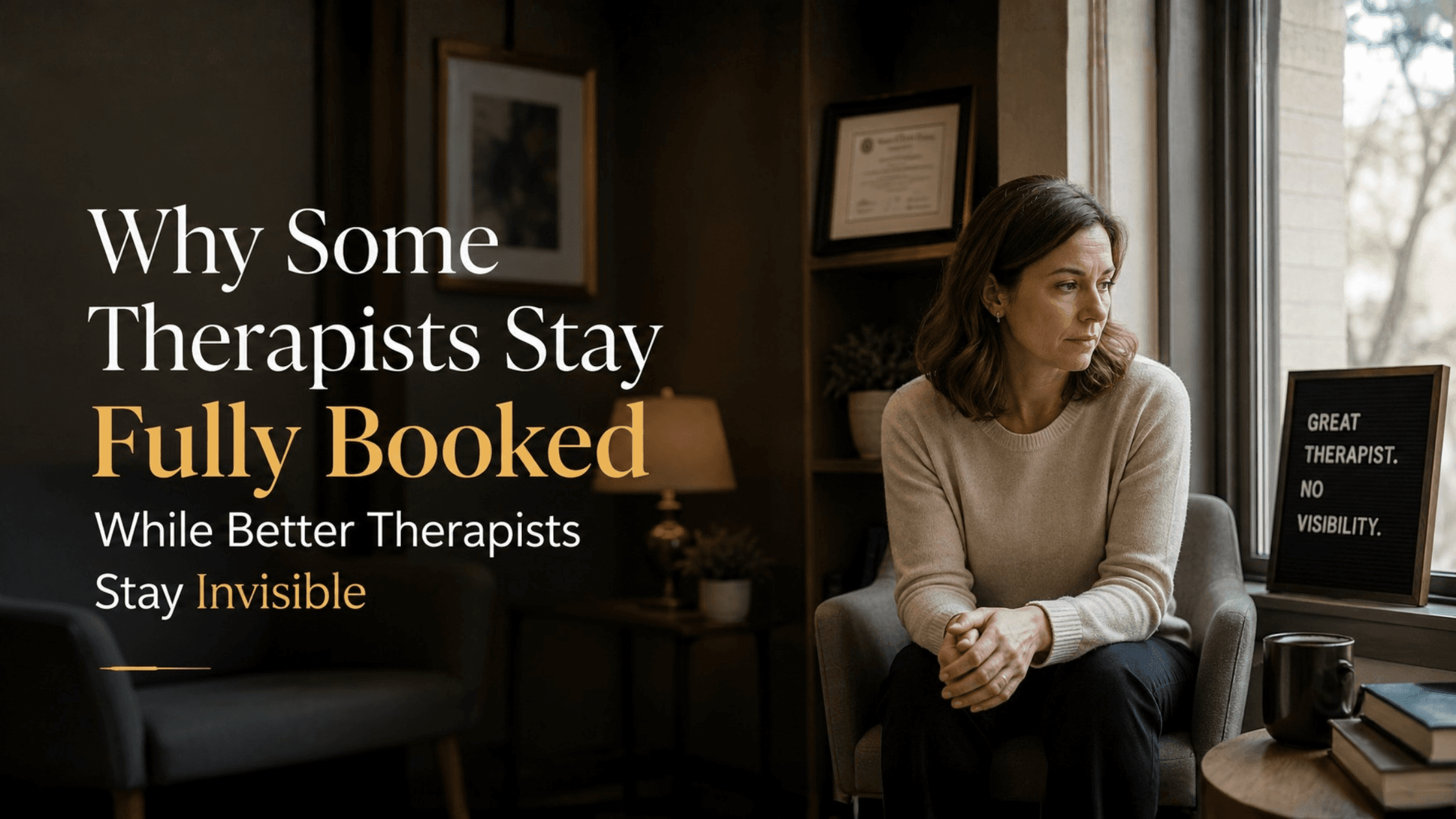
Why Some Therapists Stay Fully Booked While Better Therapists Stay Invisible
Discover why some therapists attract more clients online despite others being equally or more skilled. Learn how digital presence, trust, therapist positioning, and online visibility shape modern client decisions.
On this page
Jump to sections
If you spend enough time in the mental health space, you eventually notice something strange.
Some therapists seem to be everywhere. Their appointments are packed for weeks, clients keep recommending them, and their online presence keeps growing naturally. Meanwhile, there are other therapists who are deeply skilled, emotionally intelligent, highly trained, and genuinely brilliant at what they do… but somehow they remain almost invisible online.
And honestly, this reality frustrates a lot of therapists.
Because deep down, many mental health professionals believe that being really good at therapy should naturally bring clients. That idea made sense years ago when therapy practices mostly grew through referrals and word of mouth. But the internet quietly changed how people choose therapists, and most professionals still underestimate how much that shift affects visibility today.
The truth is, clients no longer choose therapists only based on qualifications or experience. They choose based on perception, emotional safety, trust, and digital presence long before the first session even happens.
That may sound unfair, but it’s how human psychology works online now.
The Internet Changed How People Judge Trust
Think about how people make decisions today.
Whether someone is ordering food, choosing a skincare brand, booking a doctor, or searching for a therapist, the brain immediately starts scanning for signals that feel safe and trustworthy. Most of these decisions happen emotionally before they happen logically.
When someone searches for a therapist online, they are usually already emotionally overwhelmed. Maybe they are anxious, exhausted, heartbroken, confused, or simply tired of carrying everything alone. In that emotional state, people naturally move toward what feels comforting and easy to trust.
That trust is often built through surprisingly small things.
It could be a warm-looking website. Clear communication. Easy booking. Helpful content. Calm visuals. A therapist who explains emotional struggles in a relatable way. Even the feeling that the overall process looks organized and stress-free matters more than most therapists realize.
This is exactly why having a strong website for therapists has become so important today. Clients are not just choosing a therapist anymore. They are choosing the experience around therapy too.
And the therapists who understand this usually become more visible online, even if they are not necessarily the most qualified person in the room.
Skill Alone Does Not Create Visibility Anymore
.jpg.png)
This is probably one of the hardest truths for many therapists to accept.
The internet cannot automatically detect empathy, emotional intelligence, deep listening, or clinical skill. Those qualities only become visible after someone actually starts therapy. But before that happens, clients can only judge what they see online.
And online, visibility is heavily shaped by perception.
Imagine this for a second.
A client visits two therapist websites late at night while searching for help. The first therapist has a clean, welcoming website with simple language, easy booking, clear explanations, and content that makes the client feel emotionally understood.
The second therapist may actually have more experience and stronger clinical expertise, but their website feels outdated, confusing, emotionally distant, or difficult to navigate.
Most people will naturally choose the first therapist.
Not because they carefully analyzed qualifications, but because the first experience reduced uncertainty.
Human beings are constantly trying to move away from emotional friction. Therapists who reduce that friction digitally often grow faster online.
Why Therapist Positioning Matters More Than Ever
One of the biggest mistakes many therapists make online is trying to sound professional in the exact same way everyone else does.
If you visit enough therapist websites, you start seeing identical language everywhere:
“Providing a safe space for healing and growth.”
There is nothing wrong with that sentence. But the problem is that when everybody sounds the same, nobody becomes memorable.
This is where therapist positioning becomes incredibly important.
The therapists who attract more attention online are usually the ones who make people instantly feel: “This therapist understands someone exactly like me.”
That emotional recognition changes everything.
For example, a therapist specifically talking about burnout in working professionals will usually feel more relatable to stressed corporate employees than someone using very broad language about “mental wellness.” Similarly, a psychologist openly discussing relationship anxiety may instantly connect with someone struggling in dating or marriage.
This kind of niche clarity helps clients emotionally recognize themselves faster. And when people feel understood quickly, trust builds naturally.
That’s one reason why online visibility for therapists is often less about being louder online and more about being clearer online.
The Psychology Behind Why Visible Therapists Keep Growing
Something interesting happens once therapists start becoming visible online.
People automatically begin assuming they are more trustworthy.
This is called social proof psychology.
When clients repeatedly see:
- therapist blogs
- reviews
- educational content
- active websites
- consistent online presence
- organized communication
their brain starts interpreting those signals as credibility.
Even small details matter more than people think.
For example, therapists using proper **digital tools for therapists** often create smoother experiences for clients through online scheduling, reminders, structured communication, and follow-ups. Clients may never consciously think about these systems, but emotionally they experience the therapist as more reliable and organized.
And once trust increases, visibility grows even faster because more clients start recommending them.
This creates a cycle where visibility keeps feeding visibility.
Meanwhile, many highly skilled therapists remain dependent only on referrals, inconsistent social media activity, or scattered communication systems. Over time, they slowly become harder to discover online even though their actual therapeutic ability may be excellent.
Being Fully Booked Is Often About Emotional Clarity
A lot of therapists assume marketing is about “selling yourself.” That misunderstanding stops many genuinely good professionals from building any online presence at all.
But modern therapist visibility is not really about self-promotion.
It is about emotional clarity.
Clients want to quickly understand:
- who you help
- what kind of emotional struggles you work with
- what therapy with you may feel like
- whether they can trust you
- whether reaching out will feel safe and comfortable
The therapists who communicate these things clearly usually grow faster because they remove confusion from the client journey.
And honestly, in mental healthcare, reducing confusion matters a lot.
People already hesitate before seeking therapy. If the digital experience feels overwhelming, cold, unclear, or emotionally disconnected, many potential clients simply leave quietly without booking anything.
That is why visibility today is deeply connected to trust, positioning, and digital experience.
Final Thoughts
Being a great therapist still matters deeply. No amount of branding can replace genuine therapeutic skill, empathy, or emotional care. But in today’s digital world, skill alone is often invisible unless people can emotionally recognize and trust it online first.
The therapists who stay fully booked are usually not just better at therapy. They are often better at creating clarity, trust, emotional safety, and visibility around their work.
And the therapists who remain invisible are not necessarily less talented.
Many of them simply never learned how modern human psychology works online.
The internet rewards what feels understandable, emotionally safe, and easy to trust. Therapists who build that kind of presence naturally become easier to discover, easier to remember, and easier to choose.
And somewhere right now, there are clients actively searching for exactly the kind of support those therapists can provide.
The only question is whether those clients can actually find them.
About the Author
Puneet is the founder of LifeHetu Technology, a platform built specifically for mental healthcare professionals to manage appointments, documentation, payments, and client engagement securely. He works closely with therapists, psychologists, and counselling centres to simplify digital practice management while preserving confidentiality and clinical integrity.
FAQs
Why do some skilled therapists struggle to grow online?
Many therapists struggle because they lack online visibility, niche clarity, and strong digital trust signals that help clients feel safe reaching out.What is therapist positioning?
Therapist positioning means clearly communicating who you help, what problems you specialize in, and what makes your approach relatable.Why is a website important for therapists?
A professional website helps build trust, improve online visibility, and create a smoother client experience.What are trust signals for therapists?
Trust signals include reviews, educational content, therapist blogs, professional branding, and organized communication systems.Can digital tools help therapists attract more clients?
Yes. Digital tools for therapists and mental health CRM software help improve booking, communication, client engagement, and overall trust.
On this page
Jump to sections
About the author
Founder, LifeHetu
Puneet Pandey is the founder of LifeHetu. He has worked alongside psychologists since 2022 while building the platform, helping practitioners grow their online presence with digital tools and care solutions.
Related Reads. Similar Blogs to Check Out.