Founder, LifeHetu
Puneet Pandey is the founder of LifeHetu. He has worked alongside psychologists since 2022 while building the platform, helping practitioners grow their online presence with digital tools and care solutions.
13 Jul 26 10:31 am
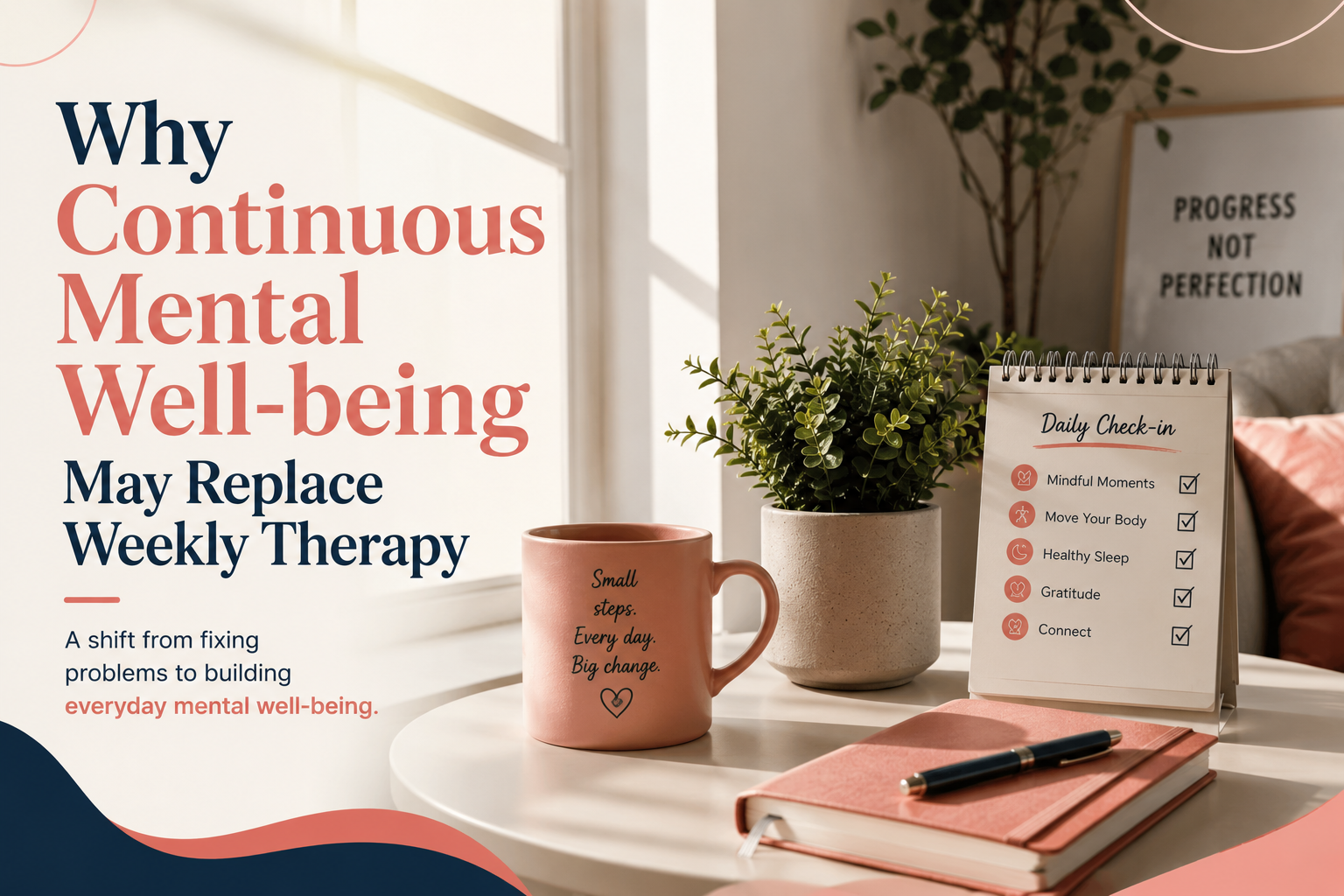
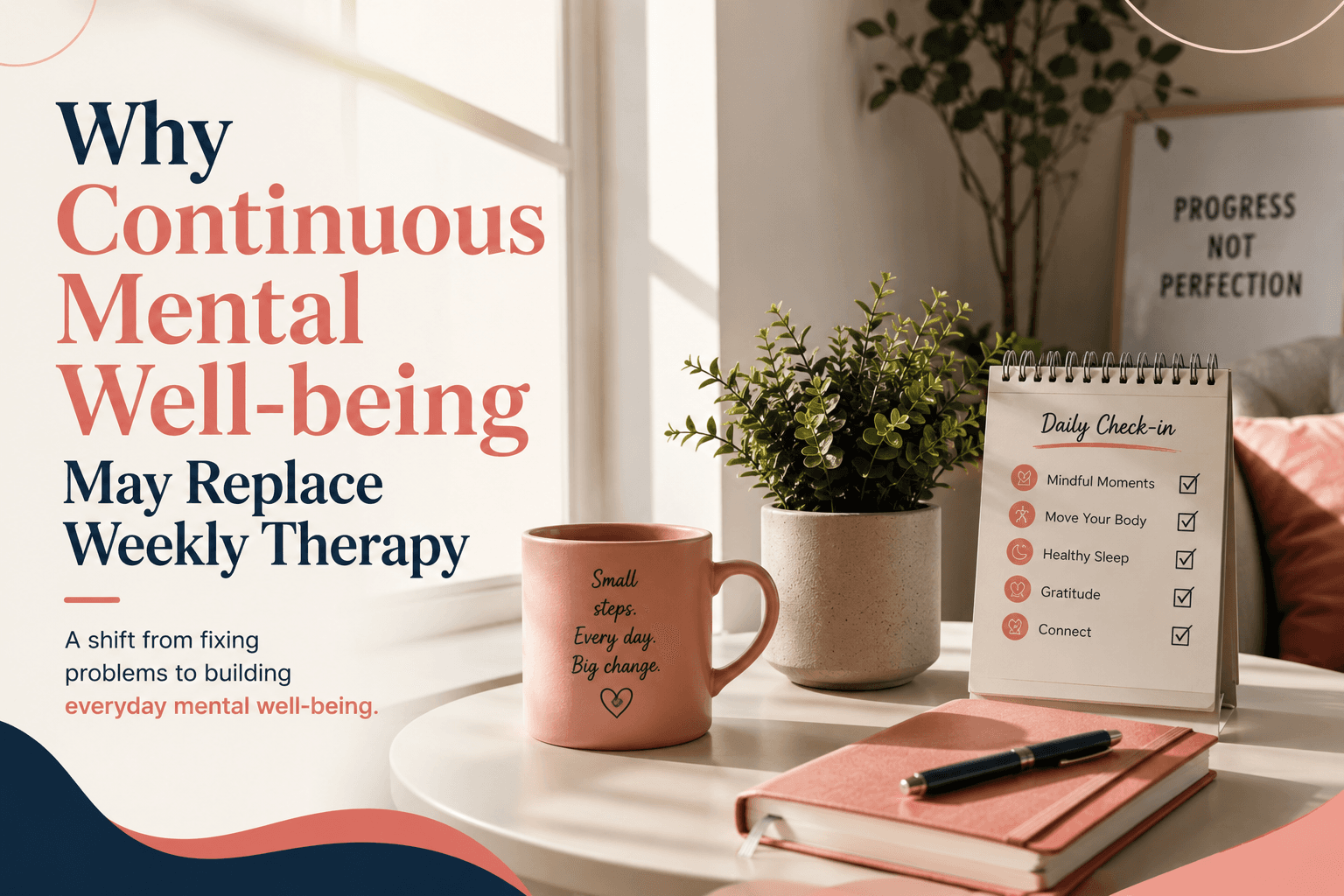
Why Continuous Mental Well-being May Matter More Than Weekly Therapy
Mental well-being doesn't happen only during therapy sessions. Discover why continuous care, daily engagement, and ongoing support are shaping the future of mental healthcare.
On this page
Jump to sections
The future of mental healthcare may not be about more sessions. It may be about staying connected between them.
A therapist finishes a session with a client who has been making steady progress over the past few months.
They've worked through anxiety that once felt overwhelming. Their sleep has improved. Relationships are healthier. Work no longer feels impossible to manage.
As the session comes to an end, the client asks a simple question.
"Do you think I still need therapy every week?"
For a long time, that question had a fairly predictable answer. Therapy was often viewed as something that happened inside a consulting room, usually once a week, for fifty or sixty minutes. The work began when the session started and paused when it ended. Progress was measured from one appointment to the next.
But mental healthcare is quietly changing.
Today, therapists and clients are beginning to realise that emotional well-being doesn't follow a weekly schedule. Anxiety doesn't wait until Thursday at 5 p.m. Relationship conflicts don't appear only on appointment days. Stress doesn't politely pause until the next session. Life happens every single day, which means emotional health is being shaped every single day too.
This shift is leading to an important question.
What if the future of therapy isn't about increasing the number of sessions?
What if it's about creating continuous mental well-being between them?
That doesn't mean therapy is becoming less important. In many ways, it means the opposite. It means recognising that meaningful change often happens in the hundreds of small moments that occur after a session ends and before the next one begins.
Mental Health Doesn't Exist in One-Hour Blocks
Think about how people build physical health.
Nobody expects to become healthier by exercising for one hour every Saturday and doing nothing for the rest of the week. Fitness improves through consistency. Small daily habits—walking, sleeping well, eating balanced meals, and staying active—usually matter far more than one intense workout.
Mental well-being works in a surprisingly similar way.
A therapy session can provide insight, clarity, and emotional safety, but those conversations eventually meet the reality of everyday life. Clients leave the session and return to workplaces, families, relationships, traffic, deadlines, financial worries, and unexpected challenges. That is where emotional patterns are tested. That is where coping strategies are either practised or forgotten.
Many of the biggest breakthroughs in therapy don't actually happen while someone is sitting with their therapist. They happen three days later during a difficult conversation with a partner, while responding differently to workplace stress, or in the quiet moment when someone notices they are reacting in a healthier way than they would have six months ago.
Healing rarely happens inside the session alone.
The session creates awareness.
Life creates change.
Recognising this has encouraged many mental healthcare professionals to think differently about how support should continue beyond the therapy room.
The Space Between Sessions Has Always Mattered

For years, therapists have known that the time between appointments is just as important as the appointment itself.
Clients often spend less than one hour each week with their therapist.
That leaves another 167 hours where life continues without them.
Those hours are filled with decisions, conversations, emotions, setbacks, successes, unexpected triggers, and opportunities to practise new ways of thinking. In many ways, that is where therapy is truly lived.
Imagine a client who has spent months working on social anxiety.
The real progress isn't measured by how confidently they speak during therapy. It is measured by whether they choose to attend a friend's birthday, contribute during a work meeting, or initiate a conversation they would once have avoided.
Similarly, someone learning to manage anxiety doesn't only benefit during breathing exercises inside a therapy session. The biggest transformation often comes when they remember those techniques during an anxious morning before an important presentation.
This is why many therapists encourage journaling, reflective exercises, mood tracking, mindfulness practices, or small behavioural experiments between sessions.
Not because they want clients to do homework.
But because therapy has always been much bigger than one conversation every week.
Clients Are Beginning to Expect More Than Appointments
The way people experience healthcare has changed dramatically over the past decade.
Whether someone is managing diabetes, improving fitness, learning a language, or building better financial habits, support is becoming more continuous rather than occasional. People receive reminders, track progress, access educational resources, and stay engaged long after the initial appointment or consultation.
Mental healthcare is gradually moving in the same direction.
Today's clients often expect care to feel more connected to their everyday lives. They appreciate having access to guided activities, progress tracking, personalised resources, and structured follow-ups that help them stay engaged with the work they are doing in therapy.
This doesn't mean clients expect therapists to be available twenty-four hours a day.
In fact, healthy professional boundaries remain one of the foundations of effective therapy.
What clients are really looking for is continuity.
They want therapy to feel like an ongoing journey rather than a series of disconnected conversations.
That difference may seem subtle, but psychologically it is significant. When people continue reflecting, practising, and noticing progress between sessions, they are more likely to stay emotionally connected to the therapeutic process. Instead of feeling that growth only happens during appointments, they begin recognising that healing is woven into everyday experiences.
It is this shift—from appointment-based care to continuous engagement—that may shape the future of mental well-being.
Technology Is Making Continuous Care Possible
For most of the history of therapy, staying connected between sessions was difficult.
Therapists might suggest keeping a journal, practising breathing exercises, or reflecting on certain situations before the next appointment. Those recommendations were valuable, but they often depended entirely on memory and motivation. Life would get busy, notebooks would remain unopened, and important reflections would be forgotten before the next session arrived.
Today, technology is quietly changing that experience.
The role of technology in mental healthcare is often discussed in terms of online therapy or artificial intelligence. While those developments are certainly important, perhaps the bigger transformation is happening in a less obvious way. Technology is making it easier to support continuity of care.
A client who learns a grounding technique during therapy can revisit it when they actually need it. Someone working on emotional awareness can record reflections while the experience is still fresh rather than trying to remember it a week later. Progress can be tracked over time instead of relying entirely on memory, making it easier for both the client and therapist to recognise meaningful changes that might otherwise go unnoticed.
This isn't about replacing therapy with an app.
It is about allowing therapy to remain present in small, practical ways between appointments.
For many psychologists, this shift is creating an opportunity to extend the impact of therapy without extending their working hours. Instead of trying to be constantly available, they can provide structured ways for clients to stay engaged with the therapeutic process while maintaining healthy professional boundaries.
That distinction is important because continuous care should never mean continuous availability. Therapists need boundaries to provide effective care, and clients benefit from learning how to apply therapeutic insights independently rather than relying on constant reassurance.
Continuous Mental Well-being Doesn't Mean More Therapy
Whenever conversations about continuous care begin, one misunderstanding often follows.
Some people assume it means clients will need more therapy than ever before.
In reality, the opposite may be true.
The goal of therapy has never been to make clients dependent on weekly sessions. Every therapist hopes to see clients become more confident in managing their emotions, making healthier decisions, and navigating life's challenges independently.
Continuous mental well-being supports that goal.
Imagine two clients who both attend therapy once a week.
The first client spends the week simply waiting for the next appointment. They rarely revisit what was discussed, struggle to remember important insights, and only begin thinking about therapy again on the morning of their next session.
The second client reflects on key conversations, practises coping strategies, notices emotional patterns, and keeps track of progress throughout the week.
Both clients spend the same amount of time in therapy.
But their experience of therapy is completely different.
The second client is not doing "more therapy." They are staying more connected to the work that is already happening.
Over time, this continuity often helps clients build confidence in their own ability to manage emotions. Therapy gradually becomes less about solving every problem together and more about helping clients develop skills they can carry into everyday life.
That has always been the purpose of good therapy.
Technology is simply making that process easier to support.
The Future of Mental Healthcare May Be Built Around Continuity
The way people think about healthcare has changed significantly over the past decade.
Healthcare is no longer viewed as something that only happens during appointments. People expect ongoing support, personalised experiences, easier communication, and better visibility into their progress.
Mental healthcare is beginning to move in the same direction.
This doesn't mean every client will need digital tools or that traditional therapy models will disappear. Face-to-face conversations will always remain at the heart of therapeutic work because healing depends on trust, empathy, and genuine human connection.
What is changing is everything around those conversations.
Scheduling is becoming simpler. Progress is becoming easier to track. Resources can be shared instantly. Reflective exercises no longer need to remain on pieces of paper that are forgotten inside a bag. Therapists can create more structured experiences that help clients stay engaged without adding unnecessary complexity to their own practice.
This is exactly where thoughtfully designed platforms such as LifeHetu are beginning to make a meaningful difference. Rather than trying to replace therapy, they support therapists by bringing together appointments, client records, activities, progress tracking, and communication into one connected ecosystem. The result is not more therapy—it is better continuity.
And continuity may become one of the defining characteristics of modern mental healthcare.
Therapy Was Never Meant to Exist Only Inside a Session
Perhaps the biggest shift is not technological at all.
It is philosophical.
For many years, therapy was naturally organised around appointments because that was the only practical way care could be delivered. But emotional growth has never followed calendars.
People don't suddenly stop learning about themselves because a session ended.
Insight appears during difficult conversations with loved ones.
Healing happens when someone responds differently to an old trigger.
Confidence grows when a person notices they handled a stressful situation more calmly than they would have six months earlier.
Those moments rarely happen while sitting across from a therapist.
They happen while living life.
That is why the future of mental well-being may look less like isolated weekly conversations and more like an ongoing process of reflection, awareness, practice, and support.
Therapy will still matter.
In fact, it may matter even more.
Because instead of carrying the entire weight of change, each session becomes part of a larger journey that continues every single day.
Final Thoughts
Mental healthcare is entering a new chapter. The question is no longer whether therapy works. Decades of research and lived experiences have already answered that.
The more interesting question is how therapy can remain meaningful in a world where people's lives are becoming faster, more connected, and increasingly shaped by technology.
Perhaps the answer is not increasing the number of therapy sessions.
Perhaps it is helping people stay connected to their mental well-being between them.
The future is unlikely to replace weekly therapy altogether. Many clients will continue benefiting from regular sessions, while others may need more intensive support depending on their circumstances.
But one thing seems increasingly clear.
Mental well-being was never designed to exist for one hour every week.
It is shaped by the conversations we have, the habits we build, the reflections we make, the challenges we face, and the choices we make every single day.
The future of therapy may still begin with a weekly appointment.
But the future of healing may happen in everything that comes after it.
About the Author
Puneet is the founder of LifeHetu Technology, a platform built specifically for mental healthcare professionals to manage appointments, documentation, payments, and client engagement securely. He works closely with therapists, psychologists, and counselling centres to simplify digital practice management while preserving confidentiality and clinical integrity.
FAQs
Will continuous mental well-being replace therapy?
No. Continuous mental well-being is designed to complement therapy, not replace it. Therapy remains essential for assessment, treatment, and professional guidance, while continuous practices help clients apply those insights in everyday life.What does continuous mental well-being mean?
It refers to staying engaged with your mental health between therapy sessions through reflection, healthy habits, guided activities, progress tracking, and other supportive practices.Why is the time between therapy sessions important?
Many meaningful changes happen outside the therapy room as clients apply coping strategies, build healthier habits, and respond differently to real-life situations.Can technology improve continuity of care?
Yes. When used thoughtfully, digital tools can help clients stay connected to their therapeutic goals while supporting therapists with better organisation, communication, and progress tracking.How can therapists support clients between sessions?
Many mental healthcare professionals encourage reflective exercises, journaling, mood tracking, mindfulness practices, and structured activities that help clients continue their therapeutic journey between appointments.
On this page
Jump to sections
About the author
Founder, LifeHetu
Puneet Pandey is the founder of LifeHetu. He has worked alongside psychologists since 2022 while building the platform, helping practitioners grow their online presence with digital tools and care solutions.
Related Reads. Similar Blogs to Check Out.