Founder, LifeHetu
Puneet Pandey is the founder of LifeHetu. He has worked alongside psychologists since 2022 while building the platform, helping practitioners grow their online presence with digital tools and care solutions.
30 Jun 26 07:43 am
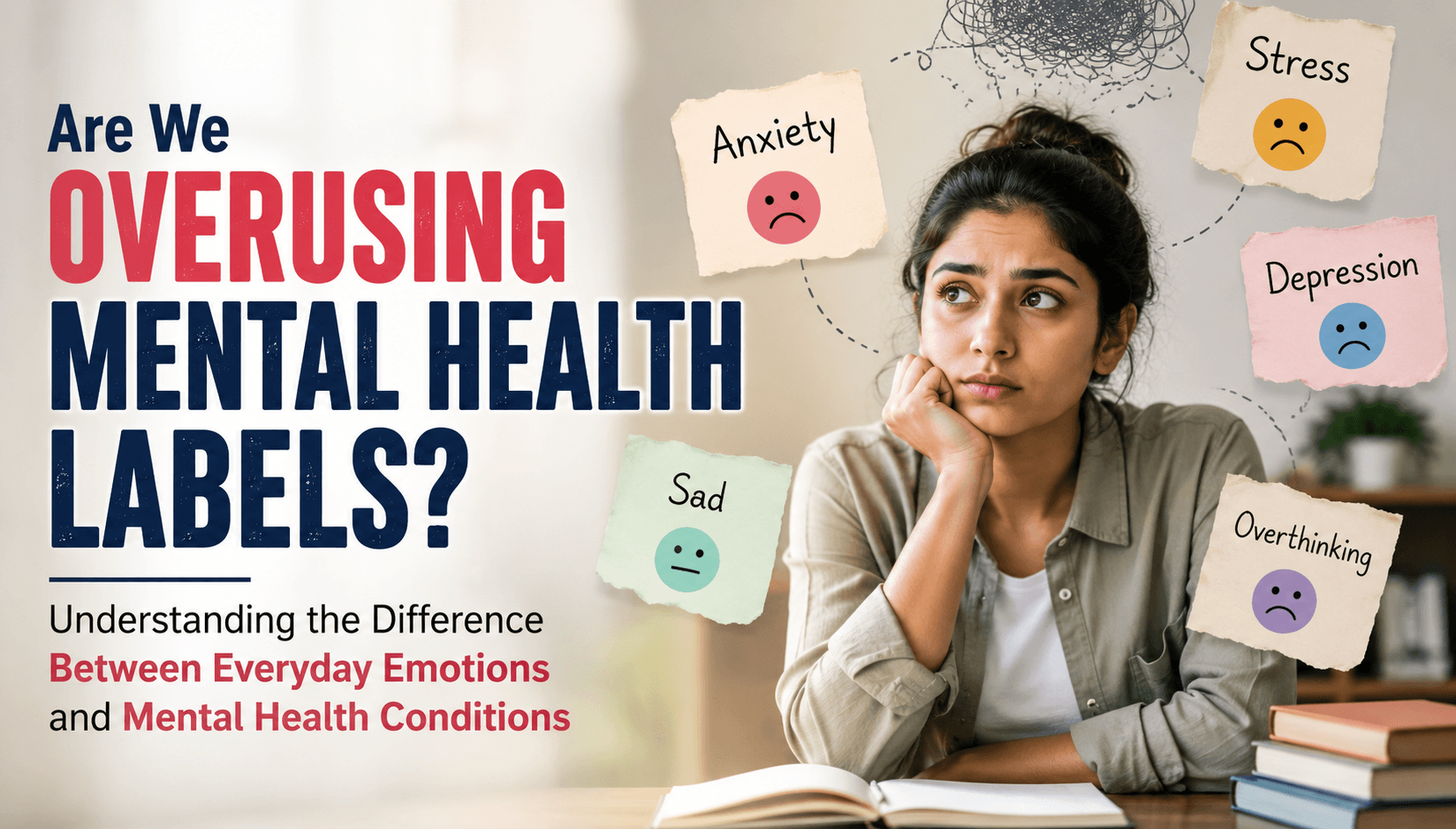
Are We Overusing Mental Health Labels? Understanding the Difference Between Everyday Emotions and Mental Health Conditions
Are we confusing everyday emotions with mental health conditions? Learn the difference between stress, sadness, anxiety, trauma, and when to seek professional help.
On this page
Jump to sections
A few years ago, if someone had a bad day, they would probably say they were feeling stressed, upset, frustrated, or heartbroken.
Today, the language sounds very different.
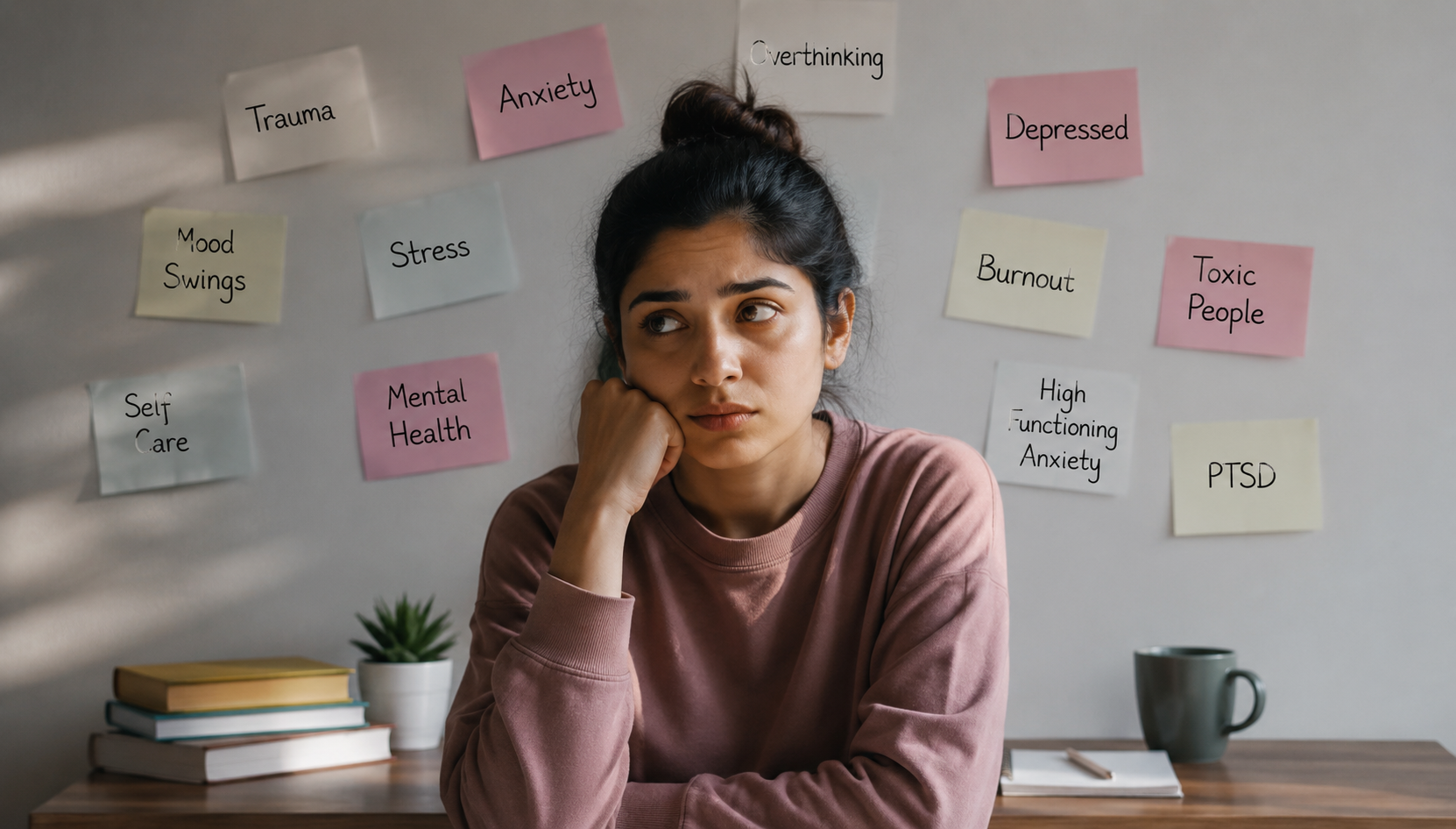
"It's giving me trauma."
"I have anxiety."
"That's toxic."
"My boss is a narcissist."
"That meeting gave me PTSD."
These words have become part of everyday conversations, especially on social media.
In one way, this is actually good news. It shows that mental health is no longer a taboo subject. People are talking more openly about emotions, therapy, and psychological wellbeing than ever before. Conversations that were once hidden behind closed doors are finally happening in schools, workplaces, homes, and online communities.
But at the same time, another question is quietly emerging. Have we started using clinical mental health terms for experiences that are actually a normal part of being human?
This is an important conversation—not because mental health conditions are "overrated" or "not real." They absolutely are real. Millions of people live with anxiety disorders, depression, trauma-related conditions, OCD, bipolar disorder, and many other mental health conditions that deserve understanding, treatment, and compassion.
The concern is something different. When every uncomfortable emotion gets labelled as a disorder, it can become harder to recognise the difference between normal emotional experiences and situations where someone genuinely needs professional support.
Understanding that difference matters.
Every Emotion Doesn't Need a Diagnosis
Being human means experiencing a wide range of emotions. Some days we feel excited. Some days we feel disappointed.
Some days we feel angry after an argument, nervous before an interview, lonely after moving to a new city, or sad after losing someone important.
These emotions are not signs that something is necessarily wrong with us. They are often signs that we are responding naturally to life's experiences.
Imagine a student feeling nervous before an important exam. Or a new employee feeling anxious on their first day at work. Or a parent feeling overwhelmed while caring for a newborn.
These emotions can be uncomfortable, but they are also understandable. Not every stressful moment is an anxiety disorder. Not every difficult experience becomes trauma. Not every disagreement means a relationship is toxic.
Sometimes, we are simply experiencing life. Recognising this doesn't minimise mental health. It helps us understand it better.
Social Media Has Changed the Way We Talk About Mental Health
One reason mental health language has changed so quickly is social media.
Today, psychological terms appear everywhere. Short videos explain attachment styles in sixty seconds. Influencers discuss trauma, anxiety, narcissism, and emotional boundaries. Posts describing common experiences often receive millions of views because people naturally relate to them.
This increased awareness has many benefits.
More people now understand that seeking therapy is okay. Conversations around emotional wellbeing are becoming more open. Many individuals who previously suffered in silence finally recognise symptoms and seek help.
But social media also has limitations. Mental health is complex.
A short video cannot fully explain the difference between temporary stress and a diagnosable anxiety disorder. A relationship disagreement cannot automatically be described as emotional abuse simply because someone on the internet used similar language.
Without proper context, people may begin applying clinical labels to everyday situations that require reflection rather than diagnosis.
Why Words Matter
Language shapes how we understand ourselves. If someone believes that every difficult emotion means something is seriously wrong with them, they may begin fearing perfectly normal emotional experiences.
Feeling sad after a breakup is painful. Feeling stressed before a presentation is uncomfortable. Feeling disappointed after rejection hurts.
But these emotions are also part of being human.
At the same time, it's equally important not to dismiss ongoing emotional struggles by saying, "Everyone feels like this." This is where balance becomes important.
If sadness continues for weeks and begins affecting daily life, relationships, appetite, motivation, or sleep, it deserves attention.
If anxiety becomes persistent, overwhelming, and interferes with work, studies, or everyday functioning, it deserves support.
The difference is not simply the emotion itself. It is the intensity, duration, frequency, and impact on a person's life.
Awareness Is Good. Self-Diagnosis Isn't Always Enough.
One of the positive outcomes of increased mental health awareness is that more people recognise when something feels different. However, recognising symptoms is only the first step.
Diagnosing ourselves based on internet content can sometimes create unnecessary confusion.
Mental health conditions are rarely identified through one symptom alone. They involve careful assessment, personal history, patterns of behaviour, and professional understanding.
Someone may relate to a video about anxiety while actually experiencing burnout. Another person may think they simply have "work stress" while living with an anxiety disorder that has gone untreated for years.
Both situations are possible. That is why self-awareness is valuable, but professional assessment remains equally important.
When emotional struggles become persistent or begin affecting daily life, talking to mental healthcare professionals can provide clarity, support, and appropriate guidance instead of guesswork.
Why This Conversation Matters More Than Ever
Modern life is emotionally demanding. People are balancing careers, relationships, financial pressure, social media, family responsibilities, global uncertainty, and constant information overload. Naturally, emotions have become a bigger part of everyday conversations.
That's a healthy change. The goal should never be to stop talking about mental health. Instead, the goal should be to talk about it accurately.
Normalising conversations around therapy and emotional wellbeing encourages people to seek help when they truly need it.
At the same time, understanding that everyday stress, disappointment, grief, frustration, and nervousness are also normal helps us build emotional resilience rather than fearing every uncomfortable feeling. Both ideas can exist together.
Mental Health Exists on a Spectrum
One reason these conversations become confusing is because people often think in extremes.
Either they are "completely fine." Or they believe they have a serious mental health condition. Reality is usually much more nuanced.
Mental health exists on a spectrum. There are days when we simply feel low. There are weeks when life feels overwhelming.
And there are situations where emotional struggles become persistent enough to require professional care.
Recognising where we are on that spectrum allows us to respond appropriately instead of either ignoring our emotions or over-pathologising them. That balanced understanding creates healthier relationships with our own minds.
Creating a Culture of Understanding Instead of Labels
Perhaps the most important lesson is that emotions are not our enemies. Feeling nervous before an interview doesn't mean we are broken.
Feeling heartbroken after losing someone we love doesn't mean something is wrong with us. Feeling stressed during uncertain times doesn't automatically mean we have an anxiety disorder.
At the same time, if these emotions become intense, persistent, and begin affecting everyday life, they deserve compassion—not judgement.
Instead of rushing to label ourselves or others, perhaps we should become more curious.
What am I feeling?
Why am I feeling this way?
How long has this been affecting me?
Do I need support?
Sometimes the answer will simply be time, rest, and self-care.
Sometimes the answer will be speaking with trusted friends or family.
And sometimes, the answer will be reaching out to mental healthcare professionals who can provide the right guidance and care.
That's not a sign of weakness.
It's a sign of taking mental health seriously.
At LifeHetu, we believe that improving mental health begins with better understanding. The more accurately we understand our emotions, the better equipped we are to care for ourselves and to seek support when it truly matters.
About the Author
Puneet is the founder of LifeHetu Technology, a platform built specifically for mental healthcare professionals to manage appointments, documentation, payments, and client engagement securely. He works closely with therapists, psychologists, and counselling centres to simplify digital practice management while preserving confidentiality and clinical integrity.
FAQs
Is feeling stressed the same as having an anxiety disorder?
No. Stress is a normal response to challenges, while an anxiety disorder is a mental health condition that is persistent, excessive, and significantly affects daily life.Is every painful experience considered trauma?
No. Many painful experiences are part of life. Trauma generally refers to experiences that have a lasting psychological impact and should be understood in the right clinical context.Can social media help spread mental health awareness?
Yes. It has encouraged many important conversations, but it should not replace professional assessment or personalised mental health advice.When should someone speak to mental healthcare professionals?
If emotional struggles are persistent, overwhelming, or begin affecting work, relationships, studies, sleep, or daily functioning, seeking professional support is a good step.Why is using accurate mental health language important?
Using the right language helps people better understand their emotions, reduces confusion, and encourages those who genuinely need support to seek appropriate care.
On this page
Jump to sections
About the author
Founder, LifeHetu
Puneet Pandey is the founder of LifeHetu. He has worked alongside psychologists since 2022 while building the platform, helping practitioners grow their online presence with digital tools and care solutions.
Related Reads. Similar Blogs to Check Out.