Digital Marketing Specialist
Shubham Srivastava is a digital marketing specialist with 3+ years of experience in the mental healthcare domain. He blends SEO expertise, social media strategy and creative storytelling to help mental health brands grow their digital presence.
09 Apr 26 11:48 am
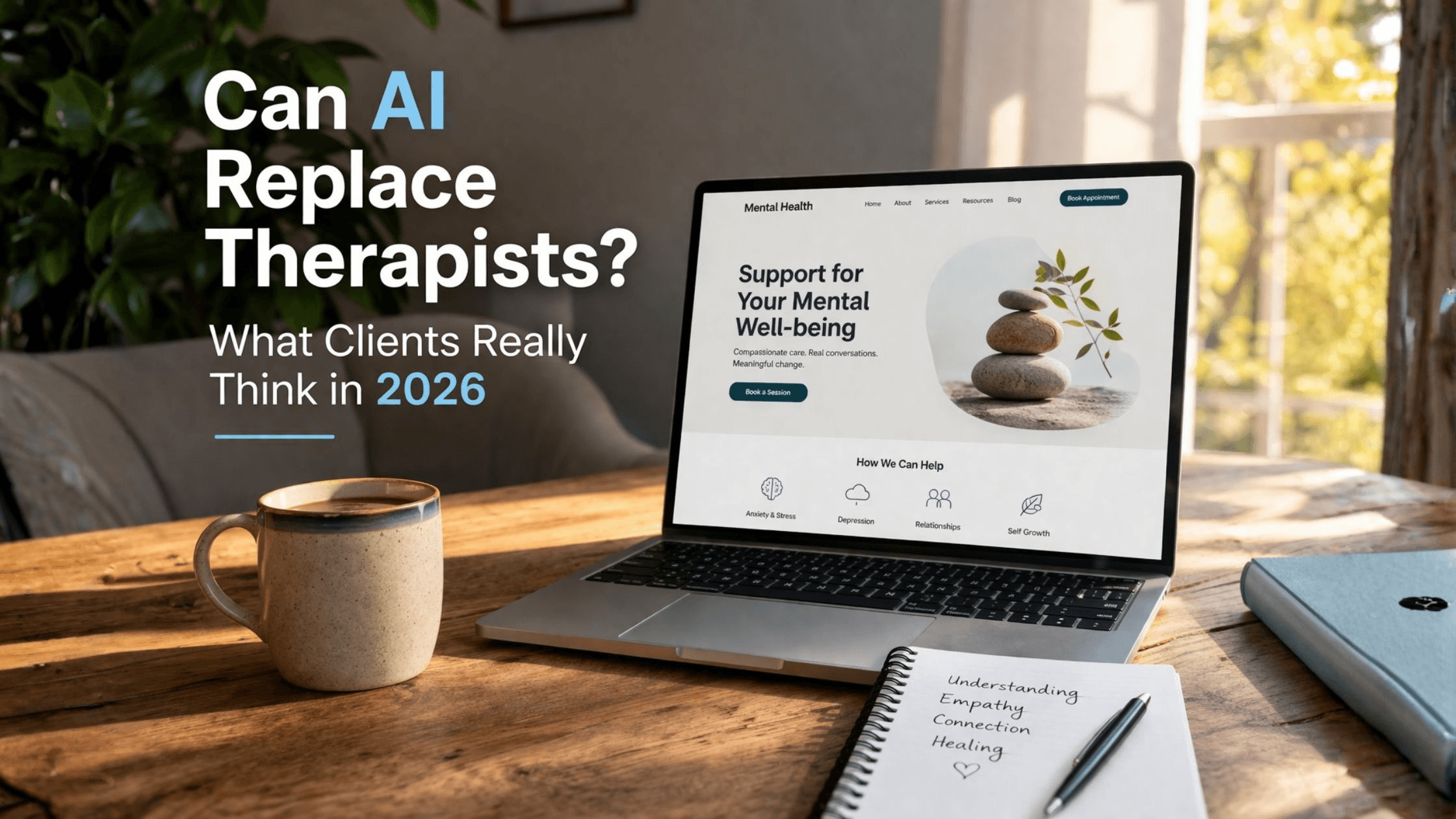
Can AI Replace Therapists? What Clients Really Think in 2026
Can AI replace therapists? Discover what clients really think in 2026 and how AI is changing mental health support and online therapy.
On this page
Jump to sections
There’s a question that keeps coming up more often now. Not just from therapists… but from clients too. “Can AI replace therapists?”
At first, it sounds like a futuristic debate. Something that belongs in tech discussions or news headlines. But if you look closely, it’s already happening in small ways.
People are using tools like ChatGPT to:
- Talk about their feelings
- Understand anxiety
- Get advice during difficult moments
And naturally, this creates a concern.
If AI can listen, respond, and guide… Where does that leave therapists?
But the more important question is not what AI can do.
The real question is: What do clients actually want?
The Rise of AI in Mental Health Support
Over the past few years, the use of AI in mental health support has grown rapidly.
People are no longer just searching on Google. They are directly asking AI:
- “Why do I feel anxious all the time?”
- “How do I deal with overthinking?”
- “Is what I’m feeling normal?”
And AI responds instantly.
No waiting. No judgment. No hesitation.
That’s powerful.
For many people, especially those who are not ready for therapy yet, AI becomes the first step. It feels safe because it removes the fear of being judged.
In fact, for someone exploring online therapy, AI often becomes a starting point before they even consider speaking to a real therapist.
Why AI Feels Helpful (From a Client’s Perspective)
To understand whether AI can replace therapists, we first need to understand why people are using it in the first place. From a client’s point of view, AI offers three things that are hard to ignore.
The first is instant availability. You don’t need to book a session or wait for a reply. You can open your phone and start typing.
The second is emotional safety. There is no fear of being misunderstood or judged. For someone dealing with sensitive issues, this matters a lot.
The third is simplicity. AI explains things in a clear and structured way. It helps people label what they are feeling and gives them a sense of clarity.
For someone who is overwhelmed, even a little clarity can feel like relief.
And this is exactly why AI is becoming a part of the mental healthcare experience.
But Here’s What AI Still Can’t Do
This is where things become very clear. AI can respond. But it cannot relate. There is a difference between understanding words and understanding a person.
A therapist does not just listen to what is being said. They observe pauses, emotions, tone, patterns, and contradictions. They build a connection over time. They remember context. They adapt their approach based on the individual.
AI, on the other hand, works on patterns and data. It can simulate empathy, but it does not experience it. And clients feel this difference.
When someone is going through something deeply personal grief, trauma, relationship struggles, they are not just looking for answers. They are looking to be understood. That level of understanding requires human presence. And that is something AI cannot replace.
What Clients Actually Think in 2026
From what we are seeing now, clients are not choosing between AI and therapists. They are using both.
AI is becoming a tool for:
- Quick clarity
- Emotional check-ins
- Understanding basic concepts
But when it comes to real change, deeper conversations, and long-term support, people still turn to therapists. In fact, AI is often pushing more people toward therapy.
Someone might start by asking AI about their feelings. That leads to awareness. And awareness often leads to action.
That’s when they begin searching for:
- therapists near me
- online therapy India
- mental health professionals
So instead of replacing therapists, AI is actually becoming a bridge.
The Real Shift: From Replacement to Collaboration
The biggest mistake in this conversation is thinking in extremes. It’s not “AI vs therapists.” It’s “AI + therapists.” AI is changing how people approach mental health support, but it is not replacing the need for human connection.
In fact, therapists who understand this shift early are in a much stronger position.
They are using AI to:
- Create content
- Educate clients
- Improve communication
- Save time on repetitive tasks
While still focusing on what matters most: Human connection
What This Means for Therapists
If you’re a therapist reading this, the question is not whether AI will replace you. It’s whether you will adapt to how clients are changing.
Clients today are:
- More informed
- More curious
- More open to exploring mental health
But they are also:
- More impatient
- More selective
- More aware of their options
That means your role is evolving. You are not just a therapist anymore. You are also:
- A guide
- An educator
- A trusted presence
And the therapists who communicate clearly, show empathy, and build trust online will always stand out.
So, Can AI Replace Therapists?
The short answer is no.
AI can support. AI can assist. AI can guide at a basic level.
But it cannot replace the depth, connection, and understanding that comes from a real human interaction. And when it comes to something as personal as mental health, that difference matters more than anything.
Final Thoughts
AI is not the end of therapy. It is the beginning of a new layer. A layer where people become more aware before they seek help. A layer where information is easier to access. A layer where the journey toward therapy becomes less intimidating.
But when it comes to healing, growth, and real change, people still need people. That is something technology cannot replace. And probably never will.
About the Author
Shubham is a Digital Marketing and Content Specialist at LifeHetu Technology. For over three years, he has worked closely with therapists, psychologists, and counselling centres to help them build a strong and ethical online presence. Through his work with mental healthcare providers, he understands the unique challenges of communicating sensitive services responsibly while reaching the people who need support. His focus lies in bridging the gap between mental healthcare demand and supply through thoughtful digital strategy and content.
FAQs
Can AI replace therapists in the future?
AI can assist in mental health support, but it cannot replace human connection, empathy, and deep therapeutic understanding.Do clients trust AI for mental health advice?
Some clients use AI for initial clarity, but they still prefer mental health professionals for serious or ongoing concerns.Is AI helpful for online therapy?
Yes, AI can support awareness and preparation, but online therapy India still relies on human therapists for real progress.Will AI reduce the demand for therapists?
No. In many cases, AI is increasing awareness, which leads more people to seek therapy.How should therapists adapt to AI?
By using AI as a support tool while focusing on building trust, connection, and strong therapy practice growth strategies.
On this page
Jump to sections
About the author
Digital Marketing Specialist
Shubham Srivastava is a digital marketing specialist with 3+ years of experience in the mental healthcare domain. He blends SEO expertise, social media strategy and creative storytelling to help mental health brands grow their digital presence.
Related Reads. Similar Blogs to Check Out.