Founder, LifeHetu
Puneet Pandey is the founder of LifeHetu. He has worked alongside psychologists since 2022 while building the platform, helping practitioners grow their online presence with digital tools and care solutions.
14 Apr 26 11:34 am
The Rise of Hybrid Mental Healthcare: Why Therapists Must Blend Online and Offline Care
Discover why hybrid mental healthcare is the future. Learn how therapists can combine online and offline care to improve client retention and outcomes.
On this page
Jump to sections
Therapy Is No Longer Just a Place. It’s an Experience. There was a time when therapy meant one thing. A fixed place. A fixed time. A face-to-face conversation.
If someone needed help, they would travel, sit across from a therapist, and talk. That was the model. And for a long time, it worked. But over the past few years, something has quietly shifted.
Clients no longer think of therapy as something tied to a location. They think of it as something that should fit into their life. And that one shift is changing everything.
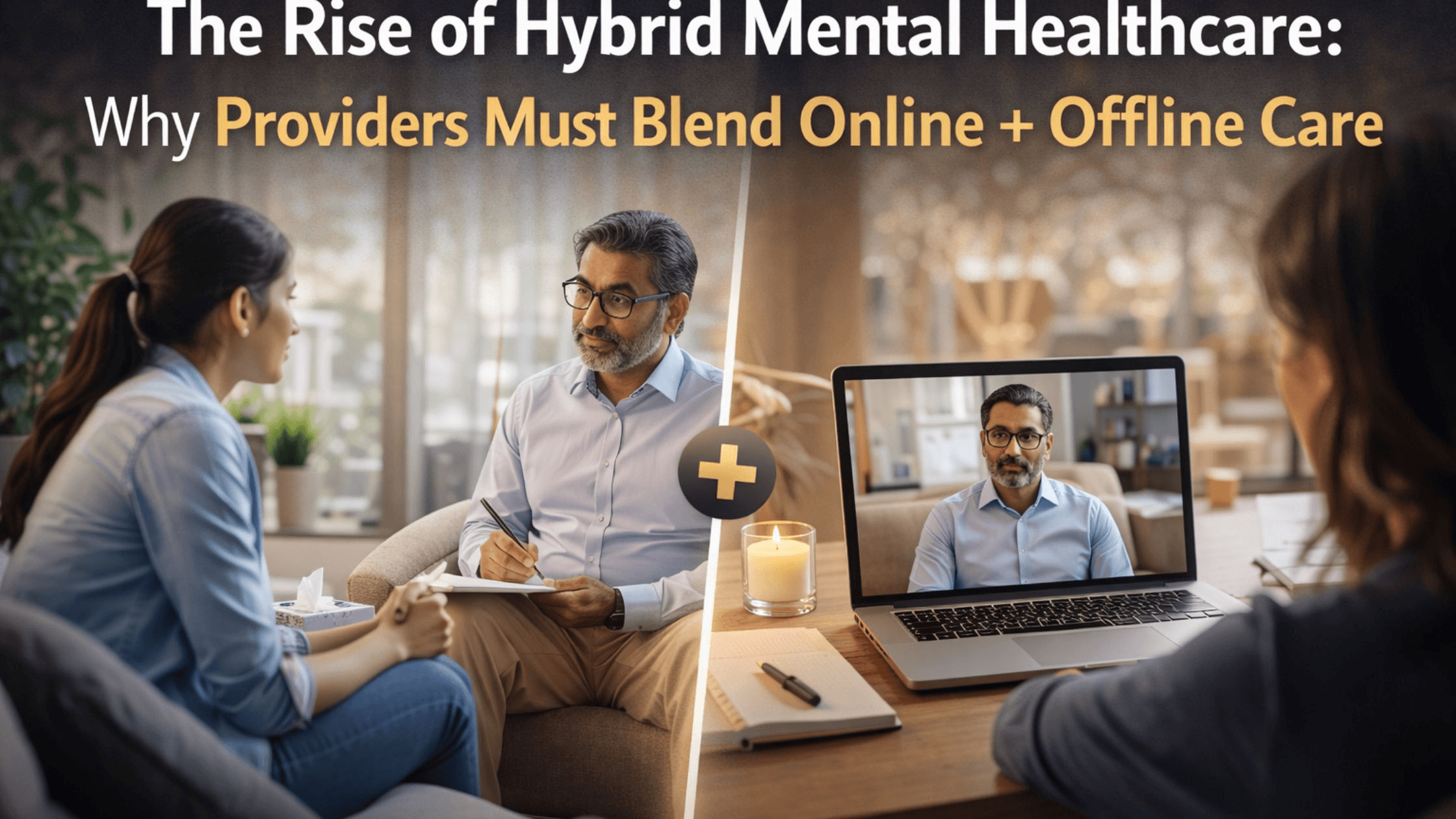
Today, people expect options. They want to be able to talk to their therapist from home on a busy day, and still have the choice of an in-person session when they need a deeper connection.
This is what we now call hybrid mental healthcare a model that blends online therapy and in-person sessions into one seamless experience. And it’s not just a trend. It’s quickly becoming the expectation.
Why Clients Now Expect Flexibility
If you look at how people live today, this shift makes sense. Everything else in life has become flexible.
Work has moved online. Communication is instant. Services are available on demand. So when it comes to something as important as mental health support, clients naturally expect the same level of convenience. But this is not just about convenience. It’s also about comfort and control.
Some clients feel more comfortable opening up from their own space. Others prefer the structure and presence of a physical session. And many want both, depending on what they’re going through.
A person dealing with anxiety might prefer online counselling on most days, but choose an in-person session during more intense phases. Someone with a busy schedule may not be able to commit to traveling every week, but still wants consistent support.
This is why hybrid care works. It adapts to the client, not the other way around. And in 2026, that flexibility is no longer a bonus. It’s expected.
The Real Benefits of Hybrid Mental Healthcare
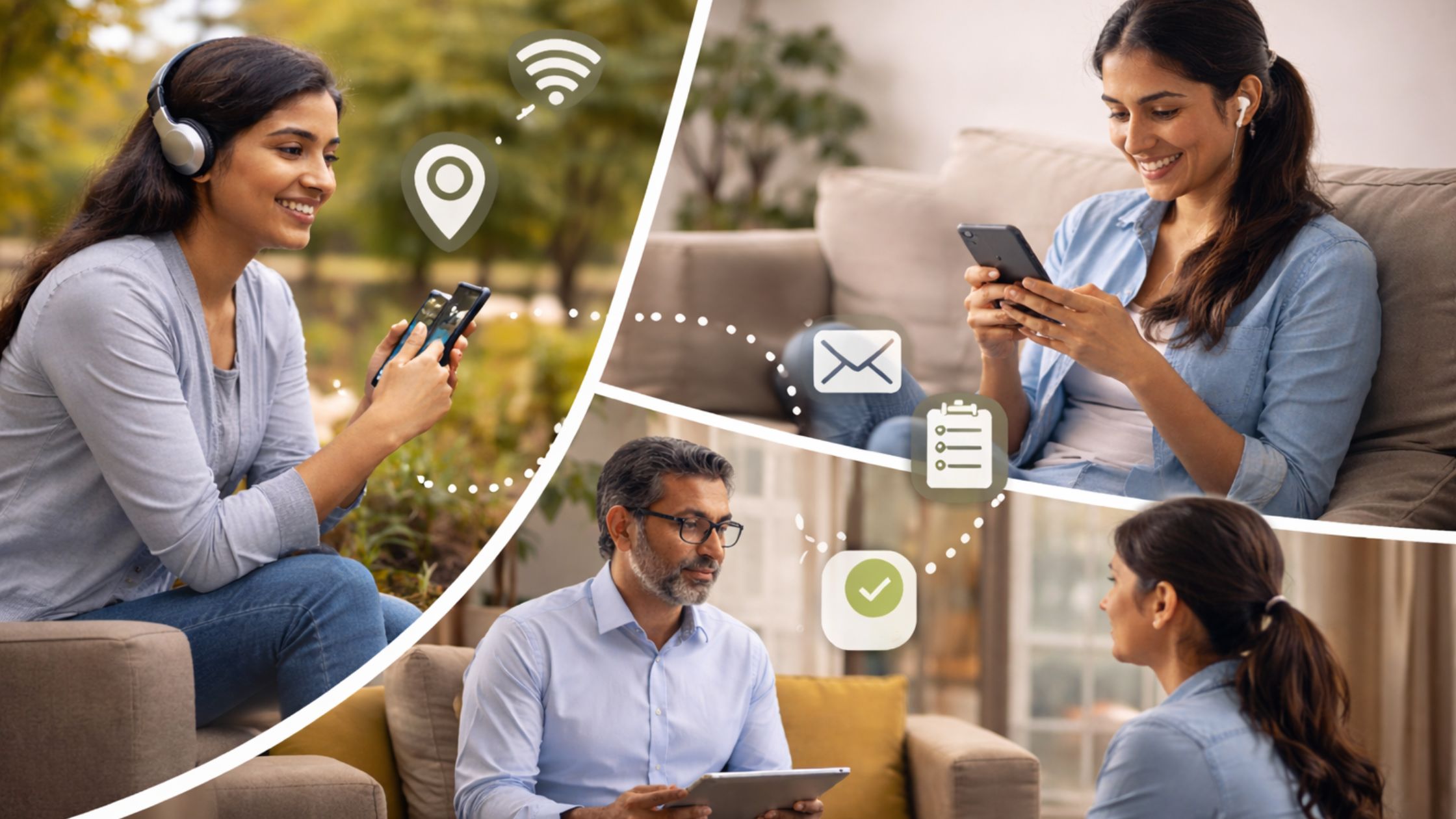
At first glance, hybrid care might seem like just a mix of online and offline sessions. But if you look deeper, it changes how therapy works at multiple levels.
One of the biggest benefits is accessibility. Clients who might have dropped off due to distance, time constraints, or scheduling conflicts can now stay connected. This is especially important in regions where access to mental health professionals is still limited.
Then comes retention. When therapy fits into a client’s lifestyle, they are far more likely to stay consistent. Missed sessions reduce. Drop-offs become less frequent. And over time, this leads to better outcomes.
There’s also continuity of care. Instead of therapy being limited to one session per week, support can extend beyond the session. A quick check-in, a follow-up message, or a structured activity can keep the process going between sessions.
This is where hybrid care becomes more than just a format. It becomes a system.
Designing a Hybrid Therapy Practice That Actually Works
This is where many therapists get stuck.
They understand the value of hybrid care. But implementing it feels complicated.
Because it’s not just about offering both online and offline sessions. It’s about creating a flow that connects everything.
A well-designed hybrid mental healthcare practice usually includes:
- Smooth appointment scheduling software that handles both online and in-person sessions
- Clear session types (virtual, in-clinic, follow-ups)
- Consistent follow-up communication
- Structured support between sessions
But the real challenge is not offering these things individually.
It’s making them work together without creating chaos.
Because when systems are disconnected, the experience breaks.
Clients get confused. Therapists feel overwhelmed. And the whole process becomes harder to manage.
The Hidden Challenge: Managing Hybrid Workflows
Let’s be honest.
Running a hybrid practice manually is exhausting.
You’re handling:
- Bookings from different sources
- Payments across different formats
- Notes and client records separately
- Follow-ups through messages or calls
At some point, it becomes difficult to keep everything organized.
And this is where many therapists hit a limit.
Not because they lack skill or intention, but because they lack the right system.
This is exactly where mental health practice management software becomes essential.
Why Tools Matter More Than Ever
To make hybrid care work smoothly, you need more than just a website or a calendar.
You need a system that connects everything.
This includes:
- Appointment scheduling software for mental healthcare practice
- Secure client records and session history
- Integrated payments for both online and offline sessions
- Tools for engagement between sessions
Without this, hybrid care becomes fragmented.
With the right system, it becomes seamless.
Where LifeHetu Fits Into This Shift
This is exactly the problem LifeHetu CRM is designed to solve.
Instead of managing your practice across multiple tools, LifeHetu brings everything into one place.
It allows you to:
- Manage online and offline appointments from a single dashboard
- Accept payments for sessions, packages, or care plans
- Maintain secure client records and session notes
- Engage clients between sessions through structured activities
What this does is simple, but powerful.
It removes friction.
Instead of thinking about tools, you can focus on your clients.
Instead of managing systems, you can focus on care.
And in a hybrid mental healthcare model, that clarity makes all the difference.
The Future of Therapy Is Not Online or Offline—It’s Both
There’s a tendency to think in extremes. Online vs offline. Digital vs physical.
But therapy is not about platforms. It’s about people. And people don’t live in one mode. They move between environments, emotions, and needs.
So the practices that will grow in the coming years are not the ones that choose one format. They are the ones that adapt. They are the ones that design experiences around flexibility, continuity, and connection.
That is what hybrid mental healthcare really means.
Final Thoughts
The shift toward hybrid care is not something that might happen in the future. It’s already happening.
Clients are already expecting flexibility. They are already moving between online and offline interactions. And they are already choosing providers who make that journey easier.
For therapists, this is not about changing everything overnight. It’s about evolving step by step.
Understanding how your clients prefer to engage. Creating systems that support that. And slowly building a practice that feels as flexible as the world your clients live in.
Because in the end, therapy works best when it meets people where they are. And today, that place is no longer just a room. It’s everywhere.
About the Author
Puneet is the founder of LifeHetu Technology, a platform built specifically for mental healthcare professionals to manage appointments, documentation, payments, and client engagement securely. He works closely with therapists, psychologists, and counselling centres to simplify digital practice management while preserving confidentiality and clinical integrity.
FAQs
What is hybrid mental healthcare?
Hybrid mental healthcare combines online therapy and in-person sessions, giving clients flexibility in how they receive support.Why do clients prefer hybrid therapy?
Clients value flexibility, convenience, and the ability to choose between online and offline sessions based on their needs.How can therapists manage hybrid practices effectively?
Using mental health practice management software helps manage appointments, records, payments, and client engagement in one place.What tools are needed for hybrid therapy?
You need appointment scheduling software, secure records, payment systems, and engagement tools to manage hybrid workflows smoothly.How does LifeHetu help in hybrid therapy?
LifeHetu CRM enables therapists to manage appointments, payments, and client engagement seamlessly across both online and offline sessions.
On this page
Jump to sections
About the author
Founder, LifeHetu
Puneet Pandey is the founder of LifeHetu. He has worked alongside psychologists since 2022 while building the platform, helping practitioners grow their online presence with digital tools and care solutions.
Related Reads. Similar Blogs to Check Out.