Founder, LifeHetu
Puneet Pandey is the founder of LifeHetu. He has worked alongside psychologists since 2022 while building the platform, helping practitioners grow their online presence with digital tools and care solutions.
17 Aug 26 10:28 am
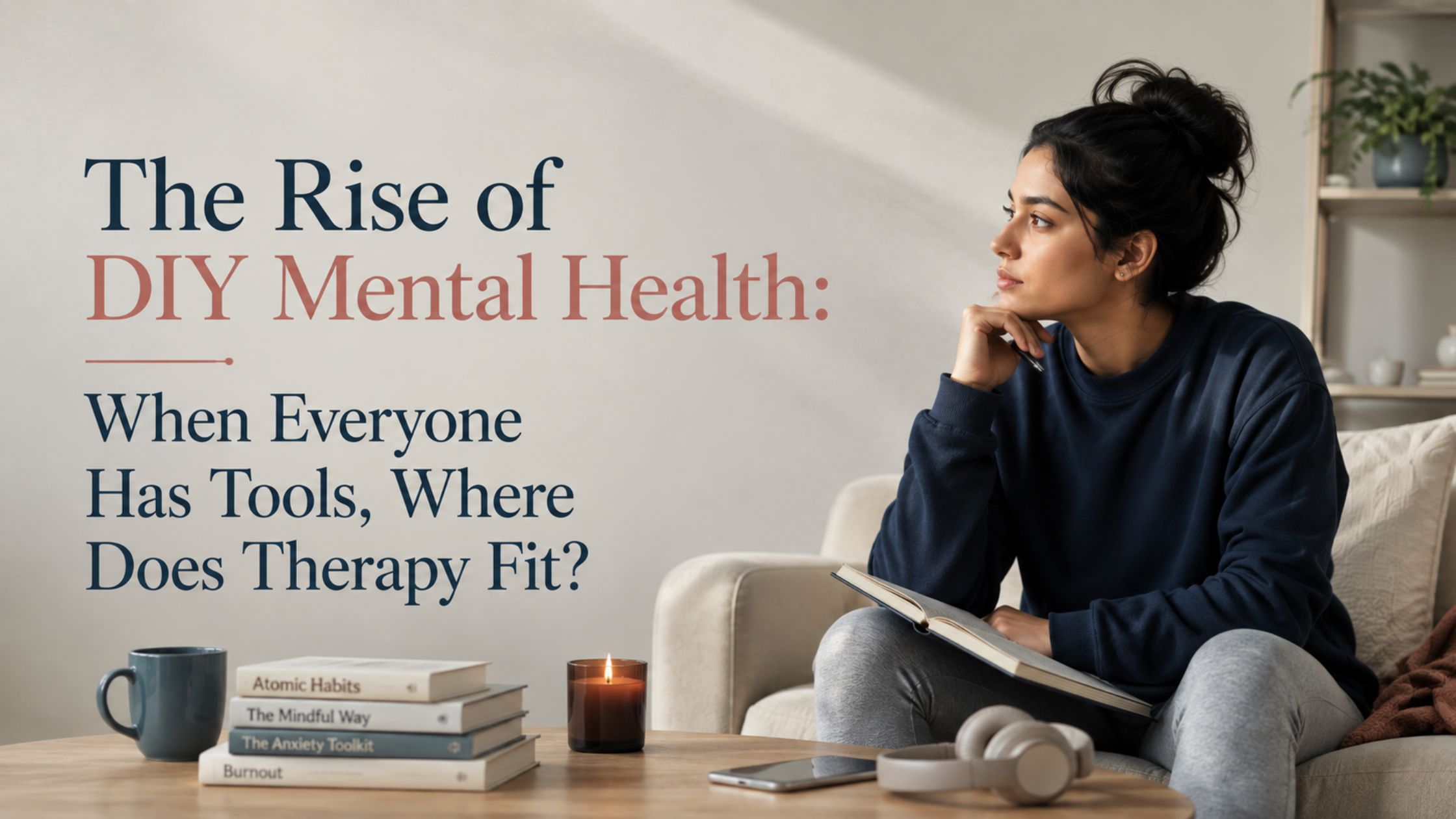
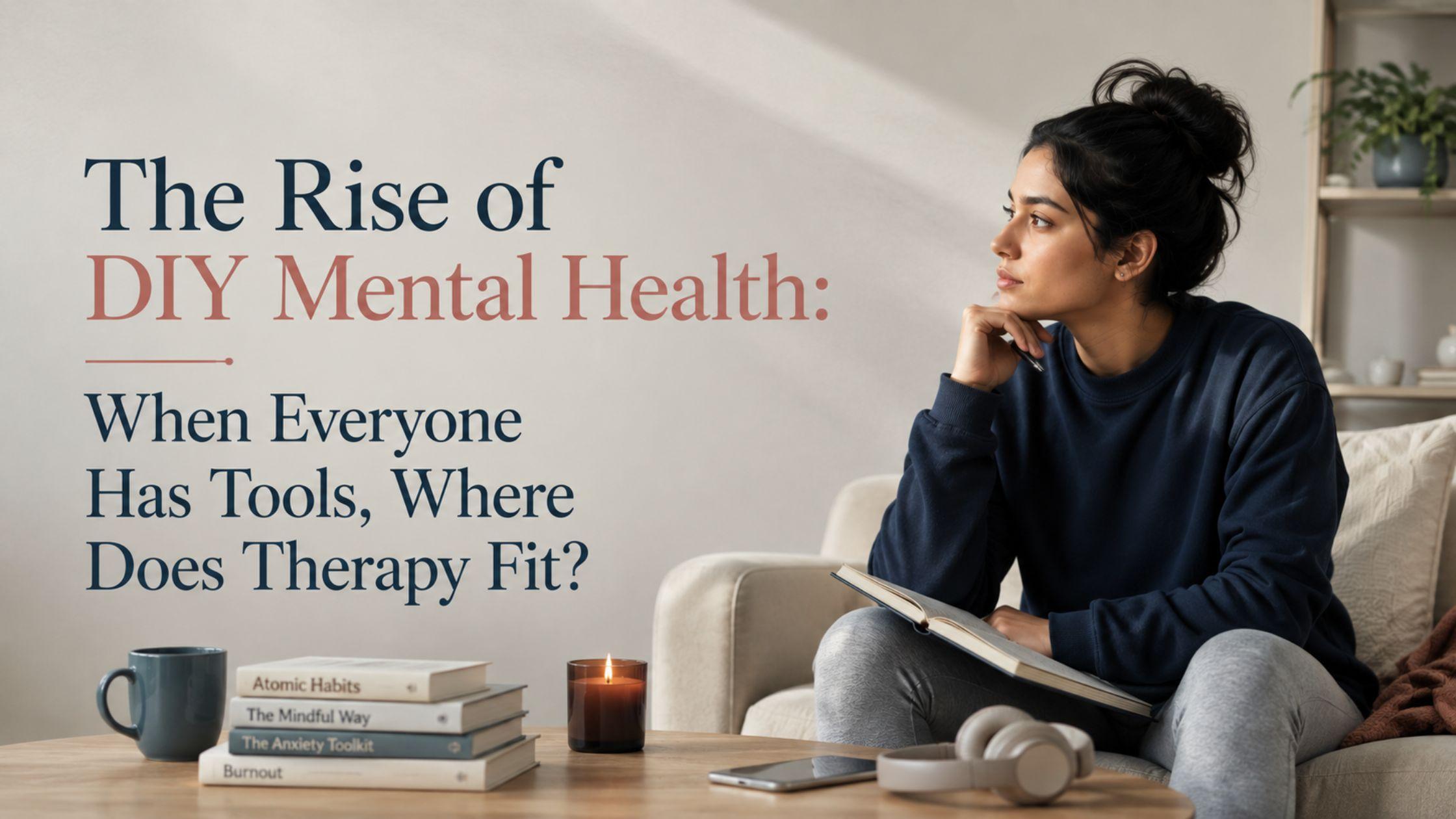
The Rise of DIY Mental Health: When Everyone Has Tools, Where Does Therapy Fit?
Books, apps, journaling, meditation and AI have made mental health self-help easier than ever. Explore the rise of DIY mental health and where therapy fits today.
On this page
Jump to sections
There has probably never been a time when people had this many ways to work on their mental health without speaking to a therapist.
Can't sleep because your mind won't stop racing? There is a meditation app for that. Feeling stuck in life? A self-help book promises a new perspective. Want to understand your emotions? Open a journal and follow a set of prompts. Struggling with a relationship? Thousands of podcasts, YouTube videos, courses, and social media posts are waiting to explain attachment styles, boundaries, communication, and emotional patterns. And if none of those feel personal enough, AI can now have a conversation with you at two in the morning.
In many ways, this is remarkable progress. Mental well-being is no longer something people think about only when life becomes unbearable. More people are actively learning about their emotions, trying healthier habits, reflecting on their behaviour, and looking for ways to understand themselves. Mental health tools that were once difficult to find are now available within seconds.
But this explosion of self-help creates an interesting question for therapy.
If someone can meditate, journal, track their mood, read psychology books, take online courses, use wellness apps, and ask AI almost anything, where does a therapist fit into the picture now?
The answer may tell us something important about where mental healthcare is heading.
Mental Health Support Has Quietly Become Unbundled
For a long time, professional support was one of the main places people encountered structured conversations about mental health. A therapist might help someone understand emotional patterns, introduce coping techniques, recommend reflective exercises, explain psychological concepts, and encourage behavioural changes.
Today, many of those experiences can be found separately.
A book can teach someone about anxiety. A meditation app can introduce breathing exercises. A guided journal can encourage reflection. A podcast can explain relationship patterns. An online course can teach stress-management techniques. A mood-tracking app can help someone notice emotional changes. AI can explain psychological concepts and suggest questions to think about.
Mental health support has effectively become unbundled into hundreds of individual tools.
That isn't necessarily a threat to therapy. In many cases, it may actually help people become more comfortable with the idea of caring for their mental health. Someone who isn't ready to speak with a professional may start with a book. Someone who feels uncomfortable discussing emotions may begin journaling privately. A meditation practice may help another person recognise how constantly stressed they have become.
Sometimes a small act of self-help becomes the first step toward seeking deeper support.
The problem begins when access to more tools creates the assumption that having tools automatically means knowing how to use them.
Having a Bigger Toolbox Doesn't Mean You Know What Needs Fixing
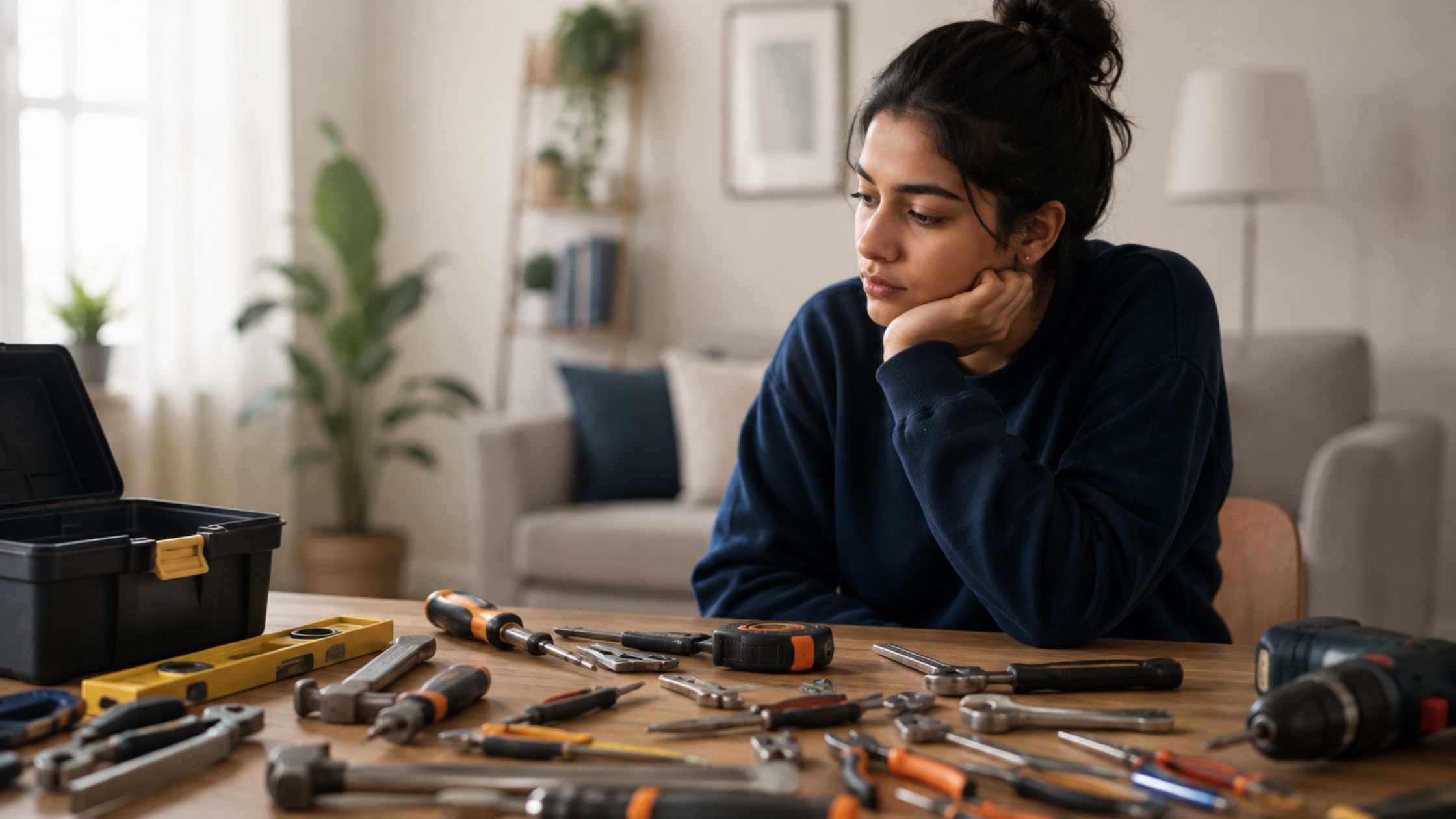
Imagine being handed a toolbox containing fifty different instruments. You have screwdrivers, drills, spanners, saws, measuring equipment and everything else you could possibly need.
There is only one problem: you don't know what is broken.
That is increasingly what modern self-help can feel like.
People have more mental health information than ever before, but information doesn't automatically create clarity. Someone experiencing constant exhaustion might assume they need a better morning routine when the deeper issue is burnout. Another person might repeatedly journal about a difficult relationship without recognising a pattern that keeps appearing across several relationships. Someone struggling to concentrate may try productivity techniques for months while overlooking the role that anxiety, sleep, stress, or another underlying difficulty is playing.
None of the tools themselves are necessarily wrong. The problem is that people naturally interpret their experiences through what they already know.
This is one reason mental healthcare professionals remain important even in a world filled with mental health resources. A professional isn't simply another source of coping techniques. Therapy can help someone understand which patterns matter, what may be sitting underneath them, and which approach makes sense for their particular situation.
Sometimes people don't need another tool.
They need help understanding what they're actually trying to change.
Self-Help Can Feel Like Progress Even When Nothing Is Changing
There is another side of DIY mental health that receives far less attention: working on yourself can become surprisingly comfortable.
You buy another psychology book. You listen to another podcast about attachment. You save another video about boundaries. You download another habit tracker. You complete another personality test. You understand another psychological term and suddenly another part of your behaviour seems to make sense.
It feels productive because you're constantly learning about yourself.
But learning and changing aren't always the same thing.
A person can understand exactly why they avoid conflict and still avoid every difficult conversation. Someone can know everything about healthy boundaries and still struggle to say no. A person can identify their relationship patterns perfectly and continue repeating them.
Self-awareness matters enormously, but awareness alone does not guarantee behaviour change.
Sometimes consuming self-help content can even become a subtle form of avoidance. Learning about the problem feels safer than confronting it. Reading about boundaries is easier than setting one with someone you love. Understanding procrastination is easier than sitting with the discomfort that makes you procrastinate. Watching videos about difficult relationships can feel easier than admitting what your own relationship has become.
This doesn't make self-help useless. It simply reminds us that knowledge is often the beginning of change rather than the change itself.
AI Has Made DIY Mental Health Far More Personal
Books, podcasts, and courses all have one obvious limitation: they cannot respond to you.
AI changes that.
For the first time, someone can describe exactly what they are experiencing and receive an immediate, personalised-looking response. They can ask follow-up questions, request explanations in simpler language, generate journaling prompts, discuss an argument, explore coping strategies, or ask why a certain emotional pattern keeps appearing.
That makes AI fundamentally different from earlier forms of self-help.
Used appropriately, it can be useful for education and reflection. Someone who struggles to put feelings into words may use AI to organise their thoughts before speaking to someone. Another person may use it to understand a psychological concept they encountered elsewhere. It can make information easier to access and less intimidating.
But there is an important limitation.
AI largely works with the information a person gives it.
And humans aren't always reliable narrators of their own lives.
We forget details. We protect ourselves from uncomfortable conclusions. We explain situations from our own perspective. We may describe what another person did in enormous detail while barely noticing our own behaviour. Sometimes the most important part of a story is precisely the part we don't realise we are leaving out.
This is one of the differences between an intelligent tool and a therapeutic relationship.
AI can help you explore the story you tell about yourself. A good therapist may help you notice the parts of the story you aren't telling.
Therapy Doesn't Have to Compete With Self-Help
It would be easy to turn this discussion into a competition.
Books versus therapists. Apps versus therapists. AI versus therapists.
But that isn't how most people actually care for their mental health.
Someone might attend therapy while also meditating every morning. Another person might read a book recommended by their therapist. Someone may journal between appointments and bring those reflections into the next session. A client might use a mood tracker to notice patterns that become useful during therapy.
These tools can complement one another.
The important difference is knowing what each one can and cannot provide.
A journal creates space for reflection, but it cannot ask why you avoided writing about something. A meditation app can guide you through breathing, but it doesn't understand why a particular emotion keeps returning. A book can introduce a powerful idea, but it cannot tell whether that idea actually applies to your situation.
Therapy adds something different: another human perspective.
A therapist can notice patterns across conversations, challenge assumptions carefully, recognise contradictions, ask uncomfortable but useful questions, and understand behaviour within the wider context of someone's life.
Perhaps the rise of self-help doesn't reduce the value of therapy.
Perhaps it simply makes therapy's unique value easier to see.
The Bigger Risk May Be Self-Improvement Without an End Point
There is another question worth asking. What happens when taking care of our mental health slowly turns into constantly trying to improve ourselves?
Modern wellness culture can make it seem as though there is always another version of ourselves waiting to be unlocked.
Wake up earlier. Meditate longer. Journal every evening. Fix your attachment style. Heal your inner child. Improve your communication. Optimise your sleep. Become more productive. Set better boundaries. Track your emotions.
Individually, many of these things can be helpful.
Together, however, they can create a strange pressure: the feeling that we are permanent projects requiring endless improvement.
Mental well-being isn't about becoming emotionally perfect.
Healthy people still get angry. They still feel jealous, anxious, disappointed, insecure, frustrated, and sad. They still make poor decisions and occasionally handle situations badly.
The goal of mental healthcare has never been to remove every uncomfortable emotion from human life.
Sometimes growth means learning when to change something.
Sometimes it means learning what doesn't need fixing at all.
That distinction becomes harder when an endless stream of self-improvement content keeps suggesting there is always another problem to solve.
The Future May Be Less DIY and More "Do It With Support"
Perhaps the most interesting future isn't one where people choose between therapy and self-help.
It is one where the boundaries between independent mental well-being practices and professional support become more connected.
Clients can already practise therapeutic skills between appointments, complete reflective exercises, track emotional patterns, read recommended resources, and bring those experiences back into therapy. Digital technology can make this process more structured without requiring therapists to be constantly available.
The difference is subtle but important.
Instead of someone endlessly searching the internet for the next thing that might help, independent reflection can have context. The therapist doesn't need to control everything a client does between sessions, but professional guidance can help turn scattered self-help into more meaningful work.
This structured approach is especially useful for young adults who are transitioning to independent living. Many young people struggle with executive functioning and daily life skills when they first leave home. Having a mentor or coach can make a big difference during this time. Programs like strivforward.com provide this type of guided support in a real-world setting. This helps individuals practice their skills while still having a safety net.
DIY mental health doesn't have to disappear.
It may simply become more useful when people know when to work independently and when another perspective could help.
So, Where Does Therapy Sit Now?
Therapy now exists in a world where information is everywhere.
That changes its role.
People don't necessarily need therapists to be their only source of psychological knowledge anymore. They can learn definitions, discover coping strategies, access meditation exercises, and read about emotional health without ever booking an appointment.
But mental healthcare has never really been about possessing information.
It is about understanding what that information means for one particular human being.
A book cannot fully understand your childhood. An app cannot know why a certain relationship changes the way you see yourself. A journal cannot independently point out the pattern you've repeated for ten years. AI can generate thoughtful responses, but it cannot automatically know which parts of your story you haven't recognised yet.
Therapy sits in that gap between knowing about yourself and truly understanding yourself.
As DIY mental health continues to grow, people will probably keep reading books, downloading apps, meditating, journaling, taking courses, and experimenting with AI. Many of those things will genuinely improve people's lives.
The future doesn't require choosing between them and therapy.
Instead, we may become better at understanding what each is for.
Because in a world overflowing with mental health tools, the hardest part may no longer be finding something that promises to help.
It may be figuring out what you actually need.
About the Author
Puneet is the founder of LifeHetu Technology, a platform built specifically for mental healthcare professionals to manage appointments, documentation, payments, and client engagement securely. He works closely with therapists, psychologists, and counselling centres to simplify digital practice management while preserving confidentiality and clinical integrity.
FAQs
Is DIY mental health a replacement for therapy?
Not necessarily. Self-help tools can support reflection, learning, and healthy habits, but they do not provide the personalised assessment, perspective, and therapeutic relationship available through professional care.Can journaling and meditation improve mental well-being?
They can be useful practices for many people, depending on individual needs and circumstances. They can also complement professional mental health support when appropriate.Can AI be used for mental health self-help?
AI can help with general mental health information, reflection, and educational questions, but it should not be treated as a replacement for professional assessment, diagnosis, crisis support, or therapy.When should someone consider seeing a therapist?
If emotional difficulties are persistent, overwhelming, affecting everyday functioning, or difficult to manage independently, speaking with a qualified mental healthcare professional can help provide clarity and appropriate support.Can therapists use self-help activities between sessions?
Yes. Depending on the therapeutic approach and individual client, therapists may recommend structured reflection, journaling, exercises, mindfulness practices, or other activities that support the work being done during therapy.
On this page
Jump to sections
About the author
Founder, LifeHetu
Puneet Pandey is the founder of LifeHetu. He has worked alongside psychologists since 2022 while building the platform, helping practitioners grow their online presence with digital tools and care solutions.
Related Reads. Similar Blogs to Check Out.