Digital Marketing Specialist
Shubham Srivastava is a digital marketing specialist with 3+ years of experience in the mental healthcare domain. He blends SEO expertise, social media strategy and creative storytelling to help mental health brands grow their digital presence.
21 Oct 26 03:57 pm
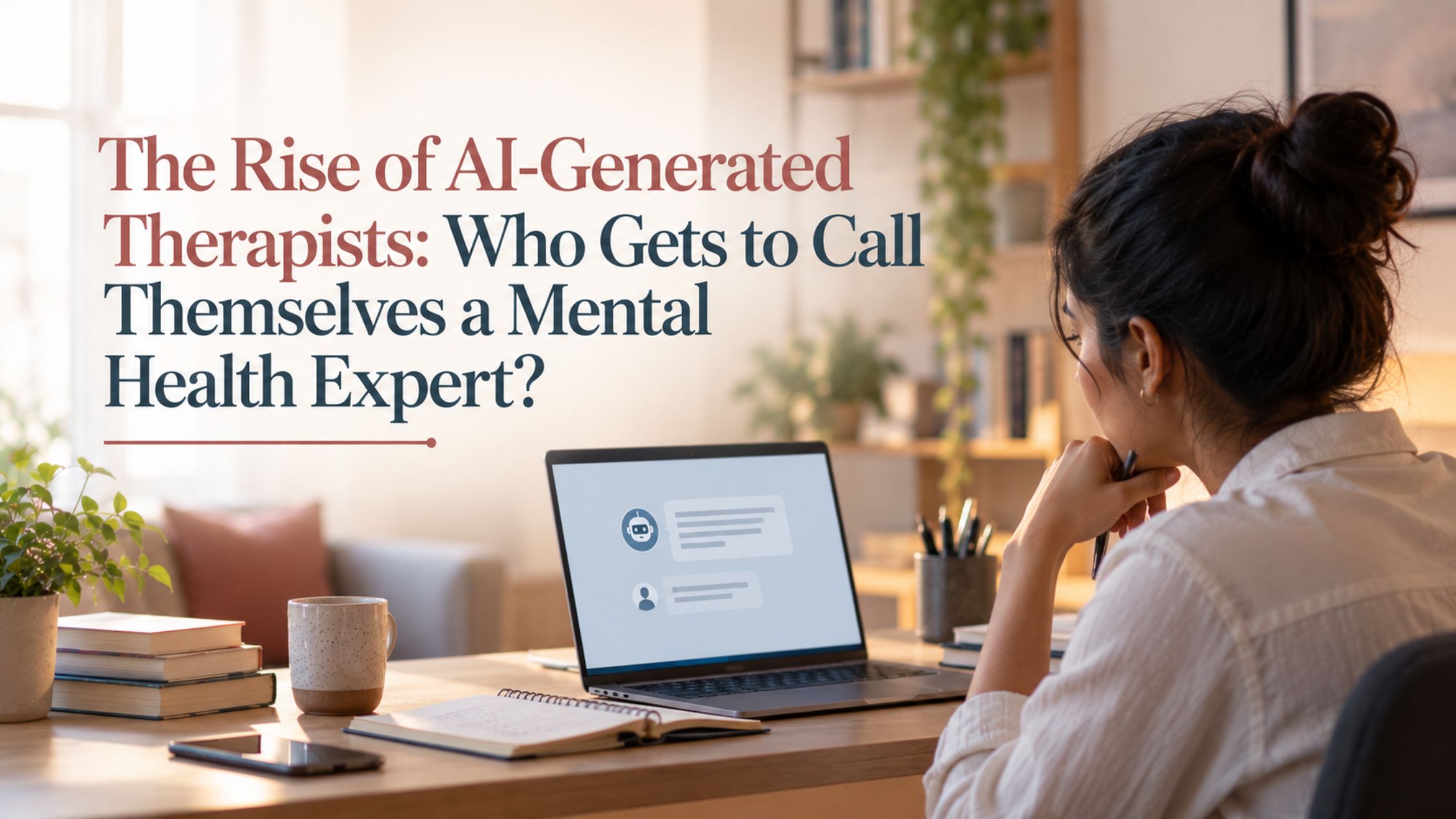
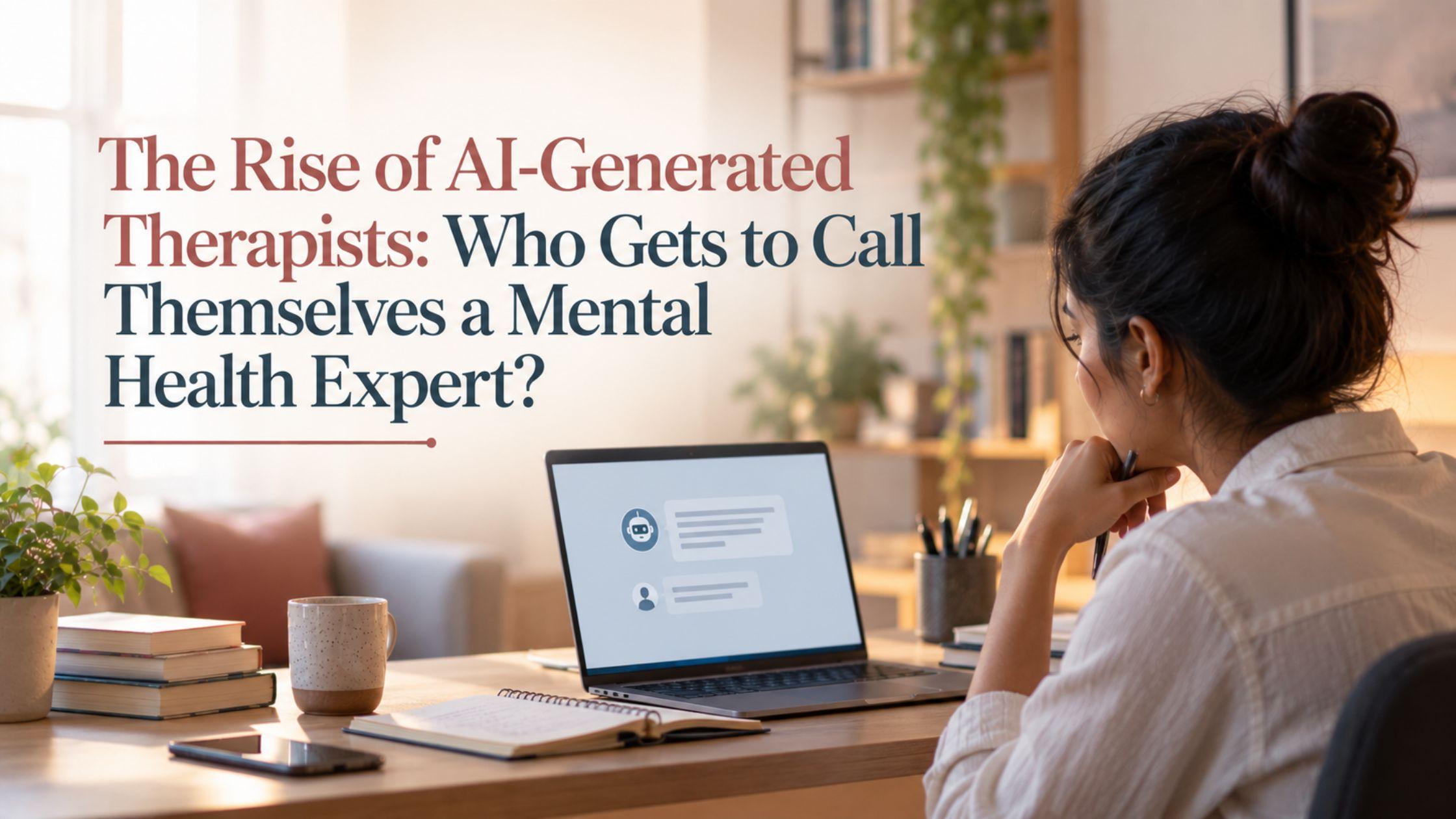
The Rise of AI-Generated Therapists: Who Gets to Call Themselves a Mental Health Expert?
AI-generated therapists and fake credentials are raising new concerns. Explore how synthetic personas are changing trust, credibility, and expertise in mental healthcare.
On this page
Jump to sections
Imagine scrolling through Instagram and coming across a mental health professional explaining why people struggle with emotional attachment.
The person looks credible. They speak calmly, use psychological terminology confidently, and explain complicated emotional experiences in simple language. Their videos discuss anxiety, childhood experiences, relationships, trauma, and self-esteem. The background resembles a professional counselling room, and the account regularly publishes thoughtful mental health advice.
You follow them. Over time, their explanations begin influencing how you understand your own emotions.
But there is something you don't know.
The person in those videos doesn't exist.
Their face was generated using artificial intelligence. Their voice is synthetic. Their professional identity was invented, and the qualifications mentioned in their biography may have been created to make the account appear credible. There may be no licensed psychologist, qualified counsellor, or accountable mental health professional behind the content.
Until recently, creating such a convincing fictional expert would have required considerable technical effort. Today, generative AI makes it increasingly possible to produce realistic faces, natural-sounding voices, professional-looking websites, and persuasive educational content.
This creates a problem that goes far beyond misinformation.
When technology can manufacture the appearance of professional expertise, how do people know whom to trust?
For mental healthcare, where credibility, vulnerability, and professional responsibility are deeply connected, that question deserves serious attention.
The Internet Has Always Had a Mental Health Credibility Problem
Mental health misinformation did not begin with artificial intelligence.
Long before generative AI became widely accessible, social media was filled with people offering psychological explanations without appropriate training. Some presented themselves as relationship coaches, emotional healing experts, trauma specialists, or mental wellness mentors. Others shared personal experiences that gradually evolved into advice for thousands of followers.
Not all of this content was harmful. Personal experiences can make people feel understood, and accessible psychological education can encourage someone to seek professional support.
The difficulty has always been distinguishing personal opinion, general education, commercial wellness advice, and qualified clinical expertise.
A person might explain attachment theory confidently without understanding its clinical limitations. Another might describe ordinary emotional experiences as symptoms of a disorder. Someone may use terms such as narcissism, trauma bonding, or emotional manipulation without sufficient context.
Social media algorithms can amplify these explanations because simple, emotionally compelling messages often attract attention.
Generative AI introduces another layer to this existing problem.
Previously, audiences could at least assume that the person speaking in a video was a real individual, even if their qualifications were uncertain. Now, the person delivering the advice may be entirely synthetic.
The credibility problem is no longer limited to whether someone's expertise is genuine.
It also includes whether the expert themselves is real.
AI Can Manufacture the Appearance of Professional Authority

People rarely evaluate credibility through qualifications alone.
We make judgements based on appearance, language, confidence, consistency, and familiarity. Someone speaking calmly in a professional setting may seem more trustworthy than someone delivering the same information casually. A polished website, carefully designed logo, professional biography, and consistent educational content can create the impression of an established practice.
These signals are useful, but they are not proof of expertise.
Generative AI makes them easier to reproduce.
A synthetic therapist persona could appear in dozens of videos, publish articles, answer frequently asked questions, and maintain a consistent identity across social platforms. The persona might have a professional-sounding name, an impressive biography, and references to qualifications that are difficult for an ordinary viewer to verify.
AI-generated images could depict an office, certificates on a wall, or a person participating in professional events. A fabricated testimonial could describe how helpful the supposed therapist was. Even an apparently authentic video introduction may no longer establish that a real professional exists.
This does not mean every AI-generated mental health persona is deliberately deceptive. Some organisations may use clearly labelled virtual presenters to communicate educational information developed and reviewed by qualified professionals.
The ethical problem emerges when synthetic presentation is used to imply human qualifications, clinical experience, or professional accountability that do not exist.
A convincing appearance of expertise can influence people long before they think to verify it.
When a Professional Title Becomes a Marketing Tool
One of the most complicated issues in online mental health is the language used to describe expertise.
Psychologist, psychiatrist, counsellor, psychotherapist, mental health coach, wellness expert, and emotional healing specialist may sound similar to someone unfamiliar with the profession. Yet these titles can represent very different levels of education, training, professional responsibility, and regulatory oversight.
The legal protection attached to particular titles also varies by country and jurisdiction.
For example, in India, clinical psychology is subject to specific professional qualification and registration requirements under the applicable regulatory framework. However, not every title used in the broader counselling and wellness industry has identical legal requirements.
This distinction matters because an AI-generated profile can easily combine legitimate psychological terminology with vague or invented professional claims.
A fictional persona might describe itself as a certified trauma recovery expert, an internationally recognised relationship therapist, or a specialist in subconscious healing. These descriptions may sound impressive without identifying a verifiable qualification, recognised professional registration, or accountable practitioner.
For audiences, the challenge becomes separating professional authority from professional-looking language.
A genuine mental healthcare professional should be able to provide relevant information about their qualifications, scope of practice, professional identity, and applicable registration where required.
An invented digital persona cannot independently hold clinical qualifications or professional accountability.
A professional title is not merely a branding decision. It represents responsibilities toward the people who place their trust in that expertise.
The Problem With Advice That Sounds Clinically Accurate
One reason AI-generated mental health content can be persuasive is that it may contain genuinely useful information.
An AI-generated explanation of cognitive distortions could be broadly accurate. A synthetic presenter might describe common signs of stress or explain the purpose of mindfulness in a way that is easy to understand. A chatbot may provide reasonable general suggestions about sleep, journaling, or emotional reflection.
This creates a more complicated problem than obviously false advice.
When content is partly accurate, audiences may begin trusting the source more broadly.
Someone who learns a useful breathing technique from a synthetic therapist might reasonably assume that the same account is qualified to explain personality disorders, diagnose mental health conditions, or recommend treatment decisions.
But the ability to communicate psychological information is not the same as clinical competence.
A qualified professional must consider the person's circumstances, relevant history, symptom patterns, potential risks, alternative explanations, and appropriate treatment options. They also need to recognise the limits of their competence and when referral or additional assessment is necessary.
AI-generated content may sound confident even when it lacks essential context.
For example, a video might explain that difficulty concentrating can be associated with ADHD. That statement alone does not establish whether someone experiencing concentration problems has ADHD. Sleep difficulties, stress, anxiety, depression, medication effects, and other factors may also need consideration.
The danger is not necessarily that every statement is incorrect.
It is that general psychological information can be presented with the authority of individual clinical judgement.
And for someone searching for answers during a vulnerable period, that distinction may be difficult to recognise.
Digital Familiarity Can Begin to Feel Like Trust
Trust usually develops through repeated interactions.
We become familiar with someone's communication style, values, and responses. Over time, that familiarity can make their opinions feel more reliable.
Social media already uses this psychological tendency extensively.
A creator who appears regularly in someone's feed can begin to feel familiar even when the viewer has never met them. Their voice becomes recognisable. Their explanations become predictable. Their presence starts to feel reassuring.
Synthetic therapist personas can potentially benefit from the same effect.
Imagine someone watching short mental health videos from the same AI-generated professional every evening. The account explains their relationship problems, offers comforting messages, and describes emotional experiences in language that feels personally relevant.
Eventually, the viewer may begin trusting the persona because its content repeatedly makes them feel understood.
But feeling understood is not the same as receiving competent professional care.
The relationship may be built around a carefully designed digital identity rather than a real practitioner who can be questioned, evaluated, or held professionally accountable.
This becomes especially concerning when an account moves from general education toward personalised advice, paid consultations, sensitive information collection, or claims of therapeutic treatment.
The more vulnerable the audience, the greater the importance of transparent identity and professional responsibility.
What Happens When Synthetic Therapists Start Offering Services?
Publishing general mental health information is one thing. Presenting an AI system as a qualified therapist capable of providing professional treatment raises a different set of concerns.
Suppose a platform introduces a digital therapist with a realistic face, a reassuring voice, and a professional biography. Users are encouraged to discuss personal experiences, relationships, symptoms, and emotional difficulties.
If the system is clearly identified as AI, its limitations are explained, and its role is restricted appropriately, it may function as an educational or supportive digital tool.
But what if the platform presents the persona as an independently qualified professional?
Who is responsible if the advice is inappropriate? Who evaluates whether the system is operating within a suitable scope? What happens when someone discloses serious risk? How are sensitive conversations stored, accessed, and protected? What qualifications support the clinical claims being made?
These questions cannot be answered simply by making the technology more conversational.
Mental healthcare involves ethical and professional responsibilities that extend beyond producing helpful responses.
A real clinician operates within professional standards, relevant legal requirements, and duties toward clients. Their work can be examined in relation to training, competence, documentation, confidentiality, informed consent, and professional conduct.
An AI persona does not independently possess those responsibilities.
Accountability must rest with identifiable people and organisations responsible for designing, deploying, supervising, and representing the system.
Without that accountability, a synthetic therapist may offer the appearance of professional care without the protections people reasonably associate with it.
Should AI-Generated Mental Health Educators Be Banned?
It would be tempting to conclude that synthetic mental health presenters should simply not exist.
But the issue is more nuanced.
AI-generated presenters can potentially make educational content easier to produce, translate, and adapt for different audiences. A qualified psychologist might use a clearly labelled virtual presenter to explain stress-management techniques in several languages. A mental health organisation could use synthetic narration to make general educational material more accessible.
The presence of AI in the content does not automatically make that content misleading.
The more important questions concern transparency, accuracy, purpose, and accountability.
Is the audience clearly told that the presenter is synthetic? Are professional qualifications attributed only to real, verifiable individuals? Is clinical content appropriately reviewed? Does the material distinguish education from diagnosis or treatment? Is there a responsible organisation behind the information?
These distinctions matter because banning a particular presentation format would not solve the underlying credibility problem.
A real person can spread misinformation.
A synthetic presenter can communicate accurate information.
What determines trustworthiness is not simply whether the face on the screen is human. It is whether the claims are supported, the identity is transparent, and responsibility can be traced to qualified people.
Mental Healthcare May Need a New Standard of Digital Credibility
For years, digital credibility has been associated with polished websites, testimonials, search rankings, social media presence, and professional branding.
Those signals are becoming less reliable as evidence of genuine expertise.
A professional-looking website can be generated quickly. A convincing profile photograph may depict someone who does not exist. A voice can be cloned or synthesised. Testimonials and professional biographies can be fabricated.
As these capabilities become more accessible, mental healthcare may need to place greater emphasis on verifiable identity.
For people seeking support, that could mean checking a professional's qualifications, relevant registration where applicable, organisational affiliation, and the nature of the services being offered.
For clinics and individual practitioners, it may mean making legitimate credentials and professional information easier to find rather than relying entirely on branding.
For digital platforms, it could mean clearer disclosure when AI is involved in communication, education, or service delivery.
This is also where the broader digital infrastructure of mental healthcare becomes relevant.
A credible professional practice is not defined only by how it appears online. It also depends on how responsibly it handles client information, maintains records, manages appointments, communicates expectations, and supports continuity of care.
Platforms such as LifeHetu support the operational side of professional mental healthcare through tools for appointments, client records, documentation, activities, and practice management. Such systems do not verify clinical expertise by themselves, but they can support the organised delivery of care by real professionals.
For mental healthcare professionals, the growing presence of synthetic identities makes a credible and transparent professional presence increasingly important.
The objective should not be to look more impressive than an AI-generated expert.
It should be to make genuine professional identity and responsibility easier to establish.
The Future of Mental Health Expertise Cannot Be Decided by Algorithms Alone
The internet has already changed who gets heard when mental health is discussed.
Someone with a large audience may have more influence over public understanding of anxiety than a qualified professional with years of clinical experience. A viral explanation can reach millions of people while careful, evidence-informed guidance receives comparatively little attention.
AI could intensify this imbalance.
Synthetic personalities can produce content at scale, maintain consistent branding, adapt messages for different audiences, and appear available across multiple platforms. They may become extremely effective at attracting attention and building familiarity.
But popularity has never been a reliable measure of clinical competence.
The future of mental healthcare cannot allow professional credibility to become something that is determined primarily by how convincing a digital persona looks, how frequently it publishes, or how effectively an algorithm distributes its content.
There is a fundamental difference between explaining mental health and being qualified to provide mental healthcare.
That difference must remain visible even as technology makes it easier to blur.
The question is not whether AI should participate in mental health education. It already does, and its role will likely continue expanding.
The question is whether audiences will be able to distinguish between technology that communicates information and professionals who are qualified and accountable for providing care.
Final Thoughts: Expertise Must Be More Than an Appearance
For most of human history, seeing someone speak was reasonable evidence that a real person existed behind the words.
That assumption is becoming less dependable.
A therapist's face can be generated. Their voice can be synthetic. Their professional biography can be invented. Their apparent experience can be described in convincing language, and their content can reach thousands of people before anyone asks whether the person behind the account is real.
This does not mean AI has no place in mental healthcare.
It means the profession must become more deliberate about what constitutes expertise.
Professional credibility should rest on verifiable qualifications, appropriate competence, transparent identity, ethical responsibility, and accountability—not simply on the ability to sound knowledgeable or appear reassuring.
Technology may eventually become extraordinarily good at explaining psychological concepts. It may produce educational content that is clearer, more accessible, and more engaging than much of what exists today.
But generating an explanation is not the same as accepting responsibility for another person's care.
And creating the appearance of a therapist is not the same as becoming one.
As synthetic mental health personalities become increasingly convincing, perhaps the most important question will no longer be whether someone looks like an expert.
It will be whether there is a real, qualified, accountable professional behind the expertise being claimed.
FAQs
What is an AI-generated therapist?
An AI-generated therapist may refer to a synthetic persona or conversational system presented as offering mental health support. Such systems are not independently qualified or licensed mental healthcare professionals.Can AI-generated therapists provide reliable mental health advice?
AI can provide useful general information, but its responses may be inaccurate or lack important context. It should not replace professional diagnosis, clinical assessment, or treatment.How can someone verify an online therapist's credentials?
Check the professional's qualifications, relevant registration where required, practice details, and verifiable professional identity. A polished website or social media profile alone does not establish credibility.Are AI-generated mental health influencers always misleading?
No. Clearly labelled synthetic presenters can be used for educational purposes. Problems arise when AI-generated identities imply qualifications, experience, or professional authority they do not possess.Why is digital credibility important in mental healthcare?
People often seek mental health information during vulnerable periods. Transparent identities, verifiable expertise, and professional accountability help them distinguish trustworthy care from misleading claims.Will AI replace qualified mental healthcare professionals?
AI may support education and administrative processes, but clinical judgement, ethical responsibility, accountability, and therapeutic relationships remain essential parts of professional mental healthcare.
On this page
Jump to sections
About the author
Digital Marketing Specialist
Shubham Srivastava is a digital marketing specialist with 3+ years of experience in the mental healthcare domain. He blends SEO expertise, social media strategy and creative storytelling to help mental health brands grow their digital presence.
Related Reads. Similar Blogs to Check Out.