How LifeHetu Works with Your Mental Health Practice
We start by understanding how your practice works, what your clients need and which technology will genuinely support your day-to-day operations. From there, LifeHetu can design, build and connect the right combination of website, integrations and practice-management tools.
The result can support online, in-person or hybrid practice — without forcing every practice into the same setup.
Start with How Your Practice Actually Works
LifeHetu does not begin with a fixed technology package. The first conversation is about how your practice runs today, and what needs to be improved, connected or built.
The kinds of things we want to understand:
What kind of practice it is, and how many practitioners work in it
Which services are offered, and how the practice describes them
How people currently find the practice and get in touch
Whether sessions happen online, in person, or both
How appointments are arranged and by whom
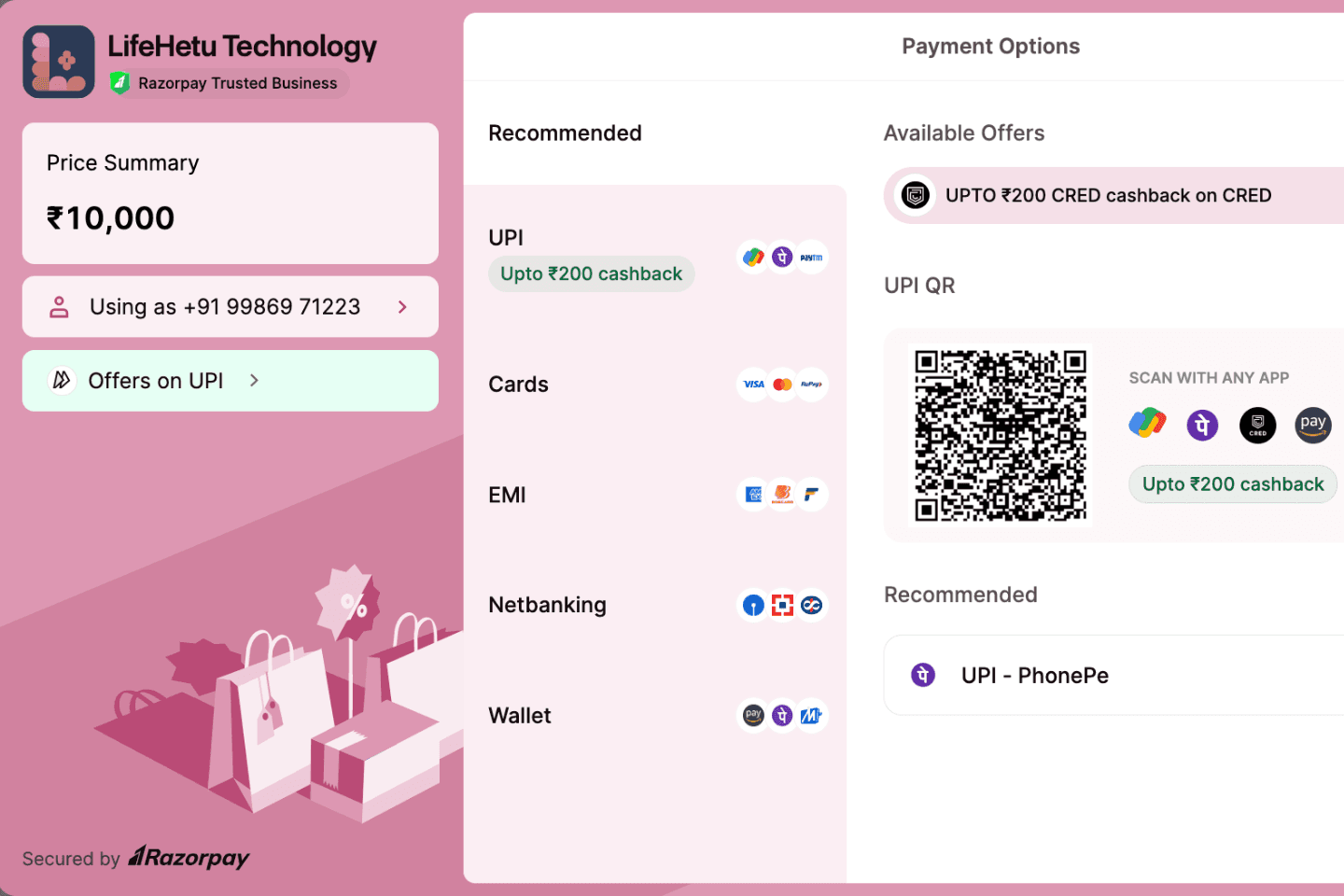
When and how the practice takes payment
What website or tools are already in use
How the practice communicates with clients between sessions
What is being managed by hand today that does not need to be
Choose the Technology Your Practice Actually Needs
From that conversation LifeHetu recommends a combination of capabilities. Not every practice needs the same implementation — a practice may need one of these, two of them, or all three connected together.
Custom Website
A website built around the practice’s services, practitioners and client journey.
Integrated Digital Workflows
Appointments, payments, notifications, events and forms connected to that website.
Practice-Management Software
The system the practice runs on day to day, for clients seen online and in person.
Design and Build the Client-Facing Experience
Where website development is part of the requirement, LifeHetu structures, designs and builds the site — the practice does not assemble it. The work moves from understanding to structure, then design, then build, then integration.
What the build covers:
How the practice positions itself, and how its services are explained
A page for each service, and a profile for each practitioner
Blogs and resources, so the practice can be found for what it knows
The path a visitor takes from reading to enquiring or booking
Payments, events and courses where they apply
Enquiry and information forms
A layout that works on a phone as well as a desktop
An SEO-ready page structure, with the headings and metadata search engines and AI answer engines rely on
Connect What Happens Before and After a Client Books
A website that only describes the practice leaves the work to be redone by hand. LifeHetu can connect the steps around a booking so the information travels with the client instead.
Steps that can be connected, depending on what the practice needs:
An enquiry reaching the practice as a record it can act on
Choosing a service, or choosing a particular practitioner
Booking against availability the practitioner has actually set
Payment, where the practice takes it in advance
Confirmations and reminders by email or WhatsApp
Intake and information forms before a first session
Event and course registrations
The client and the appointment appearing in practice management
Set Up the Day-to-Day Practice Workflow
LifeHetu's practice-management software is configured around how the practice runs: its practitioners, its services, its schedules and the way it records work.
What gets set up:
Client records, with the history the practice needs to work from
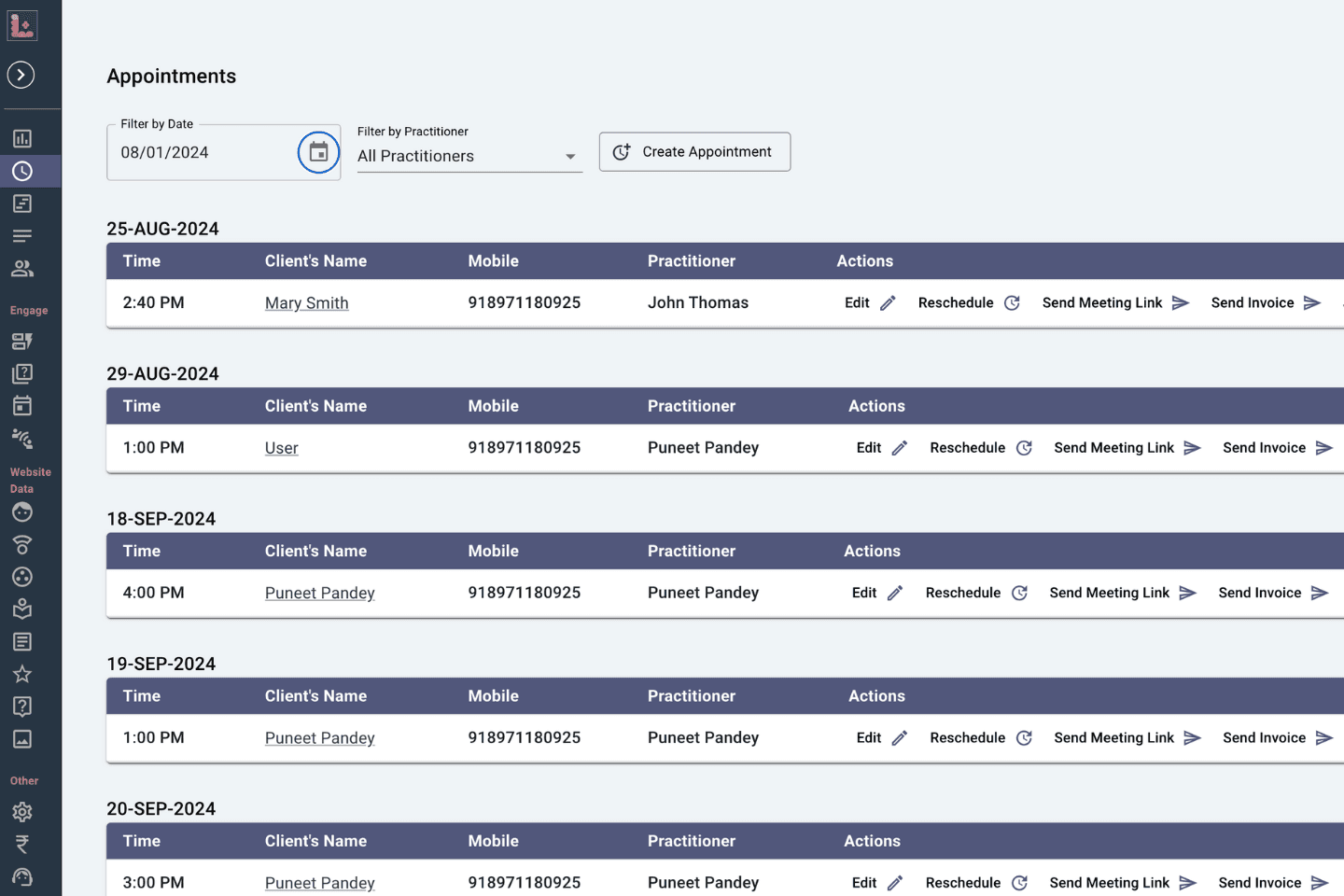
Appointments and practitioner schedules
Payments and invoices held against the client
Private notes, with templates matched to how practitioners document
Activities and forms that can be assigned between sessions
Practitioner profiles, services and availability
Care plans and packages where the practice sells them
Clients managed here do not have to have come from the website. A client who was referred, who telephoned, who walked into the clinic, who has been attending for years, or who a practitioner adds directly, is managed exactly the same way.
For a fuller account of what it manages, explore LifeHetu’s mental health practice-management software.
Bring Online and In-Person Practice into the Same Workflow
LifeHetu does not treat website bookings as the whole practice. A mental healthcare organisation usually has several kinds of client at once, and they belong in one operational picture rather than three.
All of these can sit in the same practice-management environment:
Clients seen online
Clients seen in person at a clinic or consulting room
Practitioners who work both ways
Clients arriving by referral
Long-standing clients the practice already had
Direct enquiries by phone or in person
Enquiries generated by the website
Launch with Room to Evolve
A mental health practice changes over time — services, practitioners and operational requirements all move. LifeHetu’s approach is designed so the technology supporting the practice can be reviewed and extended when new requirements arise, rather than rebuilt from scratch.
Things practices commonly come back to change:
Adding a practitioner, or a new service
Changing how availability or payment works
Publishing new resources, events or courses
Introducing activities or forms that were not needed at launch
Moving from an entirely online practice to a hybrid one, or the reverse
An Example of a Connected Client Journey
This is one example of how the pieces can fit together. It is not a process every practice follows — what gets built and how it connects is decided for each implementation.
A client who arrives through the website
- A prospective client finds the practice and reads about it.
- They look at a service, or at a particular practitioner.
- They send an enquiry, or book an appointment directly.
- They pay, where the practice takes payment in advance.
- They receive a confirmation, and a reminder before the session.
- The client and the appointment appear in practice management.
- The practitioner runs the session and records notes against the client.
- Invoices, activities and follow-up work are handled from the same record.
A client who arrives any other way
- A client is referred by a doctor, a school or another practitioner.
- Someone telephones the practice, or walks into the clinic.
- A client the practice has seen for years continues as before.
- A practitioner or staff member adds the client directly.
From that point on, both are managed the same way — same schedule, same client record, same notes and invoices.
Why This Approach Is Different
Start with the Practice, Not the Software
The requirements decide the implementation. LifeHetu is not a builder you sign up to and configure on your own between clients.
Website and Operations Together
LifeHetu can work across both the public-facing website and the practice-management workflows behind it, rather than handing one of them to somebody else.
Mental Healthcare Focus
The workflows are built around practitioners, clients, appointments, notes and engagement between sessions — not a generic sales pipeline.
Online and In-Person
The system supports the complete practice, including the clients who never touch a website. That is usually most of them.
Built for Different Types of Mental Health Practices
The same process works at very different scales. What changes is how much of it a practice needs.
Independent psychologists, therapists and counsellors
Counselling centres and multi-practitioner practices
Mental health clinics
Mental healthcare organisations
Start with What Your Practice Needs
Tell LifeHetu how your practice currently works and what you are looking to improve. We can help identify the right combination of website, integrations and practice-management technology.