ADHD: Symptoms, Diagnosis and Support Options
ADHD is a neurodevelopmental disorder involving persistent patterns of inattention, hyperactivity and/or impulsivity that can affect everyday functioning. It begins in childhood, and may continue into adulthood or first be recognised later in life.
This page explains how ADHD can present across different ages, why occasional distraction is not the same thing, what the recognised presentations mean, what professional assessment involves and why there is no single test for it, what treatment and support can include, and how to explore practitioners and book an available online session through LifeHetu. It is general information, not an assessment of you or of anyone you care for.
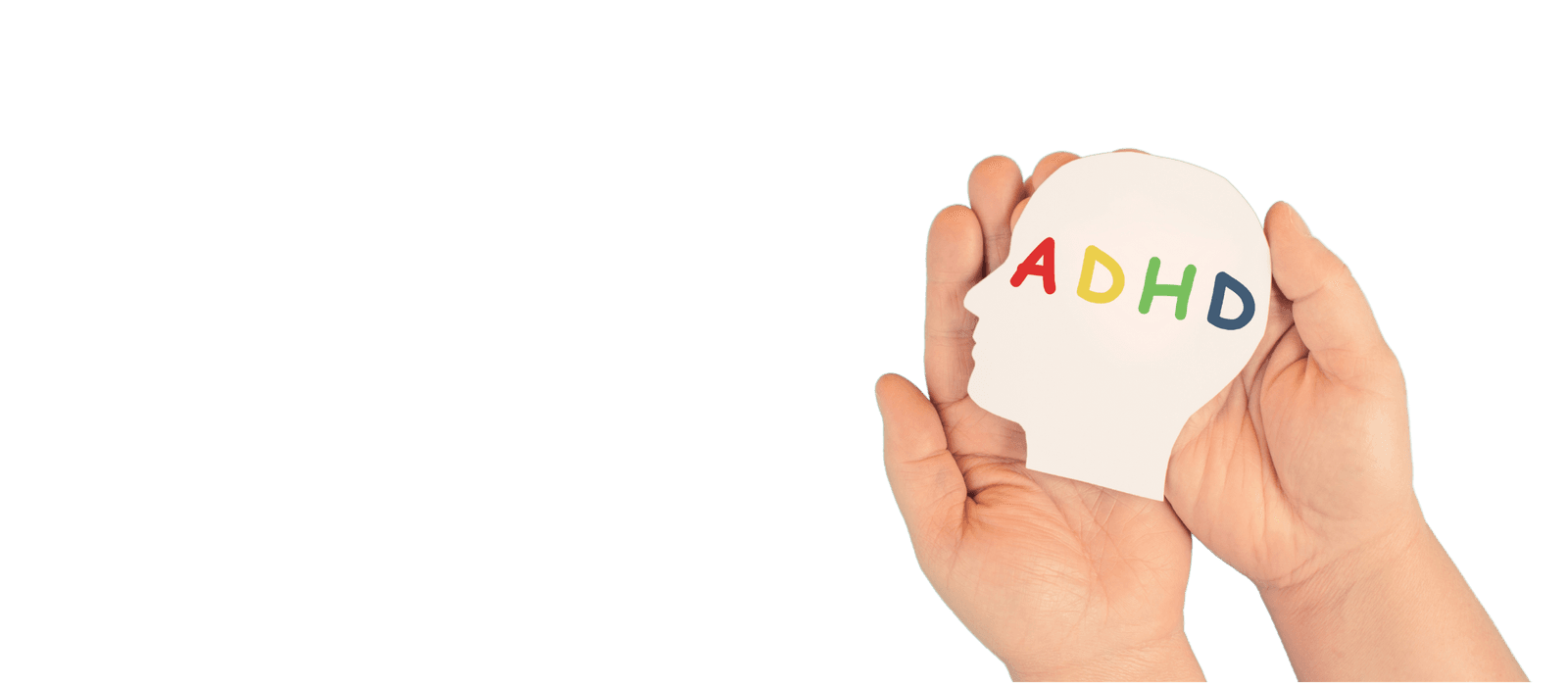
What Is Attention-Deficit/Hyperactivity Disorder?
ADHD is a neurodevelopmental disorder. That word matters: it means ADHD relates to how the brain develops, that it begins during childhood rather than arriving later, and that it is not a habit, a choice or a consequence of upbringing.
The National Institute of Mental Health characterises it by three areas — inattention, hyperactivity and impulsivity — and notes that for some people inattention symptoms are strongest, others have most difficulty with hyperactivity and impulsivity, and some experience symptoms in all three.
NIMH also says symptoms begin in childhood and usually continue into the teen years and adulthood. The degree and the way they show up can change considerably with age, which is one reason ADHD in an adult can look quite different from the picture most people have of it.
Inattention
NIMH describes this as difficulty paying attention, keeping on task, or staying organised. In practice it can involve losing track of what you were doing, difficulty finishing things that were started, trouble keeping hold of belongings or appointments, and finding sustained mental effort disproportionately hard.
Hyperactivity
NIMH describes often moving around including at inappropriate times, feeling restless, or talking excessively. The NHS adds fidgeting or tapping hands and feet, and getting up when expected to stay seated. In adults this frequently becomes internal restlessness rather than visible movement.
Impulsivity
NIMH describes interrupting, intruding on others, or having trouble waiting one's turn. It can also involve acting or deciding faster than the situation warrants, before the consequences have been weighed.
Nobody has every feature on this page, and the pattern differs between people and over time. Nothing here can establish whether someone has ADHD — that is a clinical judgement made by an appropriately qualified professional.
ADHD Is More Than Difficulty Paying Attention
Almost everyone is distractible sometimes. Forgetting things, putting off a task, losing the thread in a long meeting, fidgeting through something dull, deciding too quickly — these are ordinary human experiences, not symptoms in themselves.
NIMH draws the line clearly: it is common for people to show these behaviours some of the time, but for people with ADHD the behaviours are frequent, occur across multiple situations — school, home, work, with family and friends — and interfere with daily life.
So the questions that matter in an assessment are not really "do you get distracted?" but how persistent this has been, how far back it goes, whether it shows up in more than one part of life, how much it actually interferes, and what else could account for it. That is several judgements at once, and it is why a symptom list cannot substitute for an assessment.
This page deliberately gives no symptom count and no threshold to check yourself against. Diagnostic criteria do include thresholds, but they are one component of a professional framework applied alongside developmental history and functional impact — reproduced as a tick-box they produce wrong answers in both directions.
The Presentations of ADHD
ADHD is described in terms of presentations rather than fixed types, and a person's presentation can change over time.
Predominantly inattentive presentation
Where inattention symptoms dominate and obvious hyperactivity is limited or absent. This is the presentation most likely to go unrecognised, because it is the least disruptive to everyone else.
Predominantly hyperactive-impulsive presentation
Where hyperactivity and impulsivity dominate and inattention is less prominent.
Combined presentation
Where both are present. The NHS notes that most children and young people with ADHD have symptoms of both the inattentive and hyperactive-impulsive type, while some show signs of only one.
ADHD does not always involve visible hyperactivity
This is the single most common misconception about the condition. Someone with a predominantly inattentive presentation may be quiet, still and entirely undisruptive — and may have been described for years as dreamy, disorganised or not applying themselves. The absence of obvious hyperactivity says nothing either way.
What about "ADD"?
ADD is an older term that is no longer a separate current diagnosis. What it described is now encompassed within ADHD, and generally corresponds to what is called the predominantly inattentive presentation. People still search for it and clinicians still hear it, which is why it is mentioned here — but it is not a different condition from ADHD.
How ADHD Can Look at Different Ages
The underlying condition is the same. What it looks like from outside, and what it costs the person, changes as demands change.
In children
Being easily distracted, or finding it hard to follow instructions
Forgetting everyday tasks
High energy levels, fidgeting or tapping, talking noisily
Restlessness, or getting up when expected to stay seated
Finding it hard to wait their turn, or interrupting
In adolescents
Organisation and planning becoming harder as academic demands increase
Difficulty keeping track of deadlines and longer pieces of work
Restlessness that is felt more than seen
Impulsivity in decisions or in conversation
Strain in friendships or at home
In adults
Difficulty with planning, prioritising and starting tasks
Trouble finishing things, or managing deadlines
Forgetfulness with appointments, admin and everyday obligations
Difficulty sustaining attention on things that are not immediately engaging
Restlessness that is more internal than physical
Impulsivity in decisions, spending, or speech
Can Adults Have ADHD?
Yes. NIMH describes symptoms as beginning in childhood and usually continuing into the teen years and adulthood, and a number of adults receive their first ADHD diagnosis well into adult life.
That is not the same as ADHD starting in adulthood. ADHD is neurodevelopmental — a first diagnosis at thirty-five does not mean the condition appeared at thirty-five, it means it was not identified before then. Assessment in adults therefore looks at whether relevant difficulties were present in childhood as well as what is happening now.
Adulthood also tends to remove the structures that were compensating. School timetables, parental organisation and externally imposed routine give way to independent work, household administration, finances and caring responsibilities, all of which demand exactly the planning and follow-through that ADHD affects. Longstanding difficulties can become much more visible at that point without having become worse.
On childhood evidence
Developmental history matters in an adult assessment, but this does not mean someone needs old school reports or a parent available in order to be assessed. Professionals gather developmental history in different ways depending on circumstances, and what is possible varies between people. Not having documentation from decades ago is not a disqualification, and anyone telling you otherwise is overstating a general principle.
Why ADHD Is Sometimes Recognised Late
The presentations that are least disruptive to other people are the ones most likely to be missed. A child who is quietly inattentive causes nobody a problem, so nobody investigates; a child who cannot sit still does.
The NHS puts the gender point carefully, and it is worth repeating in its own terms rather than in the stronger form that circulates online: ADHD is thought to be recognised less often in girls than in boys, and this may be because girls with ADHD more commonly have inattentive symptoms, which can be harder to recognise. That is a statement about recognition, not about what ADHD is in women, and it does not mean every woman with ADHD has an inattentive presentation.
You will also encounter "masking" — describing effort to conceal or compensate for difficulties. Some people do describe doing this, and it can contribute to difficulties being missed. It is not an established diagnostic concept, it does not apply to everyone whose ADHD was recognised late, and it is not evidence of ADHD in someone who does not have it.
Can Other Things Look Like ADHD?
Yes, frequently — and this is a large part of why assessment exists rather than a checklist. Difficulty with attention, concentration, memory, restlessness or motivation is not specific to ADHD.
Anxiety
Worry consumes attention, and restlessness and difficulty concentrating are recognised features of anxiety in their own right. The NHS lists anxiety among the things a doctor may consider when a child presents with these difficulties.
Read about anxietyDepression
Poor concentration, difficulty making decisions, loss of motivation and fatigue are all part of how depression presents. A person struggling to start or finish anything may be describing either condition — or both.
Read about depressionSleep problems
Insufficient or poor-quality sleep degrades attention, working memory and impulse control in anyone. Sleep is something assessment asks about rather than assumes.
Stress and life circumstances
Sustained pressure affects concentration and follow-through. The NHS names being tired, anxious or stressed among the alternative explanations for these behaviours in children.
Read about stress and burnoutLearning difficulties, and other conditions
Learning difficulties such as dyslexia are distinct from ADHD but can occur alongside it, and are not the same thing. The NHS also notes that a doctor may consider conditions such as autism or Tourette's when these difficulties are presented.
Substances, medication and physical health
Some substances and some prescribed medicines affect attention and alertness, and physical health conditions can too. These are part of what an assessment considers before attributing difficulties to ADHD.
These are not either-or. NIMH notes that ADHD often co-occurs with other disorders and conditions — disruptive behaviour, learning disorders, sleep problems, anxiety or depression — which can make the conditions harder to diagnose and treat. Having one does not rule out the others, and sorting that out is precisely the professional task.
Trauma is sometimes raised in this context. Some difficulties can overlap and the two can coexist, but trauma does not cause ADHD, and this page does not present it as an alternative label for the same thing. Developmental history and alternative explanations are both part of what a proper assessment weighs.
What May Contribute to ADHD?
Research points to a substantial genetic contribution alongside other biological and early-life factors. NIMH describes researchers investigating genes, hormones and other molecules, brain structure and activity, and prenatal and early life exposures.
What the evidence does not offer is a single cause or a simple mechanism, and this page does not invent one. In particular, ADHD is often summarised online as "a dopamine deficiency". That is a considerable oversimplification of an unresolved picture, and the fact that some medication acts on neurotransmitter systems does not establish that a deficiency of one of them causes the condition.
What does not cause ADHD
Parenting. ADHD is a neurodevelopmental condition, not a consequence of discipline, structure or family style. Blaming parents is both unkind and wrong.
Sugar, food colourings or diet in general. No special diet treats ADHD, and this page recommends no elimination diet and no supplement.
Screen time. Heavy device use can affect attention and sleep for anyone, which is worth knowing — but that is a behavioural and environmental effect, and it is not the same as causing a neurodevelopmental disorder.
Laziness or lack of character. ADHD is not a failure of effort, and people with it frequently expend more effort than those around them realise.
Two opposite framings are worth avoiding. ADHD is not a superpower, and describing it that way dismisses real difficulty that people are entitled to have taken seriously. Nor does it mean a brain that is broken, or say anything about intelligence — ADHD occurs across the whole range, and the stereotypes at both ends are stereotypes.
Terms You Will Meet Online
ADHD has a large and often useful online community, and it has also generated vocabulary that gets mistaken for clinical terminology. None of the following is a diagnostic criterion, and recognising yourself in any of them does not establish ADHD.
Executive function
A real and useful concept covering planning, organisation, working memory, starting tasks, inhibition and managing time. Difficulty in these areas is genuinely relevant to ADHD — but many things affect executive functioning, including sleep, stress, anxiety and depression, so difficulty here is not by itself ADHD.
"Time blindness"
Some people with ADHD describe difficulty estimating and managing time. The phrase itself is a popular description rather than a diagnostic term, and it is not sufficient for a diagnosis.
"Hyperfocus"
Some people describe periods of unusually sustained attention on highly engaging activities. It is not an official diagnostic symptom of ADHD, it is not unique to ADHD, and it is not a superpower.
"Rejection sensitive dysphoria"
Widely discussed online, but not a diagnosis in DSM-5 or ICD-11 and not an established ADHD criterion. Some people with ADHD do report emotional difficulties, and those are worth raising with a professional — under their own description rather than this label.
"ADHD paralysis" and "object permanence"
Difficulty initiating a task is real and worth describing plainly. "Object permanence" in particular is a developmental psychology term about infancy that does not mean what its ADHD usage suggests; it is simply a misapplication.
Emotional difficulties
Some people with ADHD report difficulty with emotional regulation, and clinicians may consider it. It is not a core diagnostic criterion, and this page does not offer it as another marker to self-identify against.
How Is ADHD Professionally Assessed?
Assessment draws on several sources of information rather than one. Depending on the person's age and circumstances, it may consider current symptoms, developmental history and what childhood was like, how things are going at home and at work or school, whether difficulties show up in more than one setting, mental health history, physical health, sleep, and any medication or substance use that may be relevant.
Information from other people is sometimes part of it, where that is appropriate and consented to. Standardised rating scales and questionnaires may be used to support the process. The NHS describes assessment for a child or young person as being carried out by one or more ADHD specialists, such as a paediatrician or a child and adolescent psychiatrist.
Not every assessment involves every element, and the process differs between settings and countries. What is consistent is that it is a clinical judgement made by a professional with the relevant training and scope.
Is there a single test for ADHD?
No. There is no blood test, brain scan, computer task, attention test or online questionnaire that can establish an ADHD diagnosis on its own. Rating scales and structured tasks may contribute information to an assessment, but none of them is the diagnosis, and an online quiz is not a substitute for one — whatever it says at the end.
This page contains no ADHD test and no checklist to score. If you came here to find out whether you have ADHD, the honest answer is that a web page cannot tell you, and the useful next step is a conversation with someone qualified to assess it.
What Can Treatment and Support Involve?
What is appropriate depends on age, symptoms, how much difficulty they are causing, individual circumstances, any co-occurring conditions, and professional assessment. NIMH describes standard treatments as including medication and psychosocial interventions such as cognitive behavioural therapy, parent training and school interventions. There is no single approach that suits everyone.
Medication
Medication is an established treatment option for ADHD and, for many people, an effective one. Broadly it falls into stimulant and non-stimulant categories. Which if any is appropriate, for whom, and alongside what else, is a medical decision.
That is as far as this page goes. No drug names, no doses, no titration, no comparisons, no "best" medication, no instruction to start, stop, combine or change anything, and nothing about how to obtain it. Those decisions belong to an appropriately qualified prescribing medical professional who has assessed the individual. LifeHetu does not prescribe, and nobody should conclude from a web page that medication is or is not right for them or their child.
Psychological and behavioural support
Psychosocial approaches, including cognitive behavioural therapy, are part of standard treatment as NIMH describes it. They do not cure ADHD and nothing here claims they do. What they can help with is developing strategies that work for the individual, addressing the difficulties that have accumulated around the condition, and working on co-occurring concerns such as anxiety or low mood.
For children, NIMH includes parent training and school interventions among standard psychosocial treatments. These are structured programmes delivered by professionals — not a matter of stricter discipline, reward charts or anything a web page should be prescribing, and not a judgement on how a child has been parented.
Practical and environmental support
Structure helps: breaking work into smaller steps, external reminders, predictable routines, reducing competing demands, and shaping the environment so that less depends on remembering. What actually works is individual, and what suits one person can be useless to another.
This is not a productivity system, and this page is not going to supply a list of hacks. The aim of support is functioning and wellbeing rather than output, and someone with ADHD does not owe anyone improved efficiency.
A note on ADHD coaching
ADHD coaching exists and some people find it useful. It is not psychological treatment, not assessment and not psychotherapy, and it carries different training and different scope. LifeHetu does not offer ADHD coaching — the previous version of this page said it provided "therapy, coaching, and skill-building techniques", and none of that is accurate.
The NHS makes a point worth keeping in view: support depends on the person's symptoms, and not every child needs help or support from a health professional. Outcomes and what helps vary between people, and this page promises nothing about either.
If You Are Concerned About a Child
Assessment and support for a child or young person are developmentally specific work. The NHS describes ADHD assessment for children as being carried out by specialists such as a paediatrician or a child and adolescent psychiatrist, and the support that follows is shaped around the child's age, their school and the people around them.
The practitioners listed further down this page offer Adult Counselling, and that is not the right pathway for a child. Child & Adolescent Counselling is the service to start from, and the child psychologist category lists practitioners who work with younger clients.
Where a child's safety is an immediate concern — including risk from impulsive behaviour — that needs urgent professional help rather than anything a web page can offer.
If You Need Urgent Support
Booking a session through LifeHetu is a scheduled conversation with a practitioner at a future time. It is not an emergency service, and it is not the right route for something that needs help now.
If you are having thoughts of self-harm or suicide, or someone is in immediate danger, go to the nearest hospital or emergency room, where you can see a psychiatrist, counsellor or therapist in person. Do not wait for a scheduled session. Involving a family member or friend who can be with you helps.
ADHD is not in itself a crisis condition, and most people reading this page are not in one. NIMH does note that ADHD often co-occurs with conditions including anxiety and depression, and that teens and adults with ADHD are more likely to engage in risky behaviours such as substance use. That is a reason this guidance is here rather than assumed unnecessary — not a statement about anyone in particular.
What LifeHetu Does, and What It Does Not
LifeHetu is a technology platform. It lists independent practitioners, publishes their professional profiles, and enables online session booking and payment. The practitioners listed are not employed by LifeHetu, and the professional relationship in a session is between you and the practitioner.
LifeHetu does not assess or diagnose ADHD, conduct formal ADHD assessments, prescribe medication, provide therapy or coaching, design treatment plans, run ADHD programmes, clinically match anyone to a practitioner or verify anyone's ADHD competence. Where this page describes what assessment and treatment involve, it is describing what appropriately qualified professionals do — not what LifeHetu does.
Booking an Adult Counselling session is booking counselling. It is not an ADHD assessment, and it should not be expected to produce a diagnosis.
Where to Find Professional Support
LifeHetu lists independent practitioners and lets you book an online session with one of them. It does not maintain a list of ADHD specialists or assessors — practitioner records carry the services someone offers, not verified clinical specialisms — so any such list would be guesswork.
How Online Booking Through LifeHetu Works
Explore practitioners
Browse who is listed, with search and filters. Nothing is behind a sign-up.
Read the profile
Qualifications, years in practice, languages, the services they offer and how they describe their own work are on each profile.
Choose the service
Pick the service you want from the ones that practitioner offers. The current fee is shown for it.
Pick a time
Availability comes live from the practitioner's own calendar at the moment you book, so the times shown are the ones actually open.
Confirm and pay
Complete the booking, and you receive the details for your session.

Sessions Are Booked Online
Sessions booked through LifeHetu are online. Whether a particular practitioner can carry out formal ADHD assessment depends on their qualifications, professional scope, the service they offer and any applicable professional requirements — review individual profiles and services, and ask if it is not clear. After connecting with a practitioner you may also discuss directly whether an in-person session could be considered in the future; any such arrangement depends on the practitioner and is not managed by LifeHetu.
Related Pages
Questions About ADHD
ADHD is a neurodevelopmental disorder. NIMH characterises it by inattention (difficulty paying attention, keeping on task or staying organised), hyperactivity (often moving around including at inappropriate times, restlessness, talking excessively) and impulsivity (interrupting, intruding on others, trouble waiting one's turn). For some people inattention is strongest, for others hyperactivity and impulsivity, and some experience all three. The behaviours are frequent, occur across multiple situations and interfere with daily life.
Adults can certainly have ADHD and can be diagnosed as adults. NIMH describes symptoms as beginning in childhood and usually continuing into the teen years and adulthood. The important distinction is that a first diagnosis in adulthood is not the same as adult onset — ADHD is neurodevelopmental, so assessment in an adult considers whether relevant difficulties were present in childhood as well as what is happening now. Adulthood often removes the structures that were compensating, which can make longstanding difficulties far more visible without them having become worse.
No, and this is the most common misconception about it. In the predominantly inattentive presentation, obvious hyperactivity may be limited or absent — someone can be quiet, still and undisruptive and still have ADHD. The NHS notes that most children and young people with ADHD have symptoms of both the inattentive and hyperactive-impulsive types, while some show signs of only one. Hyperactivity in adults also tends to be internal restlessness rather than visible movement.
ADD is an older term that is no longer a separate current diagnosis. What it described is now encompassed within ADHD, and generally corresponds to what is called the predominantly inattentive presentation. It is not a different condition.
Not on its own. NIMH notes it is common for people to show these behaviours some of the time; what distinguishes ADHD is that they are frequent, occur across multiple situations and interfere with daily life, with symptoms beginning in childhood. Attention and concentration are also affected by anxiety, depression, poor sleep, stress, some substances and medications, and physical health. Sorting out which applies is what assessment is for, and this page deliberately offers no symptom count to check yourself against.
There is no single test. No blood test, brain scan, computer task, attention test or online questionnaire can establish an ADHD diagnosis on its own. Assessment draws on several sources: current symptoms, developmental history, how things are going in more than one setting, mental health and physical health history, sleep, and medication or substance use. Rating scales may support the process and information from other people may be included where appropriate and consented to. The NHS describes assessment for children as carried out by specialists such as a paediatrician or a child and adolescent psychiatrist.
Yes. Difficulty with attention, concentration, memory, restlessness and motivation occurs in anxiety and depression, with insufficient sleep, under sustained stress, with some substances and medications, and with certain physical health conditions. They can also co-occur — NIMH notes ADHD often occurs alongside conditions including learning disorders, sleep problems, anxiety and depression, which can make diagnosis and treatment harder. Having one does not rule out the others.
There is no single cause. Research points to a substantial genetic contribution, and NIMH describes researchers investigating genes, hormones and other molecules, brain structure and activity, and prenatal and early life exposures. What the evidence does not support is the popular summary that ADHD is simply "a dopamine deficiency". It is also not caused by parenting, sugar or diet, or screen time — heavy device use can affect attention and sleep in anyone, but that is a behavioural effect rather than the cause of a neurodevelopmental disorder.
NIMH describes standard treatments as including medication and psychosocial interventions such as cognitive behavioural therapy, parent training and school interventions. Medication is an established option and effective for many people, but it is not automatic and it is not the only option — what is appropriate depends on age, symptoms, circumstances, co-occurring conditions and professional assessment. Those decisions belong to an appropriately qualified professional, and for medication specifically to a prescribing medical professional. LifeHetu does not prescribe.
It can be useful for some things and it is not a substitute for others. Counselling does not diagnose ADHD and does not cure it. What psychological support can help with is developing strategies, working through difficulties that have built up around the condition, and addressing co-occurring concerns such as anxiety or low mood. What a particular practitioner offers depends on their background and training, which is on their profile.
No. LifeHetu is a technology platform that lists independent practitioners, publishes their profiles and enables online session booking and payment. It does not assess or diagnose ADHD, prescribe medication, provide therapy or coaching, run ADHD programmes or verify anyone's ADHD competence. Whether a particular practitioner can carry out formal ADHD assessment depends on their qualifications, professional scope, the service they offer and applicable professional requirements — review the profile and ask if it is not clear.
Assessment and support for children is developmentally specific work — the NHS describes it as carried out by specialists such as a paediatrician or a child and adolescent psychiatrist. It is also worth knowing that many children, particularly under five, are easily distracted, impulsive and have high energy levels, and the NHS is explicit that this does not by itself mean they have ADHD; it could reflect something else, such as being tired, anxious or stressed. The practitioners listed on this page offer Adult Counselling and are not the right pathway for a child — Child & Adolescent Counselling, or the child psychologist category, is where to start.
Yes. LifeHetu currently enables online session booking, and practitioners offering Adult Counselling are listed on this page with their current fees. Booking Adult Counselling is booking counselling, not an ADHD assessment. If an assessment or ADHD-focused treatment is what you need, check the practitioner's profile and ask them before booking.
Sources & References
- National Institute of Mental Health — Attention-Deficit/Hyperactivity DisorderThat ADHD is a neurodevelopmental disorder and the descriptions of inattention, hyperactivity and impulsivity; that symptom patterns differ between people; that these behaviours are common some of the time but in ADHD are frequent, occur across multiple situations and interfere with daily life; that symptoms begin in childhood and usually continue into the teen years and adulthood; that ADHD often co-occurs with other conditions; the areas researchers are investigating as possible causes; and that standard treatments include medication and psychosocial interventions such as cognitive behavioural therapy, parent training and school interventions.
- NHS — ADHD in children and young peopleThat symptoms usually start before the age of 12; the inattentive and hyperactive-impulsive signs described in children; that most children with ADHD have symptoms of both types while some show only one; that ADHD is thought to be recognised less often in girls than boys and that this may be because girls more commonly have inattentive symptoms which can be harder to recognise; that many children are easily distracted, impulsive and energetic without having ADHD and that this may reflect being tired, anxious or stressed; that assessment is carried out by specialists such as a paediatrician or child and adolescent psychiatrist; and that support depends on symptoms and not every child needs help from a health professional.
- World Health Organization — ICD-11 classificationThat attention deficit hyperactivity disorder is classified among neurodevelopmental disorders.
- World Health Organization — Anxiety disordersThe description of anxiety used where attention difficulties may have other explanations.
- World Health Organization — Depressive disorder (depression)The description of depression used where attention and motivation difficulties may have other explanations.
- NIMHANS — National Institute of Mental Health and NeurosciencesIndian context for mental health services and where in-person clinical care is accessed.
Explore Practitioners Offering Adult Counselling
Adults experiencing ADHD-related difficulties may also choose to discuss concerns such as organisation, stress, emotional wellbeing or everyday functioning in counselling. The practitioners below currently offer Adult Counselling through LifeHetu. This listing does not mean every practitioner provides ADHD assessment or specialised ADHD treatment. Review each practitioner's professional background, qualifications and listed services carefully.
Adult Counselling is counselling, not ADHD assessment. Formal ADHD assessment requires particular professional scope and training, and medication requires a prescribing medical professional — neither of which follows from appearing in this list. LifeHetu does not certify anyone as an ADHD specialist or assessor, does not rank practitioners and does not match you to one. If you are specifically seeking an ADHD assessment or ADHD-focused treatment and a practitioner's profile does not clearly describe relevant experience or services, check with the practitioner before assuming that they provide that form of care.
These practitioners offer Adult Counselling. If you are seeking support for a child or teenager, see the child pathway above rather than booking from this list.
9 practitioners offering Adult Counselling

Mr Abhishek Faria
6 years in practice
Doctoral Candidate at California Southern University
Online session: Video · Phone Call · Chat
Languages: English, Hindi, Marathi, Gujarati
Fee: ₹1800 per session

Ms Priya Parwani
6 years in practice
Bachelor's in Psychology Master's in Psychology PG Diploma in Counselling Psychology
Online session: Video
Languages: English, Hindi
Fee: ₹1000 per session
Mrs Mahalakshmi Rajagopal
28 years in practice
MSW, MSc
Online session: Video
Languages: English, Hindi, Tamil, Kannada, Telugu, Malayalam
Fee: ₹1800 per session
Ms Sonali Sikdar
16 years in practice
Online session: Video
Languages: English, Hindi, Marathi
Fee: ₹1500 per session

Dr. S.S. Saini
10 years in practice
M.Phil (Clinical Psychology), Ph.D (Clinical Psychology),PGDCBM with 10 years experience
Online session: Video · Phone Call
Languages: English, Hindi, Punjabi
Fee: ₹1500 per session

Dr Jignesh Ahir
11 years in practice
Masters in Applied Psychology, M.Phil. Ph.D in Psychology Research Gold Medalist
Online session: Video · Call · Chat
Languages: English, Hindi, Gujrati
Fee: ₹2000 per session

Ms Parinaaz Irani
8 years in practice
Online session: Video
Languages: English, Hindi, Marathi, Gujarati
Fee: ₹1500 per session
Irshad Md
5 years in practice
Online session: Video
Languages: English, Hindi, Telugu, Urdu
Fee: ₹2000 per session

Dr Rainy Bhuyan
12 years in practice
MPT Neurosciences and Psychosomatic Disorders, Internationally Certified Aura Reader
Online session: Video
Languages: English, Hindi, Gujarati
Fee: ₹1000 per session
Fees and availability shown come from each practitioner’s own current settings. Read more about Adult Counselling.
What to Consider When Choosing a Practitioner
Their actual professional role
What a practitioner is qualified to do differs, and it does not follow from offering Adult Counselling. Formal assessment and prescribing sit with particular professions.
Whether ADHD work is explicitly mentioned
If a profile names ADHD assessment or ADHD-related work, that is worth weighing. If it does not, ask rather than assume — LifeHetu has not verified it either way.
Counselling or assessment
These are different things. Be clear which you are looking for, and check that it is what the practitioner actually offers before booking.
Qualifications and services
The degree or training they hold, the institution that issued it, and what you can actually book with them.
Years in practice
Calculated from the year they started. Longer is not the same as better suited to you.
Languages, fee and availability
The languages they offer sessions in, the current fee, and when they have time open.
Asking a practitioner directly about their experience with ADHD, and about what they can and cannot offer, is a reasonable question and a good practitioner will expect it. This listing is not ranked or scored, and no one on it has been assessed by LifeHetu for ADHD in particular.
Explore Professional Support Options
Review practitioners offering Adult Counselling through LifeHetu, their professional backgrounds and current online booking options.